Rhipsalis (Mistletoe Cactus)
Rhipsalis - the "Mistletoe Cactus" - is a cactus that breaks all the rules you think you know about cacti.
🗓️ Last reviewed: July 2026
Overview
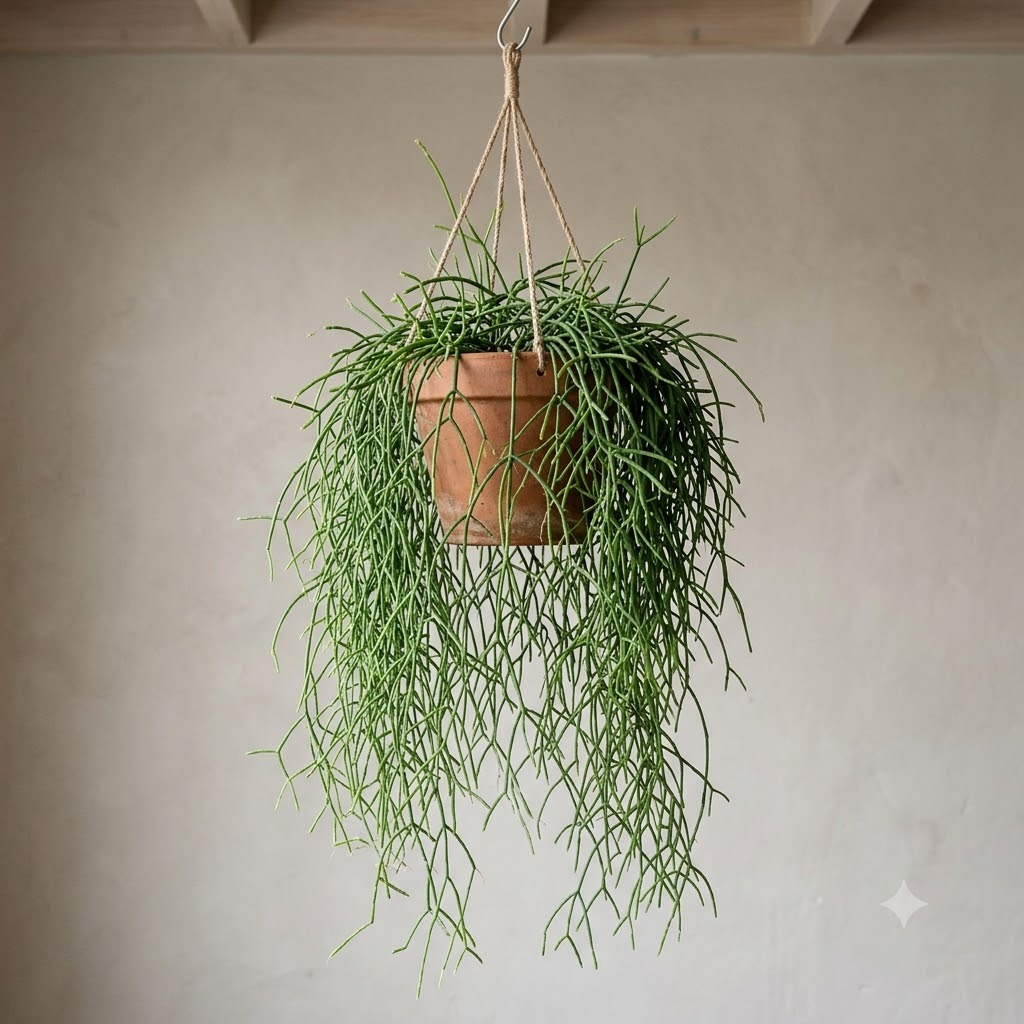
Rhipsalis - the "Mistletoe Cactus" - is a cactus that breaks all the rules you think you know about cacti. It has no fierce spines, it grows in trees rather than deserts, and it wants shade and regular water instead of blazing sun and drought. What it offers instead is a soft, fountain-like cascade of thin trailing stems that spill gracefully over the edge of a pot, making it one of the best and most elegant hanging plants you can grow. Easy-going, fast-filling, and pet-safe, Rhipsalis is a wonderful choice for a bright bathroom, a shaded window, or anywhere you want lush green movement without fuss.
Origin & Natural Habitat
Rhipsalis is a genus of epiphytic cacti native mainly to the tropical rainforests of Central and South America, with the greatest diversity in Brazil. It is one of the few cactus groups found naturally outside the Americas, with a presence in parts of Africa and Sri Lanka. Crucially, it does not grow in deserts. Instead it lives as an epiphyte - perched on tree branches high in the humid forest canopy, roots gripping bark and moss rather than soil.
This habitat explains everything about its care. Up in the canopy it receives dappled, filtered light rather than direct sun, along with frequent rain, high humidity, and fast-draining conditions where roots never sit in standing water. So while it is a true cactus, it behaves far more like a jungle plant, and treating it like a desert cactus - full sun, bone-dry soil - will make it suffer.
Appearance
Rhipsalis is grown almost entirely for its cascading stems, and the many species vary considerably in form.
- Stems: thin, cylindrical, flat, or angular, trailing and branching into a dense, weeping mass. In most species they are soft, green, and spineless - or with only fine, harmless bristles.
- Growth habit: pendulous and trailing, forming a full curtain that can hang well below the pot over time.
- Colour: fresh mid to deep green, sometimes tinged reddish or bronze in brighter light.
- Flowers: small, delicate, often white, cream, or pale yellow blooms appear along the stems, followed in many species by small translucent berries - the mistletoe-like berries that give the plant its common name.
- Size: stems can reach anywhere from 30 cm to well over a metre depending on species and age.
Because there are many species, the exact stem shape varies widely, but the soft, spineless, cascading look is the family signature.
Why People Love It - Qualities & Benefits
- Elegant trailing form: few plants make a fuller, softer, more graceful hanging display.
- Spineless and safe: no vicious cactus spines to worry about, and it is non-toxic to pets and people.
- Tolerates lower light: as a shade-adapted epiphyte it thrives away from harsh sun, ideal for spots too dim for most cacti.
- Loves humid rooms: perfect for bright bathrooms and kitchens where many plants struggle.
- Fast and forgiving: it fills out quickly and shrugs off minor neglect.
- Easy to propagate: stem pieces root readily, so one plant becomes many.
Care
Light
Rhipsalis wants bright, indirect light - the dappled shade it would get in the forest canopy. An east or north window, or a spot back from a brighter window, is ideal. It tolerates medium light better than most cacti. Avoid harsh direct midday sun, which can bleach or scorch the stems. If growth is thin and pale, it wants a little more (indirect) light; if stems yellow or redden harshly, it may be getting too much sun.
Watering
This is the biggest difference from desert cacti: Rhipsalis wants more water. Keep the soil lightly and evenly moist during the growing season, watering when the top couple of centimetres dry out - do not let it bake bone-dry for long stretches. That said, it still hates soggy, waterlogged soil, which rots the roots, so it needs excellent drainage. Ease off in winter but never let it shrivel completely. Think "regularly moist but never sitting in water."
Soil & Potting
Use a light, airy, fast-draining mix - an orchid or aroid-style blend of bark, perlite, coco coir, and a little regular potting mix works well, mimicking its epiphytic roots. Standard cactus soil is often too gritty and dry on its own. Always use a pot with drainage; hanging pots suit its trailing habit perfectly.
Humidity & Temperature
Rhipsalis appreciates higher humidity than desert cacti - above 50% is ideal, which is why it does so well in bathrooms and kitchens. It enjoys warmth, 15-27 °C, and dislikes cold drafts and temperatures below about 10 °C.
Feeding
Feed with a diluted balanced or cactus fertiliser roughly monthly through spring and summer. Stop in winter when growth slows.
Repotting
Repot every couple of years or when it fills the pot, in spring. It flowers well when slightly pot-bound, so there is no need to over-pot. Be gentle - the stems can snap.
Propagation
Rhipsalis is easy to propagate from stem cuttings. Take a healthy stem segment several centimetres long, and let the cut end callus (dry) for a day or two. Then insert it into the same light, airy mix, or lay it on the surface, keep it lightly moist, and place it in bright indirect light. Roots form within a few weeks and the cutting begins to grow. Several cuttings potted together quickly make a full, bushy plant. Handle the stems carefully, as they are brittle and break easily - though a snapped piece is simply a free cutting.
Common Problems & Pests
- Shrivelled, wrinkled stems: underwatering. Unlike desert cacti, Rhipsalis needs steady moisture; water more regularly.
- Yellowing, mushy stems / rot: overwatering or poor drainage. Improve the mix and let the top of the soil dry between waterings.
- Pale, thin, sparse growth: too little light. Move it to brighter indirect light.
- Bleached or reddened stems: too much direct sun. Move it out of harsh light.
- Stem drop / breakage: natural brittleness; handle gently and use broken pieces as cuttings.
- Pests: mealybugs and scale can hide among the dense stems; spider mites appear in dry air. Inspect regularly, wipe or dab off pests, and treat with insecticidal soap or neem oil.
Toxicity & Safety
Rhipsalis is non-toxic to cats, dogs, and humans, and it is spineless, making it one of the safest cacti to keep in a home with pets or children. There are no dangerous compounds, though as with any plant, eating it is not advisable and could cause mild stomach upset.
Pros & Cons
Pros
- Beautiful, full, cascading trailing form.
- Spineless and non-toxic - safe around pets and kids.
- Tolerates lower light than typical cacti.
- Thrives in humid bathrooms and kitchens.
- Easy to propagate from cuttings.
Cons
- Needs more regular water than people expect from a cactus.
- Rots if overwatered or in dense, soggy soil.
- Stems are brittle and break easily.
- Dislikes harsh direct sun.
- Not frost-hardy.
Best Suited For
- Anyone wanting an elegant, low-fuss hanging plant.
- Bright bathrooms and kitchens with some humidity.
- Homes with pets and children, thanks to its spineless, non-toxic nature.
- Shadier bright spots too dim for desert cacti.
Not ideal for hot dry sunny windowsills, people who like to keep cacti bone-dry, or spots where the fragile stems get knocked.
FAQ
Is Rhipsalis really a cactus? Yes, it is a true cactus - but an epiphytic, jungle-dwelling one. It grows on trees in humid forests rather than in deserts, which is why it wants shade, humidity, and more water than a typical cactus.
Why is my Rhipsalis shrivelling? Almost always underwatering. Unlike desert cacti, Rhipsalis should not dry out completely for long. Keep the soil lightly moist and water more regularly.
How much light does it need? Bright, indirect light - the dappled shade of a forest canopy. It tolerates medium light but dislikes harsh direct sun, which can bleach the stems.
Can I grow it in my bathroom? Yes, ideally. A bright bathroom's higher humidity suits it beautifully, as long as it gets enough indirect light.
Is it safe for pets? Yes. Rhipsalis is spineless and non-toxic to cats and dogs, making it one of the safest cacti for a pet-friendly home.