Satin Pothos (Scindapsus pictus)
The Satin Pothos - sometimes sold as "Silver Pothos" or "Silk Pothos" - is one of those plants that stops people mid-scroll and mid-room.
🗓️ Last reviewed: June 2026
Overview
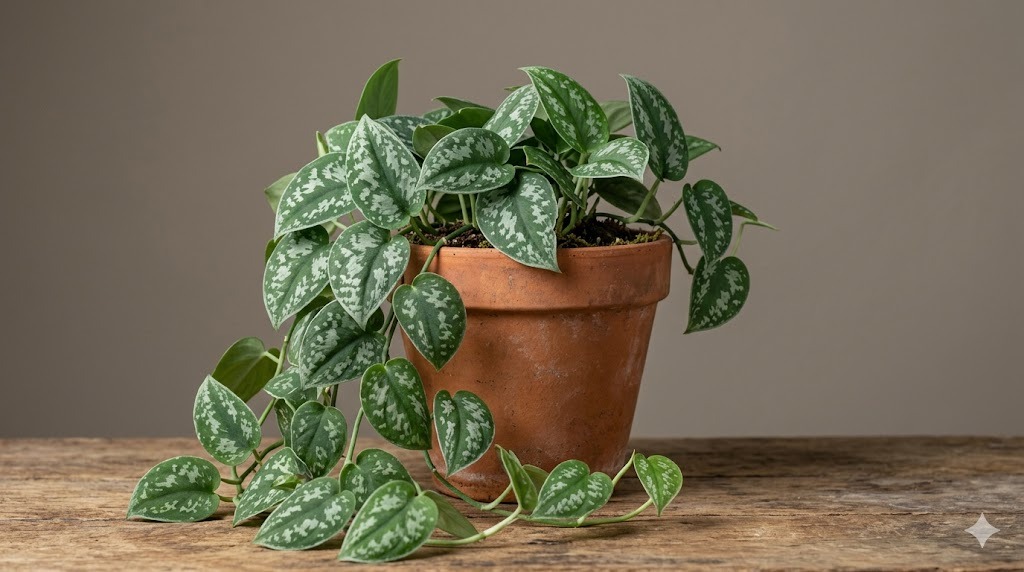
The Satin Pothos - sometimes sold as "Silver Pothos" or "Silk Pothos" - is one of those plants that stops people mid-scroll and mid-room. Its heart-shaped leaves have a soft, matte, almost velvety surface dusted with shimmering silver markings that seem to catch the light from across a room. Behind the looks is a genuinely easygoing houseplant: a slow-to-moderate trailing aroid that is compact, forgiving, and happy on a shelf, a mantel, or in a hanging pot. Give it decent light and a chance to dry out between waterings, and it rewards you with vine after vine of glittering foliage, asking for very little in return. It is a near-perfect plant for a beginner who wants something special but not demanding.
Origin & Natural Habitat
Satin Pothos is native to Southeast Asia, found across countries such as Indonesia, Thailand, Malaysia, and the Philippines, where it grows in warm, humid tropical forests. There it lives as a climbing aroid - it starts low and scrambles up tree trunks toward brighter light, gripping the bark with small roots as it ascends. In the wild it can climb many meters up a host tree, and its leaves grow noticeably larger and more silver the higher and brighter it climbs.
The name is a small lesson in itself. Scindapsus comes from the ancient Greek word for a vine that resembles ivy. Pictus is Latin for "painted," a direct nod to those silvery markings that look brushed onto each leaf by hand. So the botanical name quite literally means "the painted climbing vine" - which is about as accurate a description as you could ask for.
Appearance
A young Satin Pothos has small, neat, heart-shaped leaves on short trailing stems, already carrying its trademark silver speckling even as a baby plant. As it matures - and especially if it is allowed to climb - the leaves grow larger, more elongated, and the silver variegation becomes broader and more pronounced. The signature features:
- Variegation: irregular silvery, pewter-grey splashes, spots, and bands scattered over a deep green base, unique to each leaf.
- Leaf surface: matte and softly textured, with a satin or velvety sheen rather than the high gloss of a true pothos.
- Leaf shape: heart-shaped with a pointed tip, asymmetric at the base, typically 7-15 cm long indoors.
- Growth habit: a trailing and climbing vine - it cascades beautifully from a shelf and will also climb a support if given one.
Indoors, trailing vines commonly reach 1-1.5 meters over a few years, longer in ideal conditions. There are several popular forms: 'Argyraeus' (smaller leaves with crisp silver edging), 'Exotica' (larger leaves with bold silver streaks), and 'Silvery Ann' (extra-frosted, almost fully silver foliage). One important clarification: despite the name, the Satin Pothos is not a true pothos. True pothos belong to the genus Epipremnum, while this plant is Scindapsus pictus - a close relative, but a different genus entirely. The "pothos" label is a long-standing nursery habit.
Why People Love It - Qualities & Benefits
- Shimmering, distinctive foliage: the silver-on-green leaves are genuinely eye-catching and look more expensive and exotic than the plant actually is.
- Compact and tidy: unlike sprawling giants, it stays neat and manageable, making it ideal for smaller homes and tight spaces.
- Easy and forgiving: it tolerates a missed watering, average household conditions, and a beginner's learning curve far better than its delicate looks suggest.
- Perfect for shelves and hanging pots: the trailing vines cascade gracefully, and it looks great spilling off a bookshelf, a high cabinet, or a macramé hanger.
- Air and atmosphere: like most leafy tropicals it adds a little humidity through transpiration and a calmer, greener feel to a room. (The popular "air-purifying" claims are real but modest in a normal home - the genuine benefit is psychological: living greenery measurably lowers stress and lifts mood.)
- Easy to share: it propagates readily from cuttings, so one plant quickly becomes gifts for friends.
Care
Light
Bright, indirect light is the key to keeping the silver variegation strong and vivid - a spot near an east or north window, or a little back from a brighter south or west window, is ideal. It will tolerate medium and even lower light, but in dim conditions the leaves come out smaller, the silver markings fade toward plain green, and growth slows to a crawl. Avoid harsh, direct midday sun, which bleaches and scorches the soft leaves. If the new leaves are looking greener and less frosted than the older ones, the plant is quietly asking for more light.
Watering
Let the top few centimeters of soil dry out before watering again. Satin Pothos is fairly drought-tolerant and much prefers to run slightly dry than to sit wet - soggy soil is the fastest way to kill it, because root rot is the number-one danger here. When you do water, water thoroughly and let all the excess drain away; never leave the pot standing in water. In a bright spot in summer that is often once a week or so; in winter, considerably less. Read the plant: leaves that curl or go limp and slightly soft usually mean it is thirsty, while yellowing leaves usually mean it has had too much water. When in doubt, wait a day.
Soil & Potting
Use a chunky, well-draining aroid mix: regular potting soil loosened with orchid bark, perlite, and a little coco coir or charcoal. The roots need air around them and must never stay waterlogged. Always plant it in a pot with drainage holes.
Humidity & Temperature
Satin Pothos tolerates average household humidity perfectly well, but it genuinely loves more - higher humidity (above 50-60%) brings out fuller, more lush growth and crisper leaf edges. It is comfortable in normal room temperatures of about 18-27 °C and dislikes cold drafts, sudden chills, and anything below roughly 12-15 °C. Keep it away from cold windowsills in winter and from air-conditioning blasts in summer.
Feeding
Feed with a balanced liquid houseplant fertilizer diluted to half strength, roughly once a month through spring and summer. Stop feeding in late autumn and winter when growth naturally slows - a dormant plant does not need feeding, and excess fertilizer salts can burn the roots.
Repotting
Repot every 1-2 years in spring, moving up just one pot size when the roots start circling the bottom or pushing out the drainage holes. A slightly snug pot is perfectly fine; an oversized pot simply holds too much wet soil and invites rot.
Trailing vs climbing - the secret to bigger, brighter leaves
This is the single tip that transforms the plant. Left to trail from a shelf or hanging pot, Satin Pothos stays charming but keeps its smaller, juvenile leaves. But give it something to climb - a moss pole, coir pole, or trellis - and tie or pin the vines to it, and the plant shifts gear: the leaves grow noticeably larger, more elongated, and far more dramatically silvered. This is a real Scindapsus trait, the same instinct that makes it climb tree trunks in the wild. So decide what you want: a graceful cascade, or a bold, large-leaved climber. Keep the moss pole lightly damp and the climbing effect is even stronger.
Propagation
Satin Pothos is wonderfully easy to propagate. Find a healthy vine and cut a stem section just below a node - the small bump on the stem where a leaf and roots emerge. The cutting must include at least one node, because that is where new roots form; a leaf with no node will never grow into a plant. Place the node in a jar of water or directly into moist sphagnum moss or aroid mix, and set it somewhere bright but out of direct sun. Roots usually appear in about 2-4 weeks. Once the roots are a few centimeters long, pot the cutting up into normal chunky mix. One vine can easily become several new plants - a gift for a friend, or a fuller pot for you.
Common Problems & Pests
- Yellow leaves: usually overwatering or poor drainage. Let the soil dry more between waterings and check that the pot drains freely.
- Brown crispy edges or tips: typically low humidity or underwatering, sometimes a buildup of fertilizer salts.
- Fading or loss of variegation: not enough light - the silver markings shrink and the leaves revert toward plain green. Move it somewhere brighter (but still indirect).
- Leggy, sparse growth: long bare stretches of stem with few leaves point to too little light. Brighten its position and pinch back to encourage bushiness.
- Mushy stems, black roots: root rot from soggy soil - unpot it, cut away the rotten roots, and repot into fresh, dry, chunky mix.
- Pests: spider mites (fine webbing and stippled, dull leaves), mealybugs (white cottony fluff in leaf joints), and scale (small brown bumps). Isolate the plant, wipe the leaves, and treat with insecticidal soap or neem oil.
Toxicity & Safety
Mildly toxic to cats, dogs, and humans if chewed. All parts contain insoluble calcium oxalate crystals, which cause mouth and throat irritation, drooling, and vomiting if eaten. It is not deadly, but it is genuinely unpleasant, so keep it out of reach of pets and small children who like to chew on leaves. If a vine trails down within reach of a curious cat or toddler, move it higher or train it up and away.
Pros & Cons
Pros
- Stunning, shimmering silver-on-green foliage that looks high-end.
- Compact and tidy - ideal for small spaces and shelves.
- Forgiving, drought-tolerant, and beginner-friendly.
- Very easy to propagate and share.
- Graceful as either a trailing or climbing plant.
Cons
- Loses its silver sparkle and gets leggy in low light.
- Sensitive to overwatering - root rot is a real risk.
- Mildly toxic to pets and children.
- Slower-growing than a true pothos, so it takes patience to fill out.
- Dislikes cold drafts and chilly rooms.
Best Suited For
- Anyone who wants a striking, distinctive plant without the fuss.
- Beginners who can resist the urge to overwater.
- Shelves, mantels, high cabinets, and hanging spots that need a cascade of foliage.
- Smaller homes and apartments where space is tight.
Not ideal for genuinely dark rooms, chronic overwaterers, very cold or draughty spaces, or homes with pets and toddlers who chew everything in reach.
FAQ
Why are my Satin Pothos leaves losing their silver? Almost always too little light. The silver variegation needs bright, indirect light to develop and stay vivid - in dim conditions the leaves come out greener and plainer. Move it somewhere brighter, but keep it out of harsh direct sun.
Is Satin Pothos a real pothos? No. Despite the name, it is Scindapsus pictus, not Epipremnum (the genus of true pothos). They are close relatives and look similar in habit, but they are different plants. The "pothos" label is simply a long-standing nursery mislabel.
How often should I water it? When the top few centimeters of soil are dry - often roughly weekly in summer and much less in winter. It prefers to run a little dry rather than stay wet, so always check the soil with your finger instead of following a fixed schedule.
Why are the leaves curling? Curling, slightly limp leaves usually mean the plant is thirsty and the soil has gone too dry - a good drink should perk it back up. If the soil is wet and the leaves are yellowing instead, you are overwatering, so ease off.
Can I make the leaves bigger? Yes - give it something to climb. On a moss pole or trellis, Scindapsus pictus naturally produces larger, more elongated, and more silvery leaves than it does when left to trail. Bright light helps too.