Selaginella (Spikemoss / Resurrection Plant)
Selaginella - known as Spikemoss, and in some forms as the Resurrection Plant - is one of the most ancient plants you can grow on a windowsill.
🗓️ Last reviewed: July 2026
Overview
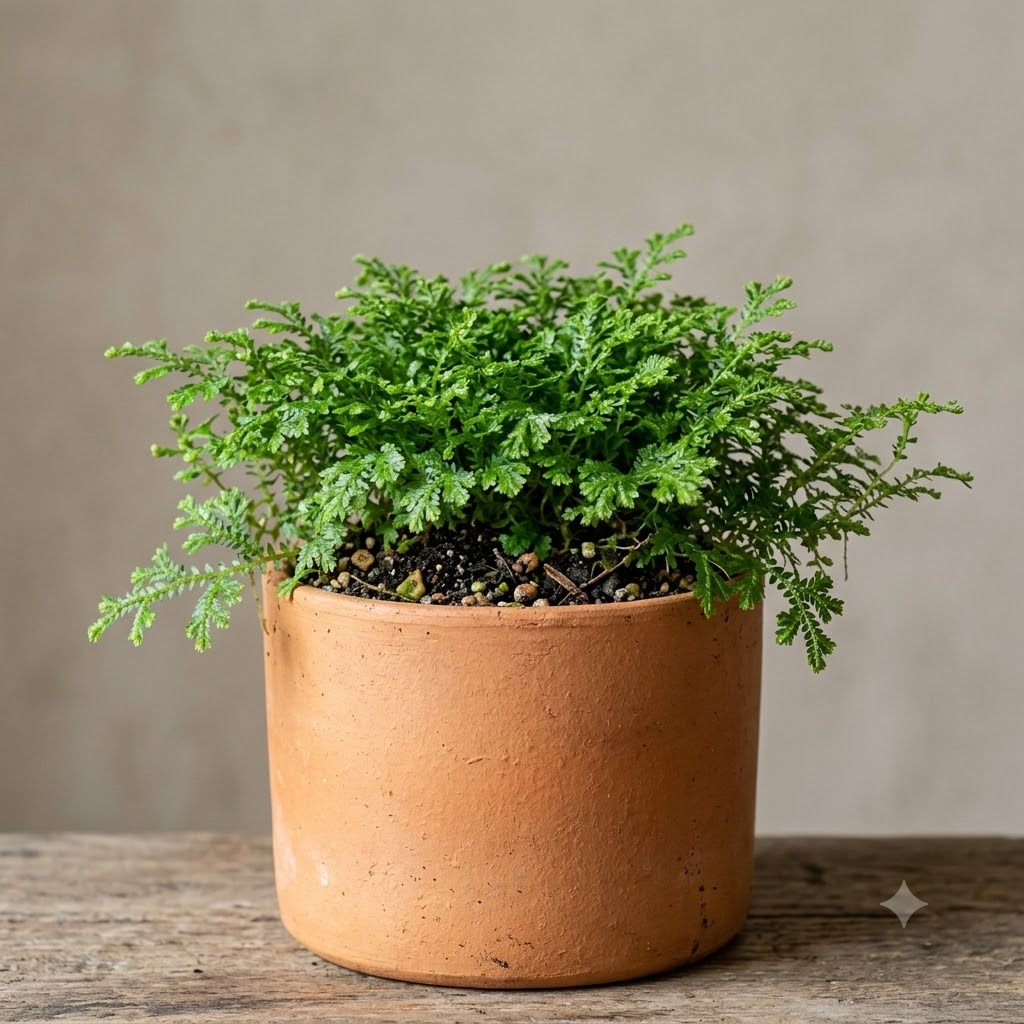
Selaginella - known as Spikemoss, and in some forms as the Resurrection Plant - is one of the most ancient plants you can grow on a windowsill. It is not a true moss and not quite a fern, but a fern ally, part of a lineage that has existed for hundreds of millions of years. What you see is a low, feathery mat of tiny scale-like leaves in vivid green (or, in some varieties, gold, blue-green, or iridescent). It has a delicate, lacy, almost prehistoric beauty. The trade-off for that beauty is honesty: Selaginella craves very high humidity and constant moisture. In dry room air it crisps up within days, which is why it is best treated as a terrarium plant rather than an open shelf plant.
Origin & Natural Habitat
Selaginella is a large genus of several hundred species found across the world, with many growing in the moist, shaded understorey of tropical and subtropical forests, along stream banks, on damp rocks, and in humid ravines. These are places with steady moisture, gentle filtered light, and humidity that rarely drops. That habitat is exactly what the plant expects at home.
One group of desert species, the true Resurrection Plants, has a remarkable survival trick: in drought they curl into a tight brown ball that looks completely dead, then unfurl and green up within hours when water returns. Most Selaginella sold as houseplants, however, are the tender tropical spikemosses, which do not survive drying out - so do not test the "resurrection" on those.
Appearance
Selaginella has a soft, intricate, fern-like texture:
- Foliage: tiny, overlapping, scale-like leaves densely arranged along branching stems, giving a fine, feathery, lace-like effect rather than broad leaves.
- Color: typically a fresh bright green; popular varieties include golden-tipped forms and one with a shimmering blue-green iridescence.
- Habit: low, creeping, and cushion-forming or gently mounding, usually only a few centimeters to around 20-30 cm high depending on the species, spreading outward as it grows.
- Overall look: delicate, mossy, and prehistoric - it reads as a soft green carpet of miniature fronds.
Why People Love It - Qualities & Benefits
- Delicate, unusual texture: the fine, lacy, mossy foliage is unlike the usual broad-leaved houseplants and adds a lush, fairy-tale detail.
- Perfect terrarium plant: it thrives in the humid, enclosed world of a terrarium or bottle garden, where its needs are effortlessly met.
- Ancient charm: growing a fern ally that predates flowering plants gives it a distinct "living fossil" appeal.
- Beautiful ground cover: it makes an excellent living carpet beneath taller terrarium plants or around miniature landscapes.
- Compact: stays small and low, ideal for small enclosed containers.
Care
Light
Bright, indirect light or gentle shade. Selaginella is an understorey plant and does not want direct sun, which scorches and dries the delicate foliage. Filtered light near a window, or a grow light in a terrarium, is ideal. It tolerates lower light better than bright, harsh conditions.
Watering
Keep the soil consistently and evenly moist at all times - never soggy and stagnant, but never dry. Like Baby Tears, it browns and crisps quickly if it dries out, so check it often and water little and often to keep the surface damp. Use tepid water and, where possible, water at the base. Well-established plants are unforgiving of a single serious dry-out.
Soil & Potting
Use a moisture-retentive, well-draining, humus-rich mix - a peat-based or peat-free houseplant compost with some added material to hold moisture works well. Its roots are shallow and fine, so a shallow pot or terrarium planting suits it. Ensure the medium stays damp without waterlogging.
Humidity & Temperature
This is the crucial point: Selaginella needs very high humidity - well above normal room levels. In dry, heated rooms the foliage crisps and dies back fast. The reliable way to grow it is in a terrarium, bottle garden, or covered container, where humidity stays consistently high. Failing that, a humid bathroom, a cloche, or a well-managed pebble tray and grouping can help, but an enclosed environment is by far the surest approach. It likes warm to average temperatures, roughly 18-24 °C, and dislikes cold drafts and dry heat.
Feeding
Feed sparingly with a very dilute balanced liquid fertilizer occasionally during the growing season. It is a light feeder and too much fertilizer can scorch the fine foliage.
Grooming
Trim away any browned or straggly stems to keep it neat and encourage fresh, dense growth. It responds well to light pruning.
Propagation
Selaginella is propagated by division or by stem cuttings. The simplest method is division: at repotting, separate the mat into several rooted clumps and pot each up, keeping them humid and moist while they settle. It can also be grown from stem cuttings or layered pieces - lengths of stem laid on the surface of moist compost will often root at the nodes, spreading into new plants. In both cases, high humidity and constant moisture are essential for the new pieces to take.
Common Problems & Pests
- Browning, crisping, dieback: the classic problem, caused by low humidity or the soil drying out. Raise humidity - ideally move it into a terrarium - and keep the soil evenly moist.
- Whole plant drying to a brown mat: it has dried out too far; tropical spikemosses usually do not recover from this, so prevention is key.
- Yellowing, mushy, rotting stems: waterlogged, airless soil - it wants moist, not swampy, with some air at the roots.
- Scorched, bleached foliage: too much direct sun.
- Thin, sparse growth: too little light or too little humidity.
- Pests: generally quite pest-resistant in humid conditions, though fungus gnats can appear in constantly wet soil and mealybugs occasionally show up. Manage gnats by not overwatering and treat mealybugs with insecticidal soap.
Toxicity & Safety
Generally considered non-toxic. Selaginella is not known to be seriously poisonous to cats, dogs, or people and is widely regarded as a safe houseplant. As with any plant it is not intended to be eaten, and nibbling could cause mild stomach upset, so it is still sensible to keep it out of reach of pets and children that chew plants, but there is no significant toxicity concern.
Pros & Cons
Pros
- Delicate, lacy, prehistoric foliage unlike common houseplants.
- Superb terrarium and bottle-garden plant.
- Compact, low-growing ground cover.
- "Living fossil" fern-ally appeal.
- Considered non-toxic and pet-safe.
Cons
- Demands very high humidity - hard to grow in open, dry rooms.
- Crisps and browns fast if it dries out even once.
- Needs constant, attentive moisture.
- Dislikes direct sun, cold drafts, and dry heat.
- Tropical forms do not survive a serious dry-out (despite the "resurrection" name).
Best Suited For
- Terrarium and bottle-garden growers.
- Humid rooms and enclosed planted containers.
- Attentive owners who can keep humidity and moisture constant.
- Collectors drawn to ancient, unusual, fine-textured plants.
Not ideal for dry centrally-heated rooms without a terrarium, forgetful waterers, or sunny windowsills.
FAQ
Why does my Selaginella keep turning brown and crispy? Almost always low humidity or the soil drying out. It needs very high humidity - the reliable fix is to grow it in a terrarium and keep the soil evenly moist.
Is it really the "resurrection plant"? Only the desert species truly resurrect from a dried, curled-up state. The common tropical spikemosses sold as houseplants do not survive drying out, so do not let them dry.
Can I grow it on an open shelf? It is difficult in normal dry room air; it does far better in a terrarium, a covered container, or a very humid spot like a bathroom.
Is it a moss or a fern? Neither exactly - it is a fern ally, an ancient lineage related to ferns, not a true moss and not a true fern.
Is it safe around pets? Yes, it is generally considered non-toxic and pet-safe, though as with any plant it is best not eaten.