Bonsai for Beginners
An honest beginner guide to bonsai - the easiest species, the indoor vs outdoor truth, the minimal tool kit, and the watering rule that kills most beginner trees.
Bonsai gets sold as either an ancient mystical art that takes a lifetime to learn or as a tiny coffee-shop novelty that lives a few months and dies. Both are wrong. A bonsai is just a tree grown in a shallow pot, pruned to stay small, and kept alive with the same basic principles as any other plant - water, light, soil, root-pruning. The art is in the styling, but the keeping-alive part is something a beginner can do well from year one if they choose the right species and learn one or two rules.
This guide cuts through the romanticism: which species actually survive for a beginner, the indoor versus outdoor question (the answer is more honest than the mall kiosk admits), what tools you genuinely need, and the most common death cause to avoid.
The Most Important Question: Indoor or Outdoor?
Almost all “real” bonsai are outdoor trees - they’re temperate species (juniper, pine, maple, elm) that need a cold winter dormancy to survive long-term. Kept indoors year-round, they slowly weaken and die over 12-24 months.
A small group of bonsai are genuinely tropical and do tolerate indoor life: ficus, jade, Chinese elm, Carmona (fukien tea), Serissa. These are what you should buy if you want a bonsai on your desk.
The kiosk problem: mall kiosks often sell juniper bonsai as “indoor.” They will die. If you fall in love with a juniper, plan an outdoor or sheltered-balcony life for it.
Best Beginner Species (Indoor)
1. Ficus (Ficus retusa or ginseng)
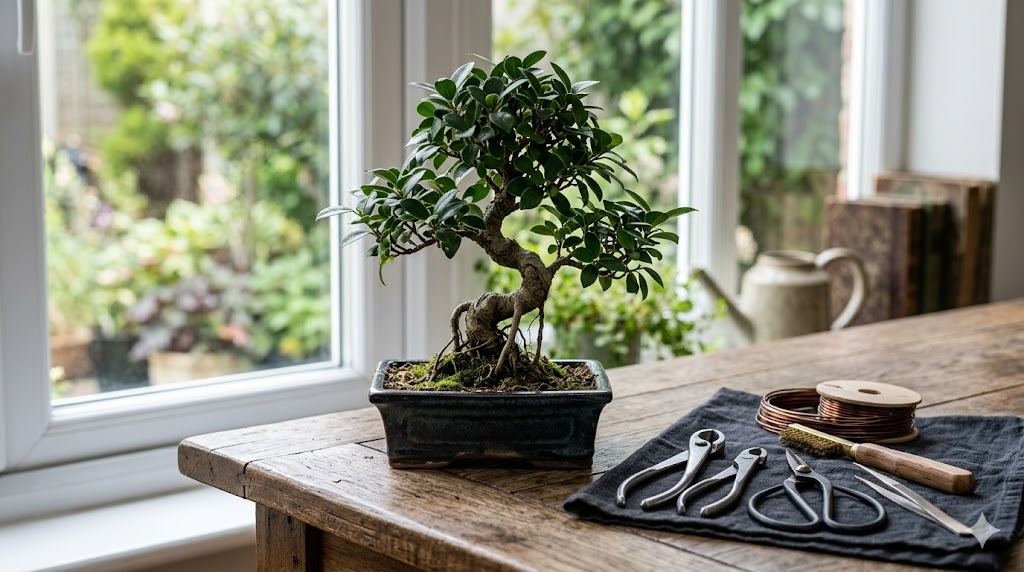
The most forgiving bonsai species. Tolerates indoor light, irregular watering, room temperature. Aerial roots make it visually interesting. Top recommendation.
2. Chinese Elm (Ulmus parvifolia)
Hardy, fast-growing, beautiful small leaves. Can live indoors with bright light or outdoors year-round in mild climates.
3. Jade (Crassula or Portulacaria)
Technically a succulent shaped as a bonsai. Drought-tolerant, very forgiving of forgotten watering. Great for sunny windowsills - the same jade plant many people grow as an ordinary houseplant.
4. Carmona (Fukien Tea)
Glossy small leaves, occasional tiny white flowers. Slightly fussier - needs consistent humidity - but rewarding once you’ve succeeded with a ficus.
5. Schefflera (Hawaiian Umbrella)
Large compound leaves shrink down with regular pruning. Aerial roots over time. Tolerant of low light - see our schefflera care guide for its everyday needs.
Best Beginner Species (Outdoor)
If you have a balcony or garden and can commit to winter protection:
- Juniper - classic bonsai look, very tough outdoors, needs a winter cold rest.
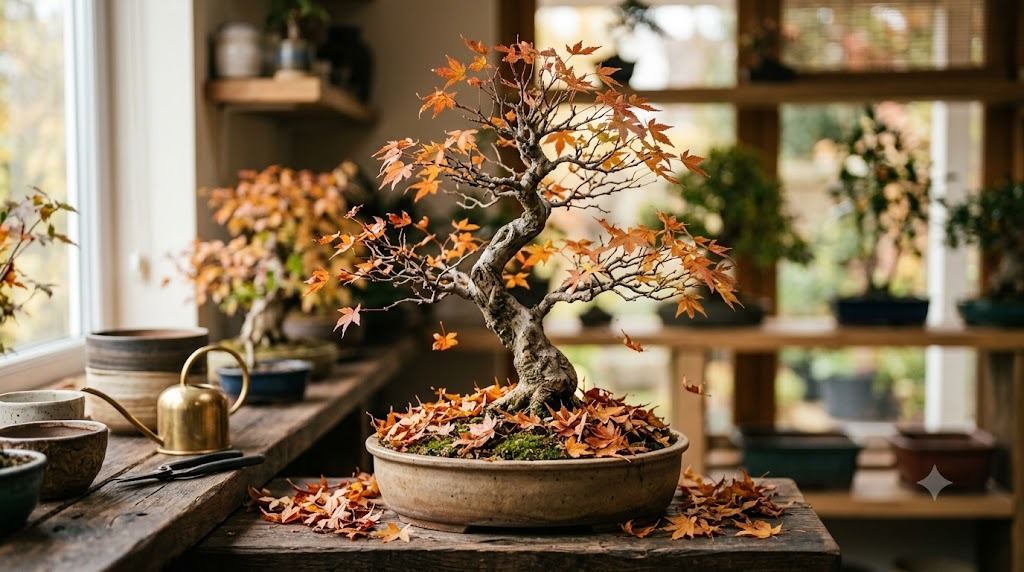
- Japanese Maple - gorgeous autumn colour, slow-growing.
- Pine (Scots, Mountain) - slow, beautiful, long-lived.
- Cotoneaster - small leaves, red berries, easy.
These all need to spend winter outside (or in an unheated shed/garage). Bringing them indoors for winter is what kills most beginner outdoor bonsai.
The Five Things You Actually Need to Know
1. Watering - the #1 killer
Bonsai pots are shallow and dry out faster than normal pots. Check daily by touching the soil. Water when the top is dry - soak until water runs out the bottom holes. Don’t water on a schedule.
In summer, an outdoor bonsai may need water twice a day. In winter (dormant outdoor trees), once a week or less.
2. Light
Indoor bonsai need the brightest possible window. South-facing in the Northern Hemisphere. A grow light (10-12 hours/day) is a worthwhile investment for anywhere darker.
Outdoor bonsai mostly want full sun, with some species preferring afternoon shade in hot climates.
3. Pruning
Light, regular pruning keeps the tree small and dense. Pinch new shoots back to 2-3 leaves once they extend. Hard structural pruning happens in late winter or early spring.
4. Wiring (later)
Skip this for the first year. Wiring is how branches are positioned, but it requires practice - too tight and the wire bites into bark. Learn watering first.
5. Repotting
Every 2-3 years for younger trees, less often as they mature. Repotting is also when you trim 1/3 of the roots - this keeps the tree small. Do it in early spring.
The Minimal Starter Tool Kit
You don’t need a £200 boxed set. The essentials:
- Concave cutter - for clean cuts that heal flush with the branch (£15-25).
- Sharp scissors - for fine pruning of shoots and leaves.
- Chopstick - for working soil into the roots when repotting.
- Watering can with fine rose - gentle flow that won’t blast the soil away.
- A few rolls of bonsai wire - 1mm and 2mm aluminium to start.
- Bonsai soil (akadama, pumice, lava rock mix) - drains fast and holds shape.
You can add a turntable, root rake, and trunk splitter later. Start basic.
Buying Your First Bonsai
Best: a $30-80 specimen from a specialist bonsai nursery (online is fine - they ship well). Ask for “starter” or “pre-bonsai” - these are healthy young trees still cheap.
Acceptable: a garden-centre ficus bonsai in a proper pot.
Avoid: mall-kiosk juniper sold as indoor, novelty “mini bonsai” in glass jars, anything sold with glued-on plastic figures.
Whatever you buy, repot into proper bonsai soil within the first growing season - kiosk plants are almost always in dense, water-retentive muck.
The First-Year Plan
- Month 1: Don’t repot, don’t prune, don’t wire. Just learn its watering needs by checking soil daily.
- Month 2-3: Start light tip-pruning of new growth. Move outdoors in summer if you can.
- Month 4-6: Continue gentle pruning. Begin reading about wiring (don’t do it yet).
- Year 2 (spring): First proper repot into bonsai soil. First gentle wiring of one or two branches.
- Year 3+: Now you’re a bonsai keeper.
Common Beginner Mistakes
- Overwatering - the same killer as for any plant.
- Bringing an outdoor tree indoors for winter. Outdoor bonsai need the cold dormancy. Indoor heating kills them.
- Hard pruning straight away. A stressed kiosk plant needs a year to recover before major work.
- Repotting outside of spring. Repotting in summer or winter shocks the tree.
- Decorative gravel glued on top of the soil. Often found on kiosk trees; suffocates the roots and traps moisture. Remove it.
Frequently Asked Questions
What’s the easiest bonsai for a complete beginner?
A ficus. It tolerates indoor conditions, irregular watering, and beginner mistakes better than any other species. Buy a ginseng ficus or a standard Ficus retusa.
Can I keep a juniper bonsai indoors?
No. Junipers are outdoor trees that need winter cold and full sun. Indoors they slowly weaken and die over 12-18 months. Keep junipers outside or on a sheltered balcony.
How often do I water a bonsai?
Check the soil daily by touch. Water when the top 1 cm is dry - soak until it drains out the bottom. Shallow bonsai pots dry out fast; you may water indoor bonsai 2-4 times a week and outdoor in summer twice a day.
Do bonsai stay small forever?
Yes, if you keep pruning them - including root-pruning at every repot. Stop pruning and a “bonsai” will eventually grow into a normal-sized tree.
How long does it take to grow a “real” bonsai?
Five years to a presentable styled tree. Twenty to a refined one. But you start enjoying the process from year one - refinement is a long arc, not a starting requirement.
🛒 Recommended Gear on Amazon
- Beginner bonsai tree (live) - browse current options and reviews on Amazon.
- Bonsai tool kit - browse current options and reviews on Amazon.
- Bonsai soil mix - browse current options and reviews on Amazon.
As an Amazon Associate, we earn from qualifying purchases - at no extra cost to you. This helps us keep producing free, in-depth guides.