Making Leaf Mold From Fallen Leaves
Leaf mold is what autumn leaves become after about two years of slow breakdown: a free, crumbly soil conditioner and mulch. How to collect and store leaves, which ones need shredding, how to speed it up and how to use the result, following the RHS.
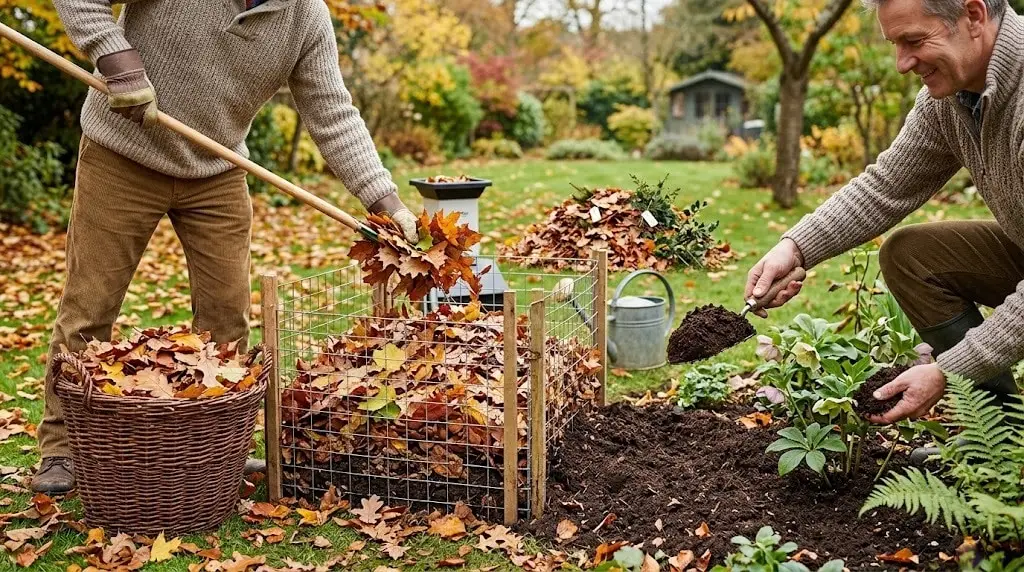
The short version: bag or pile your fallen leaves, keep them damp, leave them for up to two years, and you get leaf mold, which the Royal Horticultural Society calls an invaluable free soil conditioner and a material that is perfect for mulching. It costs nothing but space and patience.
Autumn is the time to start, the RHS says, because that is when most leaves fall.
Which leaves to use
The RHS says all leaves and conifer needles will eventually break down into leaf mold, but some are much quicker than others:
- The best: oak, beech and hornbeam break down with little help and make an excellent leaf mold.
- Thick, slow leaves: sycamore, walnut, horse chestnut and sweet chestnut break down much more slowly and need shredding before they go on the pile, or they can go on the compost heap instead.
- Conifer needles may take two to three years to decay. Conifer hedge clippings are better added to the compost heap.
- Pine needles are worth collecting in a separate pile: they make an acidic leaf mold that is ideal for mulching acid-loving plants such as rhododendrons, azaleas, camellias, pieris and blueberries. Pines shed needles through the year, especially in spring, so gather them gradually.
Where to collect. Leaves from your own garden or public places are fine, but the RHS notes that leaves collected by main roads may be affected by air pollution, so quieter streets and side roads are better, and street leaves can carry litter that needs sorting out first.
Two simple ways to make it
The bag (RHS). Put the leaves into a bin liner, moisten them if they are dry, pierce holes in the bag with a knife or garden fork, tie the top loosely, and stack the bags out of sight for up to two years. This suits small gardens, and the bags are easy to check.
The cage (RHS). Make a square or round frame of chicken wire or similar, held up with stakes or bamboo canes at the corners or around the circle, ideally in a sheltered spot so the leaves are not blown away. Make the heap as large as possible to hasten decay, and moisten it when it gets dry. The RHS says most leaves take about two years to break down.
Either way, the leaves must not dry out: the RHS advises moistening the pile in hot, dry weather. If you have no room for a heap at all, our overview of indoor composting methods covers bokashi, worm bins and countertop units.
How to collect and speed it up
- Collect on a dry, still day, when leaves are easier to gather. If it is windy, rake in the direction the wind is blowing, and pick up large amounts with leaf boards (two flat pieces of plywood or plastic) or a lawn vacuum (RHS).
- Use a rotary mower on the lawn. The RHS says mowing up the leaves shreds them and hastens rotting, and the grass clippings it adds increase the nutrient value of the leaf mold.
- Turn a slow pile. If the pile is slow to break down, the RHS suggests turning it regularly to let air in.
How to use it
The RHS divides leaf mold by age and quality:
- Less than two years old, or of poor quality: use it as a mulch, an autumn top-dressing for lawns, or a winter covering for bare soil.
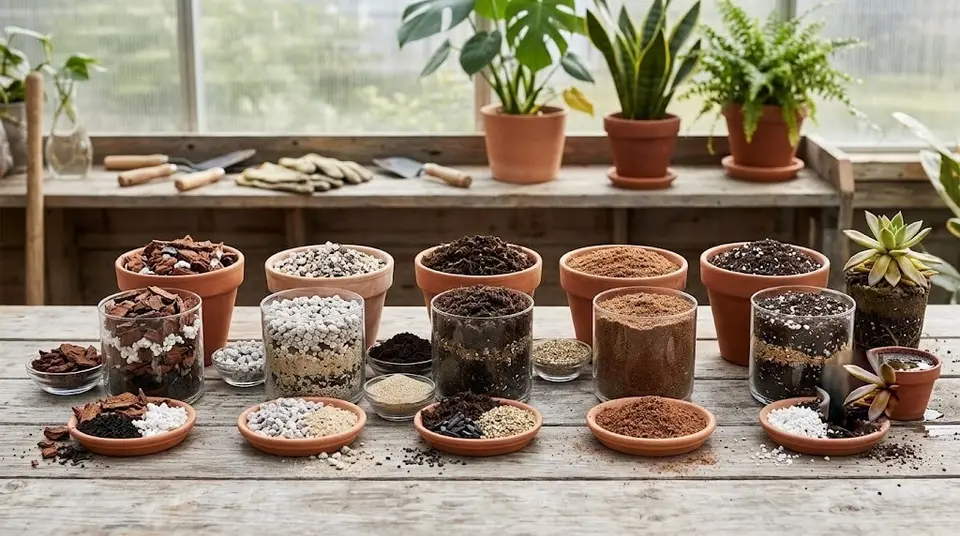
- Good quality and well rotted (more than two years old): it can be used as a seed-sowing compost, or mixed with sharp sand, garden compost and good soil to make a potting compost. The soil mix calculator can help you work out proportions if you blend your own.
Our guide to improving garden soil covers how leaf mold fits alongside other soil improvers.
One caution from the RHS: leaf mold heaps can be colonised by weeds and their seeds, so avoid using it where weed seeds would be a particular problem.
Fitting it into your autumn
Leaf collection slots naturally into the rest of the season’s jobs, and every bag that goes into a corner instead of the waste collection becomes something useful. If you are working through the garden before winter, our fall garden checklist covers the other tasks worth doing while you are out there.
The only real cost is patience: a bag of leaves you fill this autumn can be one of the most useful soil conditioners in your garden two years from now.
Sources
- Royal Horticultural Society, Leafmould. Read 28 October 2026.
Recommended Gear on Amazon
- Jute leaf sacks - browse current options and reviews on Amazon.
- Leaf rake - browse current options and reviews on Amazon.
- Leaf grabber boards - browse current options and reviews on Amazon.
As an Amazon Associate, we earn from qualifying purchases - at no extra cost to you. This helps us keep producing free, in-depth guides.