Terrarium Building Guide
Step-by-step guide to building a terrarium - closed vs open jars, the four-layer drainage system, the best plants for each type, and how to stop mould from ruining it.
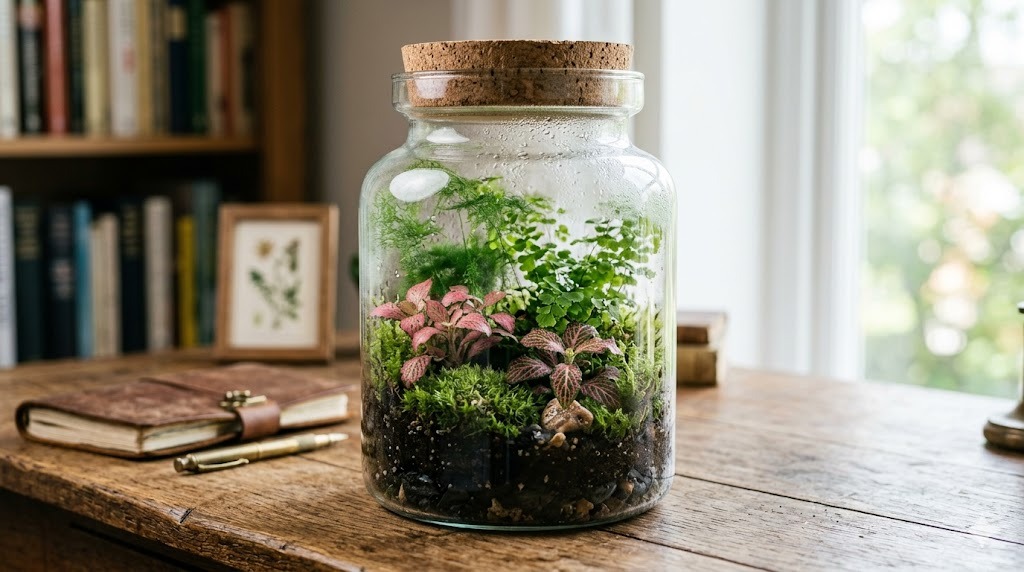
A terrarium is a tiny self-contained ecosystem in a jar - and once you understand how it works, it’s one of the most rewarding indoor plant projects. A well-made closed terrarium goes years without watering. An open terrarium becomes a miniature succulent garden you can actually keep alive on a desk.
The catch is that beginners tend to mix the two up. A closed jar of cacti will rot in three weeks. An open dish of ferns will dry out in a week. The species, the soil, and the lid are not interchangeable. The decision tree starts with one question: do you want a humid jungle or a dry desert?
This guide walks through both - the layered build, the plants that actually thrive, the lighting, and the most common mistake (too much water, every time).
Closed vs Open: Pick the Right One First
Closed Terrarium (Humid Jungle)
- Container: Sealed glass - old apothecary jar, kilner jar, sealed bottle, geometric glass dome with lid.
- Climate: High humidity (often 90%+), low airflow. Water recycles through the lid as condensation and drips back down.
- Watering: Maybe twice a year, sometimes never. Truly self-sustaining when built right.
- Plants: Moisture-loving tropicals - moss, ferns, fittonia, baby tears, small selaginella, peperomia.
- Light: Bright indirect - never direct sun (cooks the inside).
Open Terrarium (Dry Desert / Dish Garden)
- Container: Open bowl, fish bowl, brandy glass, geometric open glass.
- Climate: Like a normal pot - air dries it out steadily.
- Watering: Every 2-4 weeks, lightly.
- Plants: Succulents, cacti, air plants, drought-tolerant herbs (rosemary, thyme).
- Light: Bright direct - succulents need real sun.
If you want low maintenance: closed terrarium with mossy tropicals. If you want bright sculptural appeal: open terrarium with succulents.
The Four-Layer Build (Both Types)
The standard structure prevents soggy soil and root rot - non-negotiable for closed terrariums, helpful for open.
- Drainage layer (2-3 cm) - small pebbles, hydroton clay balls, or aquarium gravel. Excess water collects here below root level.
- Filter layer (1 cm) - mesh or activated charcoal. Stops soil washing into the drainage and (charcoal) reduces odours and mould.
- Soil layer (4-10 cm) - depends on plant root depth and container size.
- Closed: tropical mix (peat-based or coco coir + perlite).
- Open: cactus/succulent mix (gritty, fast-draining).
- Decor layer (optional) - small stones, bark, moss, miniature figurines if that’s your style.
For very small terrariums (under 15 cm), thin the layers proportionally. For very large ones, scale up.
Step-by-Step Build
Step 1 - Clean the container
Wash with soapy water, rinse with diluted vinegar, dry completely. Dirty glass grows mould faster.
Step 2 - Add drainage and filter
Pour in pebbles and level. Sprinkle activated charcoal in a thin layer over it.
Step 3 - Add soil
Pour soil to your planned depth. Sculpt slight hills if you want - terrarium landscapes look better with elevation.
Step 4 - Plan layout before planting
Set plants on top in their pots first. Move them until the composition works. Tallest at the back, smallest in front, odd numbers feel more natural.
Step 5 - Plant
Make a hole with a chopstick or spoon. Slide each plant out of its nursery pot, gently shake off excess soil, place, firm in. Long tweezers are useful for small jars.
Step 6 - Decorate
Add moss, small stones, decorative figures. Less is more.
Step 7 - Water (carefully)
- Closed: mist with a spray bottle until the soil is just damp. Walls should fog slightly but not stream water.
- Open: water with a turkey baster or small watering can, around the plants - not soaking the whole soil.
Step 8 - Position and observe
Bright indirect light for closed; bright direct for open succulents. Watch for the first two weeks - if condensation is constant on the closed jar walls, lift the lid for a day. If the soil dries to dust in an open dish, water lightly.
Best Plants for Closed Terrariums
These love humidity and confined space:
- Mosses - sheet moss, cushion moss, mood moss; the bedrock of every closed terrarium.
- Fittonia (nerve plant) - small, colourful pink or white veined leaves; classic terrarium plant.
- Baby tears (Soleirolia soleirolii) - carpet of tiny round leaves; covers surfaces.
- Selaginella (spike moss) - fern-like ground cover, loves humidity.
- Small ferns - button fern, lemon button fern, polypody.
- Peperomia - compact, varied leaves, slow.
- Small begonia - for colour and pattern.
Avoid: anything that grows fast (will outgrow the jar in months), succulents (will rot), most flowering plants (flowers die and rot).
Best Plants for Open Terrariums
Succulents and slow-growing desert plants:
- Echeveria - classic rosettes.
- Haworthia - small, sculptural, tolerates lower light than echeveria.
- Sempervivum (hen-and-chicks) - cold-hardy if your terrarium goes outside.
- Small cacti - golden barrel, mammillaria, bunny ears.
- Air plants (Tillandsia) - no soil needed; just rest on stones or bark.
- Sedum varieties - colourful, trailing options.
Avoid: ferns, mosses, anything that wants damp.
Lighting
- Closed terrarium: bright indirect - a north-facing window or 1-2 metres back from a south window. Direct sun cooks the closed environment to 50°C+ within an hour.
- Open terrarium: bright indirect to direct. Succulents and cacti want at least 4 hours of direct sun. A grow light works for darker rooms.
How to Stop Mould (The Number-One Failure)
White or grey fuzz on soil, moss, or decor is the most common closed terrarium failure. Causes:
- Too wet at build. Don’t soak the substrate when watering after building - light mist only.
- No charcoal layer. Always include activated horticultural charcoal.
- Dead plant material. Remove yellowing leaves immediately.
- No airflow at all, ever. Open the lid for 1-2 hours every couple of weeks to refresh air.
If mould appears: remove the infected plant material, wipe the glass with a paper towel, leave the lid off for a day or two, and consider adding a few springtails (Folsomia candida) - tiny harmless bugs that eat mould and are the secret weapon of professional terrarium builders.
Maintenance Calendar
Closed terrarium:
- Daily: glance at condensation; if walls are streaming, lift lid for an hour.
- Weekly: check for yellow leaves or mould.
- Monthly: open lid for a few hours to refresh air.
- Annually: trim or replace overgrown plants.
- Watering: only when soil clearly dries out - often every 3-12 months.
Open terrarium:
- Weekly: check soil, mist or water lightly if dry.
- Monthly: wipe inside of glass to remove dust and water marks.
- Annually: replace any spent plants.
- Watering: every 2-4 weeks for succulents in normal indoor air.
Frequently Asked Questions
How often do I water a closed terrarium?
Often, never - or maybe twice a year if it’s slightly underwatered at build. Closed terrariums recycle their own water through condensation. The signal to water is dry soil with no daily fogging on the walls.
Can I put succulents in a closed terrarium?
No. Succulents need dry air and rot quickly in the humid environment of a closed jar. They belong in open terrariums or dish gardens.
Why is my terrarium growing mould?
Too wet, no charcoal layer, dead plant material left in, or no occasional airing. Remove the affected material, wipe the glass, leave the lid off briefly, and consider adding springtails.
What’s the best plant for a beginner terrarium?
Fittonia in a closed terrarium - they’re colourful, forgiving, and signal stress (droopy leaves) clearly before they die. For open terrariums, haworthia is the easiest succulent.
Do terrariums need direct sunlight?
Closed terrariums - no, never. Direct sun cooks them. Bright indirect only. Open terrariums with succulents - yes, they need direct sun like any other succulent.
🛒 Recommended Gear on Amazon
- Glass terrarium container - browse current options and reviews on Amazon.
- Terrarium kit with plants - browse current options and reviews on Amazon.
- Activated charcoal for terrariums - browse current options and reviews on Amazon.
As an Amazon Associate, we earn from qualifying purchases - at no extra cost to you. This helps us keep producing free, in-depth guides.