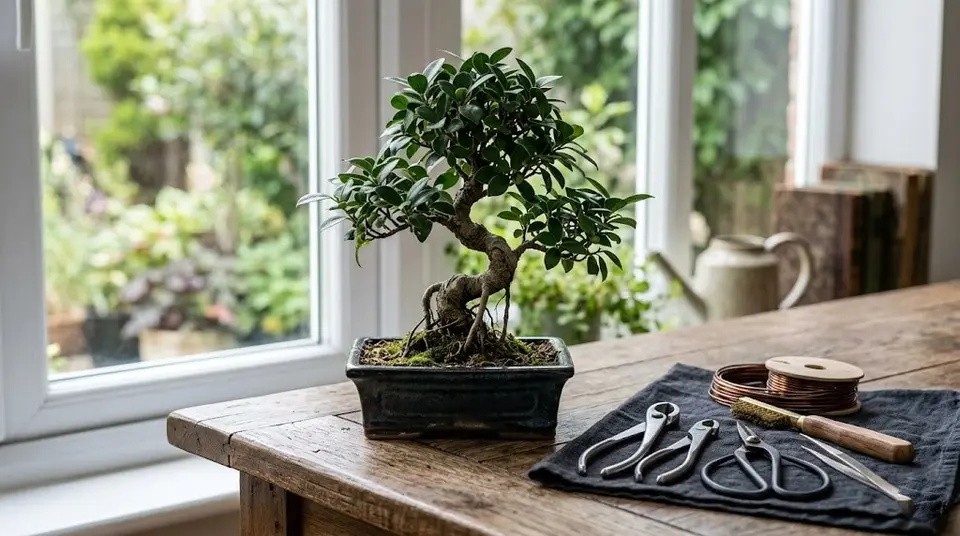
Why Bonsai Drop Their Leaves
The short answer: most bonsai leaf drop is a reaction to stress or change - watering, draughts, low light, a move - or a deciduous tree doing what it does every autumn. How to tell normal shedding from trouble, and why outdoor species do not belong indoors, following the RHS and Clemson University.
The short answer: a bonsai that drops leaves is usually reacting to stress or change, such as a watering slip, a draught, too little light or a move, and it often recovers once conditions settle. Two cases need separating out first: deciduous trees shedding in autumn, which is normal, and outdoor tree species being kept indoors, which is a mistake. This guide follows the Royal Horticultural Society’s bonsai page and Clemson University’s factsheet on the weeping fig, the classic indoor bonsai.
First, rule out the normal reasons
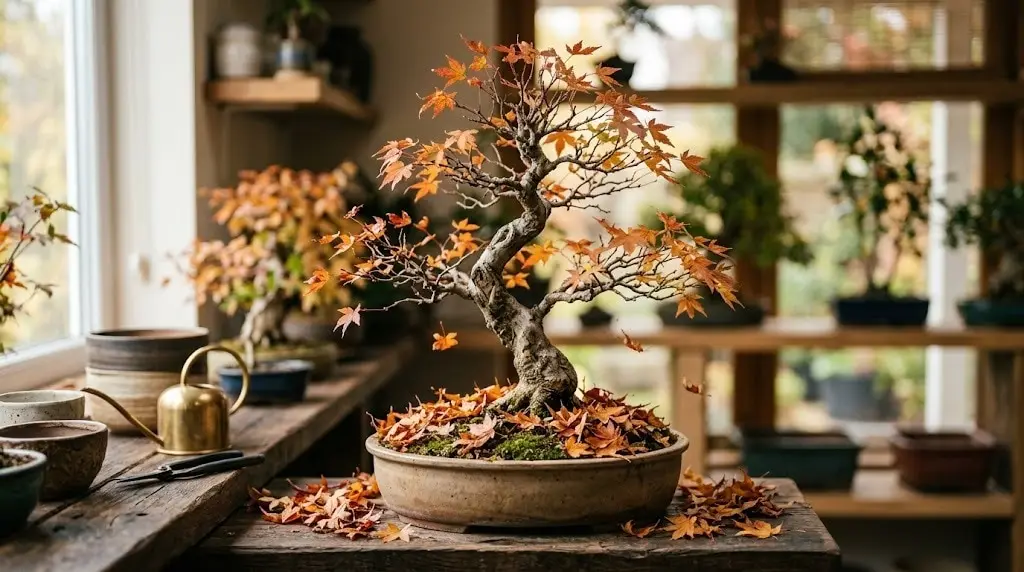
- Deciduous trees shed in autumn. The RHS defines deciduous plants as those that lose their leaves seasonally, usually in autumn. Deciduous bonsai such as Japanese maple and larch, which the RHS lists among good outdoor bonsai, are bare in winter because that is their nature.
- Indoor bonsai renew some leaves. The RHS notes that, depending on the species, some indoor bonsai lose a few old leaves in spring to make way for new ones.
- A new home. Clemson notes that weeping figs often shed leaves when moved to a new place or repotted, and that if conditions are good the tree adjusts, stops dropping leaves and puts out healthy new growth.
If your tree fits one of these, the fix is patience and steady care.
The stress reasons
Clemson says weeping figs seem to react to almost any stress by shedding leaves, and names the usual causes:
- Watering, in both directions. Overwatering and underwatering both cause leaf drop. The RHS points out that bonsai grow in small, often shallow containers that hold little water and can dry out quickly, so water whenever needed (once or twice a day in summer for outdoor trees), aiming to keep the compost just moist, and check through the year, because a dry week in winter can catch you out. Never leave the tree standing in water (Clemson).
- Draughts and heating. Clemson warns that placing a weeping fig near a heat vent or a draught causes excessive leaf drop.
- Too little light. Low light is one of Clemson’s causes. The RHS says indoor bonsai, usually tropical or semi-tropical species, need lots of light, a constant temperature and humidity.
- Lack of nitrogen. Clemson lists it too. The RHS suggests a balanced liquid feed at a low dose every two weeks in the growing season once the slow-release fertiliser added at repotting is used up, and warns that overfeeding produces excessive growth prone to pests and disease.
Outdoor trees kept indoors
The RHS notes that most trees and shrubs can be grown as outdoor bonsai, naming Scots pine, larch, maidenhair tree, yew and Japanese maple among good species to start with, while indoor bonsai are usually tropical or semi-tropical species such as Chinese elm, silver jade plant, weeping fig, celtis and olive. A temperate outdoor species kept in a heated room is outside the conditions it is grown for. Our bonsai catalog marks every tree as indoor or outdoor, so check yours first.
What to do
- Identify your species and check whether it is an indoor or an outdoor tree: that decides everything else. Each profile in the bonsai catalog covers it.
- Fix the position: bright, away from heat vents and draughts for indoor trees (Clemson, RHS), and outdoors for outdoor species.
- Fix the watering: check often, keep the compost just moist, water gently with a fine rose so it soaks in rather than running off, and use rainwater if you can, which the RHS says reduces the build-up of minerals in the compost.
- Give it time. Clemson notes a weeping fig that has been moved will adjust and put out new growth once conditions are right.
Where this leaves you
Leaf drop is a symptom, not a disease: it is a bonsai’s way of showing that something changed. Autumn shedding on a deciduous tree is normal; watering, draughts, light and a recent move are the usual stresses; and an outdoor species indoors needs moving outside. Work out which you have before you change anything.
Sources
- Royal Horticultural Society, Bonsai: growing miniature trees. Read 28 October 2026.
- Clemson University Home & Garden Information Center, Weeping Ficus. Read 28 October 2026.
Recommended Gear on Amazon
- Bonsai tool set - browse current options and reviews on Amazon.
- Watering can with fine rose - browse current options and reviews on Amazon.
- LED grow light - browse current options and reviews on Amazon.
As an Amazon Associate, we earn from qualifying purchases - at no extra cost to you. This helps us keep producing free, in-depth guides.