Amazon Sword
The Amazon sword is the classic rooted centrepiece plant - a big rosette of broad green blades that fills the back of a tank and, once established, grows fast enough to be a genuine nutrient sponge.
Last reviewed: October 2026
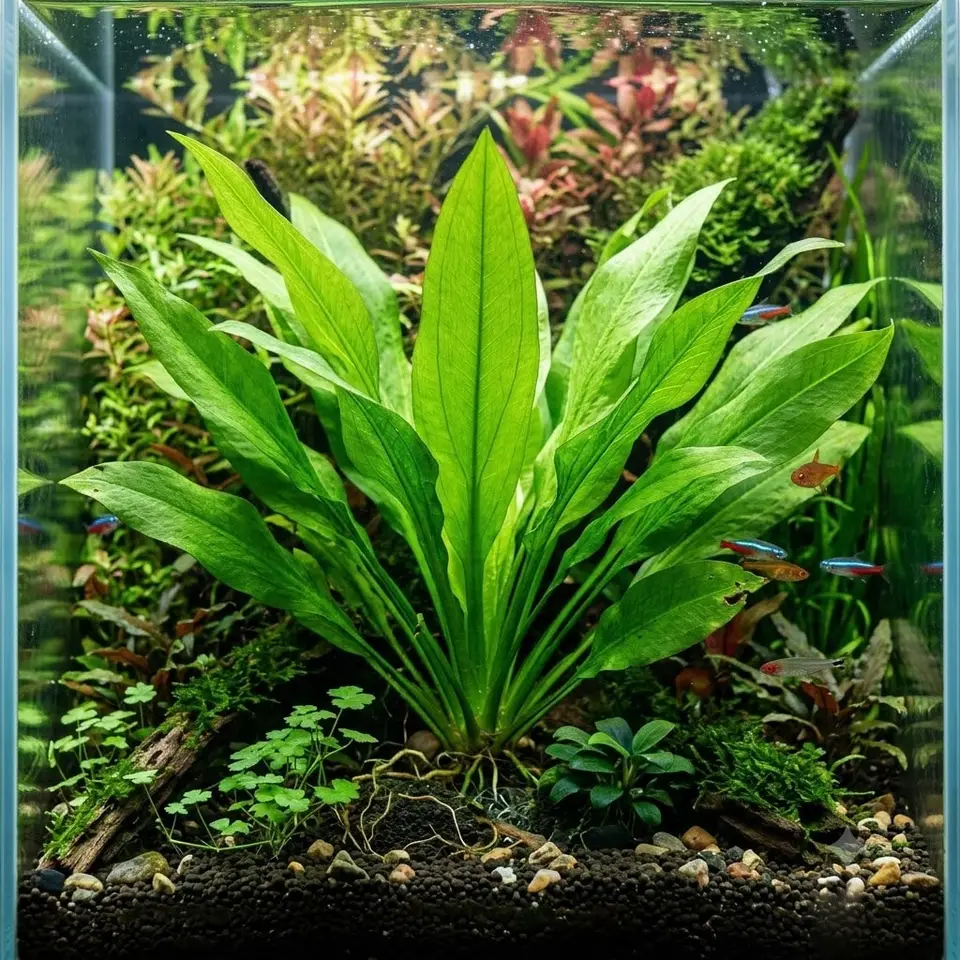 AI illustration
Overview
The Amazon sword is the classic rooted centrepiece plant - a big rosette of broad green blades that fills the back of a tank and, once established, grows fast enough to be a genuine nutrient sponge. It is a heavy root feeder, so it wants a rich substrate or root tabs. (Echinodorus grisebachii.)
Origin & Natural Habitat
South America, in and along the margins of rivers and floodplains across the Amazon basin.
Appearance
A dense rosette of lance-shaped bright-green leaves 20-50 cm long; a large, mature plant can dominate a 200-litre tank.
Why People Grow It - Qualities & Benefits
- Big, dramatic background centrepiece
- Fast growth soaks up nitrate
- Undemanding once rooted
- Long-lived and easy to propagate
Care
Light: Moderate to high; more light means faster, denser growth.
Water: 22-28°C, pH 6.5-7.5, soft to moderately hard.
Substrate: Nutrient-rich, or plain gravel/sand plus root tabs - it feeds mainly through its roots.
CO₂ & feeding: Optional; grows without it but faster and lusher with CO2 and root feeding.
Placement: Background or centrepiece - give it room; it gets large.
Extra: New sword plants often melt back after planting while they switch from farm-grown emersed leaves to submerged ones. Do not pull it up - keep the roots in and new underwater leaves will follow.
Propagation
It sends out runners (flower stalks) bearing baby plants; detach and plant them once rooted.
Common Problems & Pests
Pale leaves with green veins = iron/nutrient deficiency (add root tabs). Melting = transition or too little light.
Toxicity & Safety
Not on the ASPCA lists. The ASPCA Animal Poison Control Center's plant lists for cats and dogs have no entry for this plant, and we have no other checked source either way. If a pet chews it and seems unwell, call your vet or a pet poison helpline.
Best Suited For
- Background and centrepiece planting
- Nutrient export in stocked tanks
- Beginners willing to feed the roots
- Larger aquariums
FAQ
My sword is falling apart after I planted it - what went wrong?
Usually normal transition melt. The farmed plant grew above water; underwater leaves now replace those. Leave the roots undisturbed and feed the substrate.
Why are the leaves pale with dark veins?
Iron and nutrient deficiency - swords are heavy root feeders. Push root tabs into the substrate near the crown.
Gear for growing amazon sword
Links go to Amazon or a partner store (such as Adagio Teas) and may earn us a commission at no extra cost to you. As an Amazon Associate we earn from qualifying purchases. We link gear types, not sponsors' picks: you choose the exact product.