Byblis (Rainbow Plant)
Byblis, the rainbow plant, is a haze of thread-fine leaves beaded in glue that splits sunlight into prisms, dotted with mauve flowers.
Last reviewed: October 2026
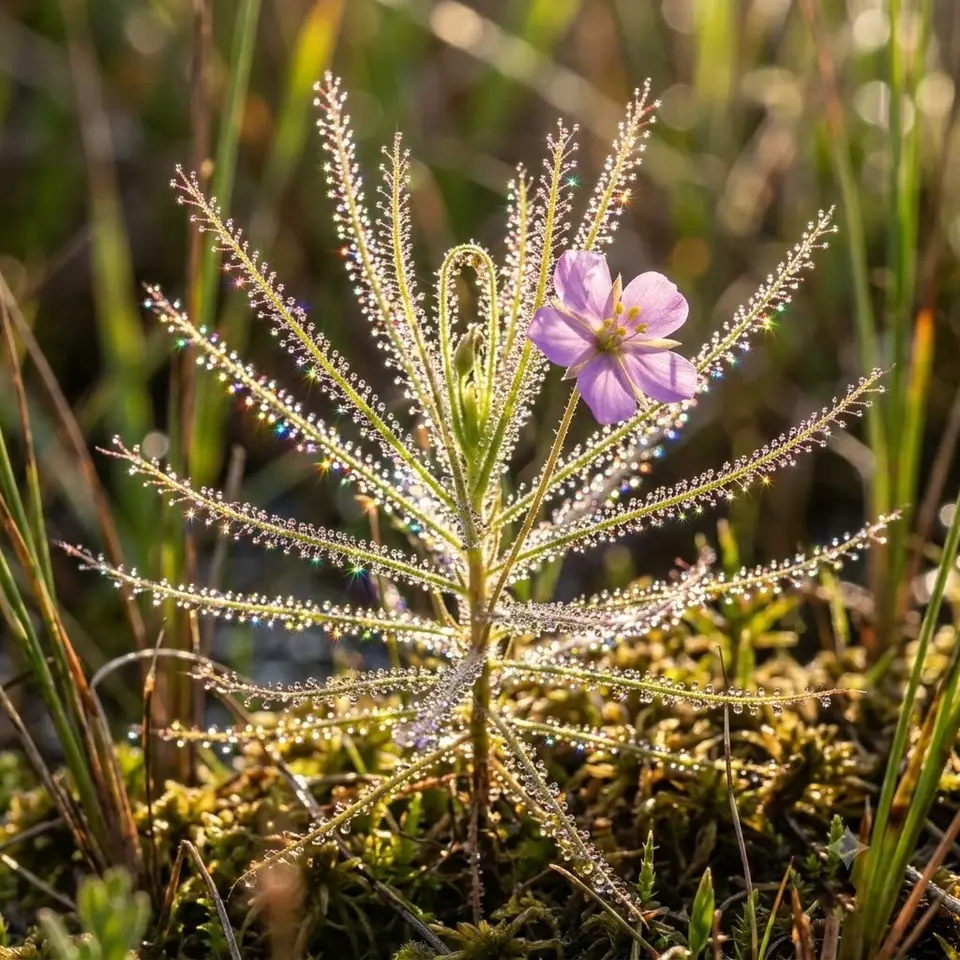 AI illustration
Overview
Byblis, the rainbow plant, is a haze of thread-fine leaves beaded in glue that splits sunlight into prisms, dotted with mauve flowers. The commonly grown annual species live fast: seed to sparkling half-meter bush to seed again in a year: flypaper as a delicate glittering annual. (Byblis.)
Origin & Natural Habitat
Sandy seasonal wetlands of northern Australia - annual species (liniflora and kin) sprint through the wet season; rarer perennials in the southwest.
Appearance
Feathery uprights 15-60 cm, every thread-leaf beaded with sticky prisms - backlit plants literally rainbow; simple 5-petal mauve/violet blooms all season.
Why People Grow It - Qualities & Benefits
- The sparkle: no plant glitters like backlit Byblis
- Fine-textured contrast to chunky pitchers
- Season-long violet flowering
- An annual's speed: sowing to spectacle in months
Care
Light: Bright with real sun - the sparkle IS light; grow lights serve well.
Water: Rain, distilled or RO water ONLY - tap-water minerals poison carnivorous roots within months. The tray method (pot standing in 1-2 cm of pure water) is standard. Moist tray culture through the season.
Soil: Sandier blend: peat + majority silica sand - their native seep-sand analog.
Temperature & Dormancy: Warm season 18-30°C; the common annuals then flower, seed and die on schedule - collect seed, repeat. (Not failure; life cycle.)
Feeding: Gnats and midges self-stick; light misting of tiny prey optional.
Propagation
Seed - the whole strategy: collect from spent plants, sow warm (liniflora germinates readily; some kin want smoke treatment: use smoke discs), enjoy the annual rhythm.
Common Problems & Pests
- Mourning an annual's natural death (plan the seed cycle)
- Damp-off of seedlings in stale air
- Aphids hiding below the glue line
- Support for lanky glitter (a twig suffices)
Toxicity & Safety
Not on the ASPCA lists. The ASPCA Animal Poison Control Center's plant lists for cats and dogs have no entry for this plant, and we have no other checked source either way. If a pet chews it and seems unwell, call your vet or a pet poison helpline.
Pros & Cons
Pros
- Unique prismatic beauty
- Fast and generous from seed
- Continuous bloom
Cons
- Common species are annuals: by design
- Fragile stems
- Seed logistics each year
Best Suited For
- Backlit windowsills (east/west magic)
- Photographers of plants
- Seed-cycle enjoyers
- Texture collectors
FAQ
My rainbow plant died after flowering heavily - what went wrong?
Nothing - B. liniflora is a true annual: it sprinted, sparkled, seeded and finished. The seeds in your tray are next year's plant; the cycle is the plant.
Is it a sundew?
Convergent cousin, different family - passive flypaper without the sundew's moving tentacles; the prey sticks, the glands digest, the leaves never curl.
Gear for growing byblis (rainbow plant)
Links go to Amazon or a partner store (such as Adagio Teas) and may earn us a commission at no extra cost to you. As an Amazon Associate we earn from qualifying purchases. We link gear types, not sponsors' picks: you choose the exact product.