Hoya Bella
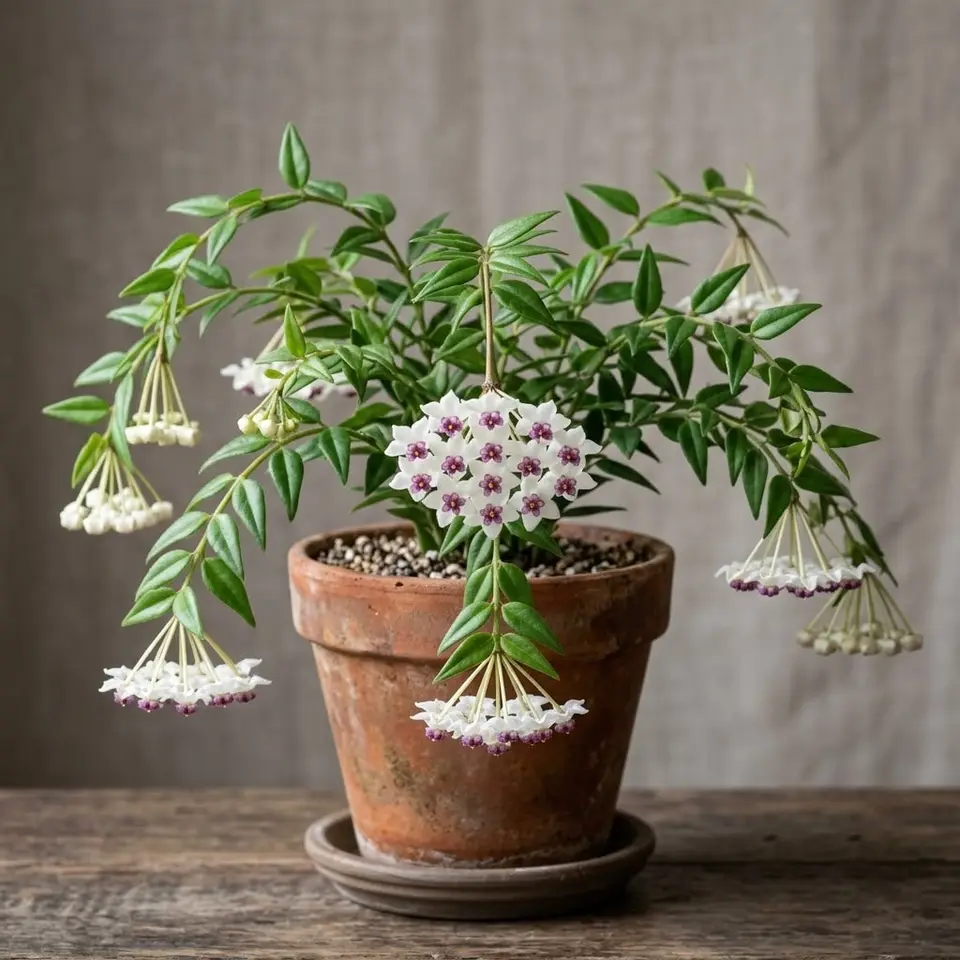
Hoya bella is a dainty, arching miniature shrublet whose thin little leaves disappear each summer under dozens of jasmine-scented white-and-purple stars.
Last reviewed: October 2026
 AI illustration
Overview
Hoya bella is a dainty, arching miniature shrublet whose thin little leaves disappear each summer under dozens of jasmine-scented white-and-purple stars. It asks for slightly different care than the succulent hoyas, and repays it with the genus's most generous flowering. (Hoya lanceolata ssp. bella.)
Origin & Natural Habitat
Himalayan foothills of India, Myanmar and southern China - cooler, moister, higher than most hoya homelands; it grows as a true epiphyte in moss on branches.
Appearance
Small lance leaves on slender arching-then-cascading stems 30-60 cm; profuse summer umbels of porcelain-white stars with amethyst crowns, sweetly jasmine-scented - often blooming the first year.
Why People Grow It - Qualities & Benefits
- The most flower-per-plant of any common hoya
- Perfumes a whole room on summer evenings
- Compact: a hoya for small spaces
- Blooms young, no five-year wait
Care
Light: Bright indirect; gentler than the sun-lovers - think orchid light, not cactus light.
Water: More even moisture than succulent hoyas: water when the top third dries; its thin leaves store less. Never swampy.
Soil: Extra-airy epiphyte mix - fine bark + perlite + sphagnum; it hates heavy soil most of all hoyas.
Temperature & Humidity: 15-26°C - appreciates cooler nights (Himalayan genes); avoid hot dry drafts.
Feeding: Weakly, every two weeks in the flowering season.
Extra: Hang it at nose height: the down-facing umbels and evening jasmine scent are designed (literally) to be looked up at. Leave every spur for rebloom.
Propagation
Tip cuttings root fast in sphagnum; bella also layers itself where stems touch moss - the easiest 'oops, more plants' hoya.
Common Problems & Pests
- Drying out (thin leaves crisp faster than succulent kin)
- Root rot in dense mixes: the #1 bella killer
- Aphids on buds
- Leaf drop from hot dry air
Toxicity & Safety
Not on the ASPCA lists. The ASPCA Animal Poison Control Center's plant lists for cats and dogs have no entry for this plant (they do have entries for relatives, such as Hoya carnosa and Hoya publcalyx), and we have no other checked source either way. The sap is mildly irritating, as with all hoyas. If a pet chews it and seems unwell, call your vet or a pet poison helpline.
Pros & Cons
Pros
- Blooms young and massively
- Heavenly evening fragrance
- Compact hanging habit
- Fast to propagate
Cons
- Less drought-armor than most hoyas
- Dislikes heat waves
- Shorter-lived unless refreshed from cuttings
Best Suited For
- Hanging baskets at face height
- Small apartments needing scent
- Cooler bright rooms
- Impatient hoya-curious growers
FAQ
Why is bella care advice different from my other hoyas?
Geography: it's a cool-foothill epiphyte, not a dry-forest succulent - more even moisture, airier roots, gentler light. Treat it half-orchid.
When does it flower?
Summer, generously, often in its first year from a cutting - the anti-kerrii. Feed weakly every two weeks and don't move it once budded.
Why did leaves crisp and drop in August?
Heat + dry air + a missed watering - bella's thin leaves have no reserves. A cooler spot and steadier moisture restore it from the stems.
Gear for growing hoya bella
Links go to Amazon or a partner store (such as Adagio Teas) and may earn us a commission at no extra cost to you. As an Amazon Associate we earn from qualifying purchases. We link gear types, not sponsors' picks: you choose the exact product.