Hoya Linearis
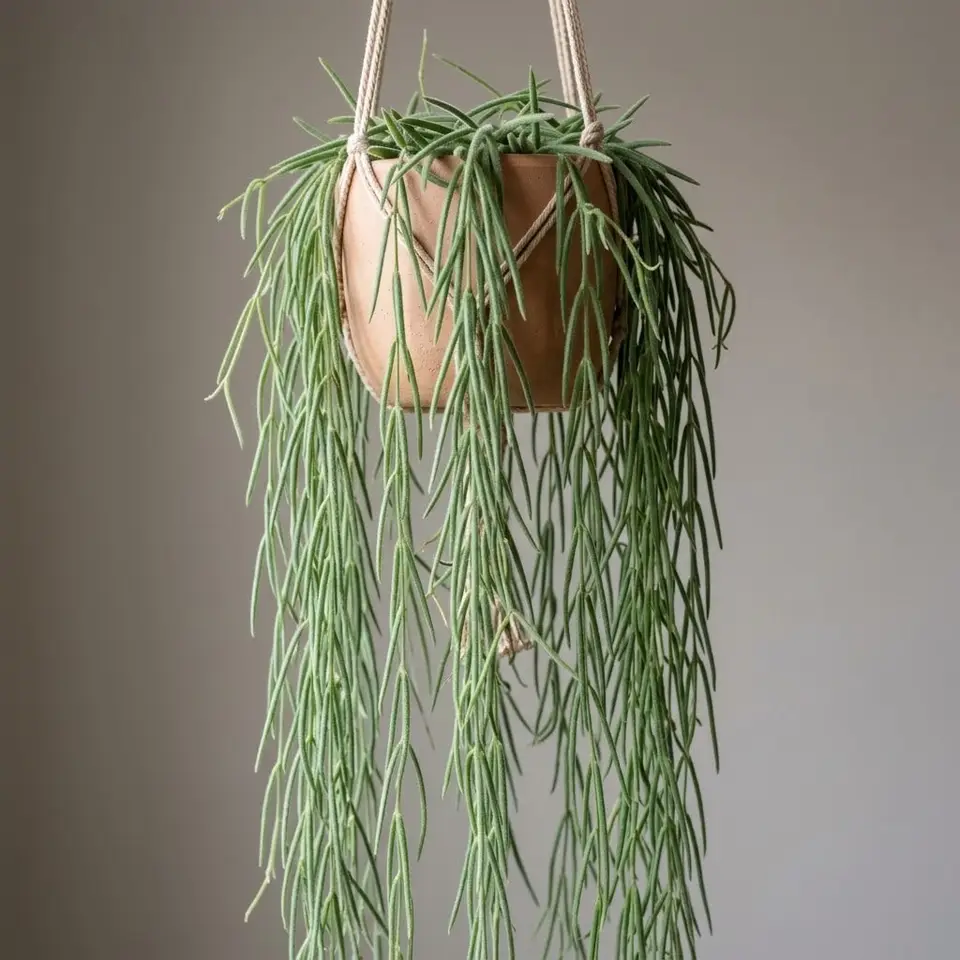
Hoya linearis looks like no other hoya - a waterfall of soft, needle-thin, fuzzy strands cascading a meter or more, closer to a green horsetail than a wax plant.
Last reviewed: October 2026
 AI illustration
Overview
Hoya linearis looks like no other hoya - a waterfall of soft, needle-thin, fuzzy strands cascading a meter or more, closer to a green horsetail than a wax plant. It is the genus's supermodel: stunning, sought-after, and requiring noticeably more attention than its succulent cousins. (Hoya linearis.)
Origin & Natural Habitat
High Himalayan epiphyte (India, Nepal, southern China) draping from mossy branches in cool, humid, bright cloud forest - the care sheet writes itself from that sentence.
Appearance
Slender, grooved, downy leaves like soft pine needles on hanging stems to 1-2 m; white lemon-scented stars in loose umbels at strand tips in fall.
Why People Grow It - Qualities & Benefits
- The most dramatic cascading foliage in the genus
- Elegant in a way chunky hoyas aren't
- Lemon-scented autumn flowers
- Statement piece for bright humid rooms
Care
Light: Bright indirect - a north-lit conservatory or an east window; harsh sun scorches the fine strands.
Water: Even, light moisture - the needle leaves store little; water when the top dries, never bone-dry, never soggy.
Soil: The airiest mix you own: fine bark, perlite, sphagnum. Many keepers grow it half-in-moss.
Temperature & Humidity: 13-24°C - it LIKES cool nights and resents tropical heat; the Himalayan hoya rules apply.
Feeding: Weak monthly feeding in growth.
Extra: Humidity 50%+ keeps strands plump; hot dry rooms shed them. Handle gently - strands detach at joints and don't reattach. Hang high; it grows down.
What to Buy
| Product | Type | What the maker states | Links |
|---|---|---|---|
| Espoma Indoor! | Organic liquid plant food | For all houseplants; 2 teaspoons per quart of water, every 2 to 4 weeks | See on Amazon · Maker's page |
| Espoma Organic Potting Mix | Potting mix | For indoor and outdoor containers; processed forest products, sphagnum peat moss, perlite, humus and limestone, with organic nutrients and mycorrhizae | See on Amazon · Maker's page |
| Espoma Organic Perlite | Perlite | Lightweight volcanic granules that create pore space and prevent compaction in potting mixes | See on Amazon · Maker's page |
How we put this together. The products are described from the maker's own pages, checked on 26 October 2026; we have not trialed them. There are no prices here: the Amazon links search for the exact product, and we may earn a commission if you buy through them.
Propagation
Strand cuttings (few nodes) laid on or stuck in damp sphagnum root in weeks; take several - singles look sparse and colonies insure against losses.
Common Problems & Pests
- Strand shedding from heat/drought/dry air: the classic complaint
- Rot in stagnant wet moss
- Fragile joints during handling/repot
- Slow recovery from any setback
Toxicity & Safety
Not on the ASPCA lists. The ASPCA Animal Poison Control Center's plant lists for cats and dogs have no entry for this plant (they do have entries for relatives, such as Hoya carnosa and Hoya publcalyx), and we have no other checked source either way. If a pet chews it and seems unwell, call your vet or a pet poison helpline.
Pros & Cons
Pros
- Unmatched cascade drama
- Cool-room compatible
- Scented fall bloom
- Light, airy visual texture
Cons
- Least forgiving popular hoya
- Needs humidity + evenness
- Fragile to handle
- Pricier per strand
Best Suited For
- Bright bathrooms and conservatories
- Cool bedrooms with an east window
- Experienced hoya growers levelling up
- High hanging displays
FAQ
What do Hoya linearis leaves look like up close? Nearly cylindrical, 1 to 2 inches (25 to 51 mm) long, which is what gives the strands their needle-like look (Wikipedia).
Why do strands keep falling off?
Stress shedding - usually heat, dry air or a missed watering. Stabilize conditions (cooler, ~50% humidity, even moisture) and it holds; the dropped strands can be rooted as insurance.
Is linearis a beginner hoya?
Honestly no - it's an alpine cloud-forest plant in a genus of camels. After a year of success with bella or carnosa types, it's a worthy graduation.
Can I grow it warm?
Persistently above ~27°C it declines - this is the hoya for the COOL bright room that tropicals hate. Match the plant to the room you actually have.
Gear for growing hoya linearis
Links go to Amazon or a partner store (such as Adagio Teas) and may earn us a commission at no extra cost to you. As an Amazon Associate we earn from qualifying purchases. We link gear types, not sponsors' picks: you choose the exact product.