Windowsill Herb Garden
A practical guide to growing herbs on a windowsill - light needs, pots and drainage, watering, the best beginner herbs, harvesting for more growth, and fixing common problems.
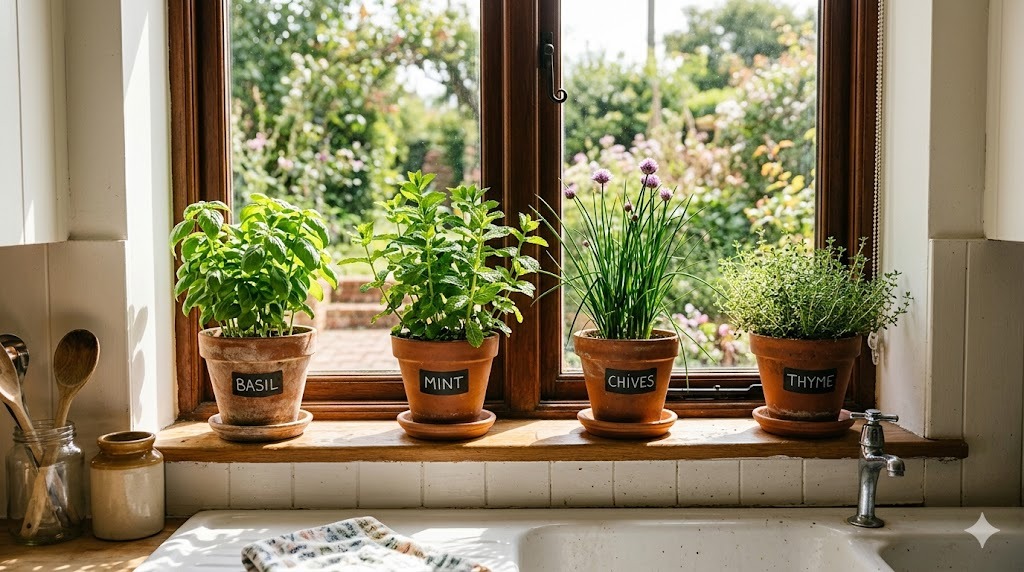
A windowsill herb garden is the most useful patch of growing space in any home: a few pots within arm’s reach of the stove, ready to snip into whatever you’re cooking. It’s also forgiving enough for a complete beginner, as long as you get the basics right. The single biggest factor isn’t your green thumb - it’s light.
Light: the make-or-break factor
Herbs are sun plants, and most indoor failures come down to too little of it.
- Aim for a south-facing window (north-facing in the southern hemisphere) that gets at least 6 hours of direct sun a day. East- or west-facing windows can work for the more tolerant herbs but expect leggier, slower growth.
- Signs of too little light: long, stretched, pale stems with wide gaps between leaves (this is called being “leggy”), and a plant that leans hard toward the glass.
- Turn the pots a quarter-turn every few days so they grow evenly instead of all leaning one way.
- If your brightest window still isn’t enough - common in winter or a shaded flat - a small LED grow light on a timer for 12 to 14 hours a day makes the difference between surviving and thriving.
Be honest about your light before you buy plants. The right herb in a dim window will still struggle; matching the herb to the light you actually have is half the battle.
Pots and drainage
Herbs hate sitting in waterlogged soil, so the container matters as much as the plant.
- Every pot needs a drainage hole. This is not optional - without one, water collects at the bottom and rots the roots. If you love a decorative pot with no hole, grow the herb in a plain plastic nursery pot and drop that inside it.
- Use a saucer under each pot and tip out any water that collects after watering.
- Pick a pot of reasonable size - at least 15 cm / 6 inches across. Tiny pots dry out within hours and cramp the roots.
- Use a free-draining potting mix, not garden soil, which compacts hard in a container. A general-purpose potting mix is fine; a handful of perlite improves drainage further.
- Give each herb its own pot where you can, or group only herbs with similar needs together (see below). One pot crammed with rivals rarely ends well.
Watering
More windowsill herbs die from overwatering than from drought.
- Check before you pour. Push a finger an inch into the soil; water only when it feels dry at that depth. On a sunny sill that might be every day in summer and once a week in winter - there is no fixed schedule.
- Water thoroughly, until it runs out the drainage hole, then let the pot drain fully. Light daily sips encourage shallow roots; a proper soak followed by a dry-down is better.
- Never let a pot stand in a saucer of water. Tip the excess away.
- Mediterranean herbs (rosemary, thyme, sage, oregano) like it on the dry side; let them dry out more between waterings. Soft herbs (basil, parsley, mint, cilantro) like steadier moisture but still not soggy.
If you want the full logic behind reading a plant’s thirst rather than watering on a timer, our guide on how to water houseplants covers it in detail.
The best herbs for a windowsill
Start with herbs that genuinely do well indoors, and you’ll stay encouraged:
- Mint - vigorous, shade-tolerant and almost unkillable. Give it its own pot; it will crowd out anything it shares with.
- Chives - compact, hardy, and quick to regrow after cutting.
- Basil - loves the warmth of a kitchen and a bright sill, but wants plenty of light and steady moisture; pinch it often.
- Parsley - tolerant and productive, happy in slightly less sun than basil.
- Thyme and oregano - low, tough Mediterranean herbs that cope well with a sunny sill and dry soil.
A little harder indoors, but possible with strong light: rosemary (needs the most sun of all and good airflow) and cilantro (short-lived and quick to bolt, so sow a little every few weeks). If you’d like to group pots, the Mediterranean herbs - thyme, oregano, rosemary, sage - share a love of sun and dry-ish soil and get along.
Harvesting to encourage growth
The trick to a productive windowsill is that cutting herbs correctly makes them grow back fuller, not smaller.
- Pinch soft herbs above a leaf pair. With basil, mint and oregano, snip the stem just above a set of leaves; the plant branches into two new stems there. Regular pinching keeps them bushy and stops them flowering.
- Cut chives like a haircut, taking the outer blades down to a few centimetres above the soil and leaving the centre to keep growing.
- Harvest little and often. Never take more than about a third of a plant at once, and harvest regularly - a herb that’s cut often grows faster than one left alone.
- Pinch off flower buds as they appear on basil and cilantro; once a soft herb flowers, leaf flavour drops and turns bitter.
Common problems and quick fixes
- Leggy, pale, stretched growth - not enough light. Move to a brighter window or add a grow light, and pinch back the stretched stems.
- Yellowing lower leaves, soil always wet - overwatering. Let it dry out, check the drainage hole is clear, and water less often.
- Wilting, crispy, bone-dry soil - underwatering, common on a hot sill. Soak thoroughly and check more often in summer.
- Sudden flowering and bitter leaves (bolting) - usually heat, stress or age. Pinch buds early; resow cilantro and basil in small, frequent batches.
- Tiny webs or sticky leaves - spider mites or aphids enjoy warm, dry indoor air. Rinse the plant, wipe the leaves, and improve airflow; treat with insecticidal soap if it persists.
- Mould or gnats in the soil - too damp. Let the top dry out properly between waterings and don’t overwater.
The short version
Give your herbs the brightest window you have, pots with drainage holes and a free-draining mix, and water only when the top inch is dry. Start with easy growers like mint, chives, basil and parsley, harvest a little and often by pinching above leaf pairs, and watch for the two classic warnings - leggy growth means more light, soggy soil means less water. A handful of pots on a sunny sill will keep your cooking in fresh herbs all year.