Pink Muhly Grass
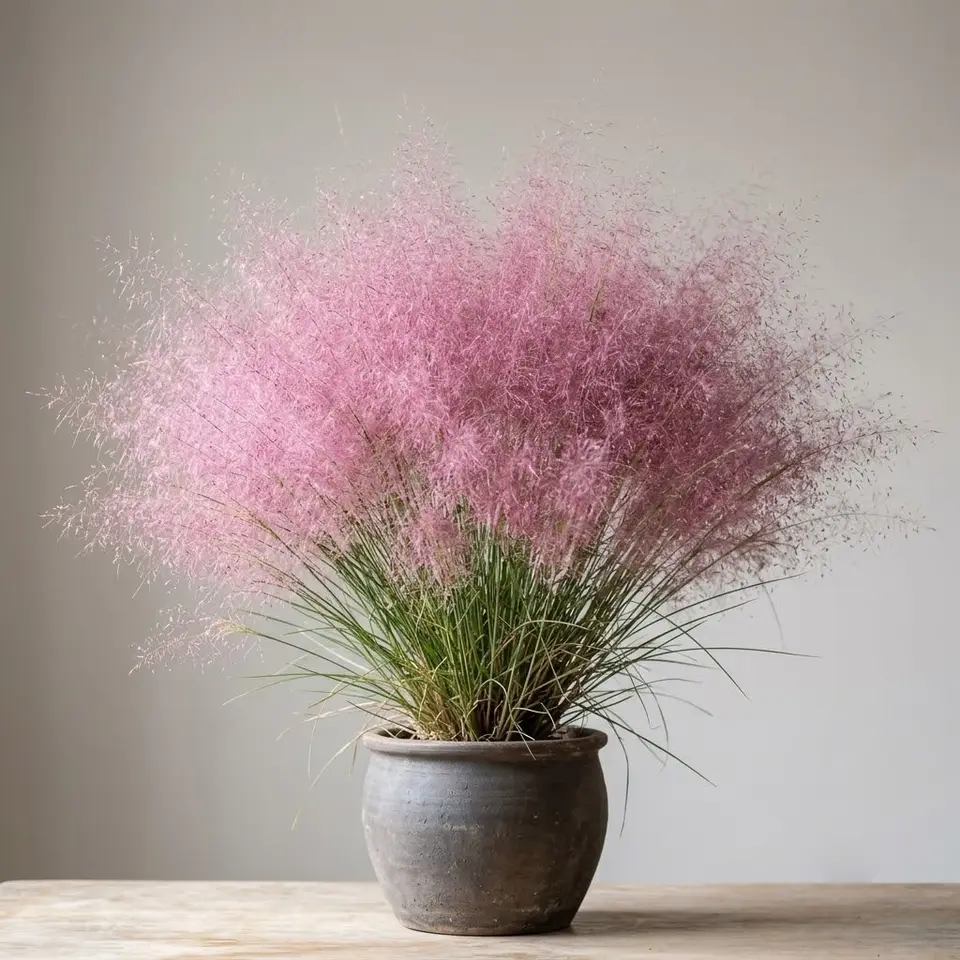
Pink Muhly Grass performs the garden's best magic trick: an unassuming green tuft all summer that detonates in October into a knee-high cloud of cotton-candy pink so improbable that passers-by ask if it's real.
Last reviewed: October 2026
 AI illustration
Overview
Pink Muhly Grass performs the garden's best magic trick: an unassuming green tuft all summer that detonates in October into a knee-high cloud of cotton-candy pink so improbable that passers-by ask if it's real. No other hardy plant delivers that color at that season on that little care. (Muhlenbergia capillaris.)
Origin & Natural Habitat
Sandy prairies and open pine woods of the eastern and southern USA - a true native from Massachusetts to Texas. Hardy zones 6-10 (5 with sharp drainage and luck).
Appearance
A fine-textured clump 60-90 cm tall; wiry dark-green leaves, then airy panicles of pink-magenta filaments forming the famous haze, aging to buff and holding into winter.
Why People Grow It - Qualities & Benefits
- The pink October cloud: unmatched late color
- Native, tough, salt- and drought-tolerant
- Fine texture contrast for stiff neighbors
- Peak show when the garden is otherwise done
Care
Light: Full sun - the bloom density and the pink both fade in shade.
Water: Low once established; it grows wild on sand dunes. Winter-wet soil is the main killer at the cold edge.
Soil: Sandy or gravelly preferred, must drain sharply; poor soil = better bloom.
Temperature & Hardiness: Zones 6-10; in 5-6 give it a dry, sunny microclimate and skip the fall cut.
Feeding: None to a whisper of spring compost.
Maintenance: Leave it standing over winter (crown protection + beauty); comb or cut to 15 cm in mid-spring. Plant in odd-numbered drifts - one cloud is a curiosity, five are an event.
Planting & Propagation
Division in spring, or species seed sown warm - flowering usually starts year two. Buy blooming-size pots for instant October payoff.
Common Problems & Pests
- Winter rot in cold wet clay: drainage decides survival
- Slow spring wake-up at the cold edge
- Bloom-less plants = shade or over-feeding
Toxicity & Safety
Not on the ASPCA lists. The ASPCA Animal Poison Control Center's plant lists for cats and dogs have no entry for this plant, and we have no other checked source either way. If a pet chews it and seems unwell, call your vet or a pet poison helpline.
Pros & Cons
Pros
- Unreal pink haze in October
- Native + pollinator/bird friendly
- Thrives on sand, salt, drought
- Nearly maintenance-free
Cons
- Demands drainage in cold zones
- Anonymous-looking until fall
- Marginal below zone 6
Best Suited For
- Coastal and sandy gardens
- Mass drifts along paths and drives
- Native and pollinator plantings
- Anywhere autumn needs a headline
FAQ
Why didn't mine bloom pink?
Shade, rich feeding, or a spring cut done so late that it chopped the fresh new growth. Sun + lean soil + early-spring-only tidy = the cloud.
Will it survive zone 5?
Sometimes, on a sunny bank in gravelly soil with the foliage left on all winter - treat it as a gamble worth one plant, not a hedge.
When do I cut it back?
Mid-spring, after hard frosts pass - fall cutting exposes the crown to winter wet, the #1 cause of loss.
Gear for growing pink muhly grass
Links go to Amazon or a partner store (such as Adagio Teas) and may earn us a commission at no extra cost to you. As an Amazon Associate we earn from qualifying purchases. We link gear types, not sponsors' picks: you choose the exact product.