Tufted Hair Grass
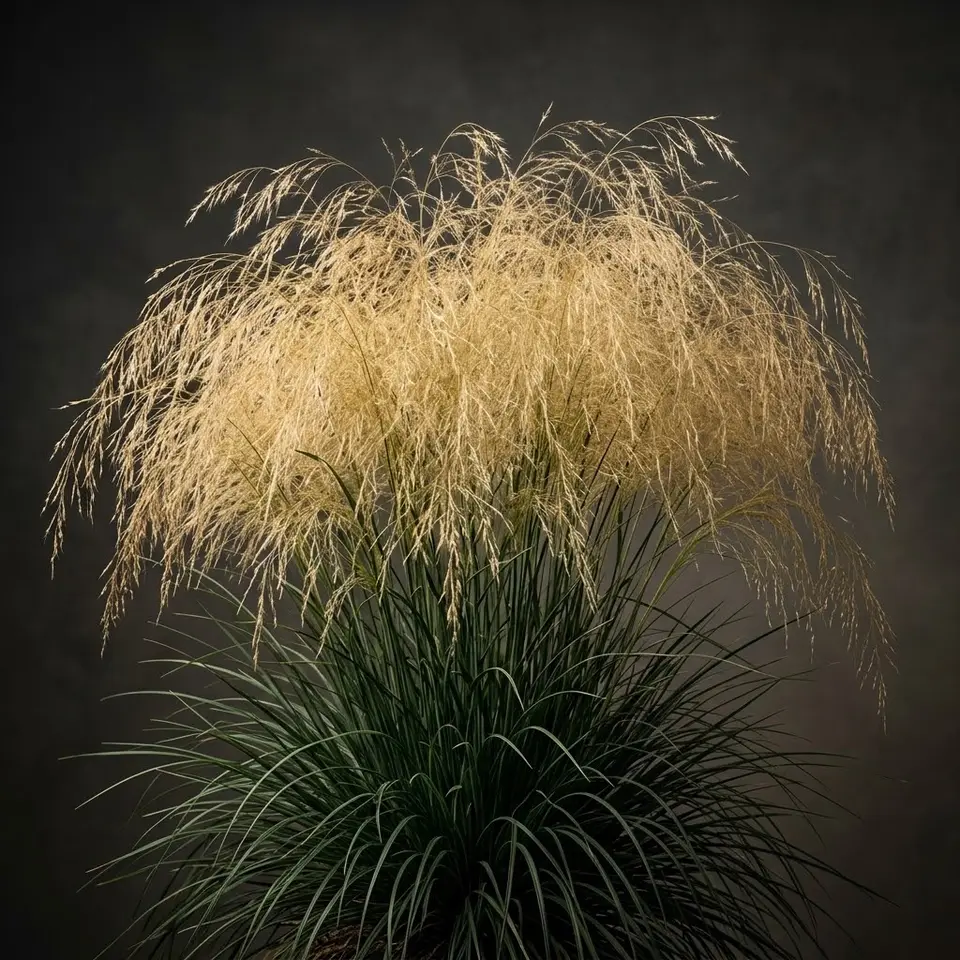
Tufted Hair Grass throws the garden's finest veil - a dark evergreen tussock that erupts in early summer into a meter-wide shimmer of gold-green flowers so airy they read as light rather than substance.
Last reviewed: October 2026
 AI illustration
Overview
Tufted Hair Grass throws the garden's finest veil - a dark evergreen tussock that erupts in early summer into a meter-wide shimmer of gold-green flowers so airy they read as light rather than substance. It is also that rarity: a flowering grass genuinely content in part shade and damp soil. (Deschampsia cespitosa.)
Origin & Natural Habitat
Moist meadows, ditches and open woods across the temperate Northern Hemisphere - including most of North America and Europe. Hardy zones 4-8.
Appearance
A dense dark-green tussock 30-50 cm; June-July panicles rise to 90-120 cm in a gauzy cloud of tiny gold, bronze or silver flowers ('Goldtau', 'Bronzeschleier') that glitter after rain.
Why People Grow It - Qualities & Benefits
- Airiest early-summer flower veil of any hardy grass
- Takes part shade AND damp soil: rare combo
- Semi-evergreen dark base all winter
- Native across much of its selling range
Care
Light: Part shade to full sun in cool climates; in hot regions give afternoon shade.
Water: Likes moisture - one of the few ornamental grasses for damp corners, pond edges and heavy soil.
Soil: Moist, humus-rich to heavy; drought is its least favorite thing.
Temperature & Hardiness: Zones 4-8; a cool-season bloomer that flowers before the summer heat.
Feeding: Light spring compost at most.
Maintenance: Comb the tussock and cut old flower stems in late winter - no hard annual chop needed. Self-sows lightly in bare damp soil; cultivars come partly true.
Planting & Propagation
Division in spring or fall; species easy from seed. Clumps are long-lived and rarely demand renewal.
Common Problems & Pests
- Sulks and browns in hot-dry sites
- Modest self-seeding in open ground
- Rust rarely, in stagnant humidity
Toxicity & Safety
Not on the ASPCA lists. The ASPCA Animal Poison Control Center's plant lists for cats and dogs have no entry for this plant, and we have no other checked source either way. If a pet chews it and seems unwell, call your vet or a pet poison helpline.
Pros & Cons
Pros
- Luminous flower veil
- Shade + damp tolerance
- Evergreen base tussock
- Ecologically valuable native
Cons
- Not for dry gravel gardens
- Flowers once, early
- Can seed about in wet mulch
Best Suited For
- Damp part-shade borders
- Pond and stream margins
- Woodland-edge naturalism
- Backlit positions: it's made of light
FAQ
Will it really flower in shade?
In half-day sun or bright dapple, yes - the veil thins only in genuinely deep shade. It's the go-to flowering grass where miscanthus would sulk.
Is it evergreen?
Semi: the dark tussock persists through mild winters; only the flower stems brown and need removing. In zone 4 it retreats further.
My soil is heavy and wet in spring - problem?
The opposite: deschampsia is one of the few ornamental grasses that genuinely enjoys it.
Gear for growing tufted hair grass
Links go to Amazon or a partner store (such as Adagio Teas) and may earn us a commission at no extra cost to you. As an Amazon Associate we earn from qualifying purchases. We link gear types, not sponsors' picks: you choose the exact product.