Bladderwort
Bladderworts run the fastest traps in the plant kingdom (underground/underwater bladders that vacuum prey in under a millisecond), while the surface shows only grassy leaves and disproportionately lovely orchid-like flowers.
Last reviewed: October 2026
 AI illustration
Overview
Bladderworts run the fastest traps in the plant kingdom (underground/underwater bladders that vacuum prey in under a millisecond), while the surface shows only grassy leaves and disproportionately lovely orchid-like flowers. You grow the flowers; the massacre is invisible. (Utricularia.)
Origin & Natural Habitat
Worldwide - terrestrial species in wet peat, aquatics in ponds; one of the two largest carnivorous genera (~240 species, alongside the sundews).
Appearance
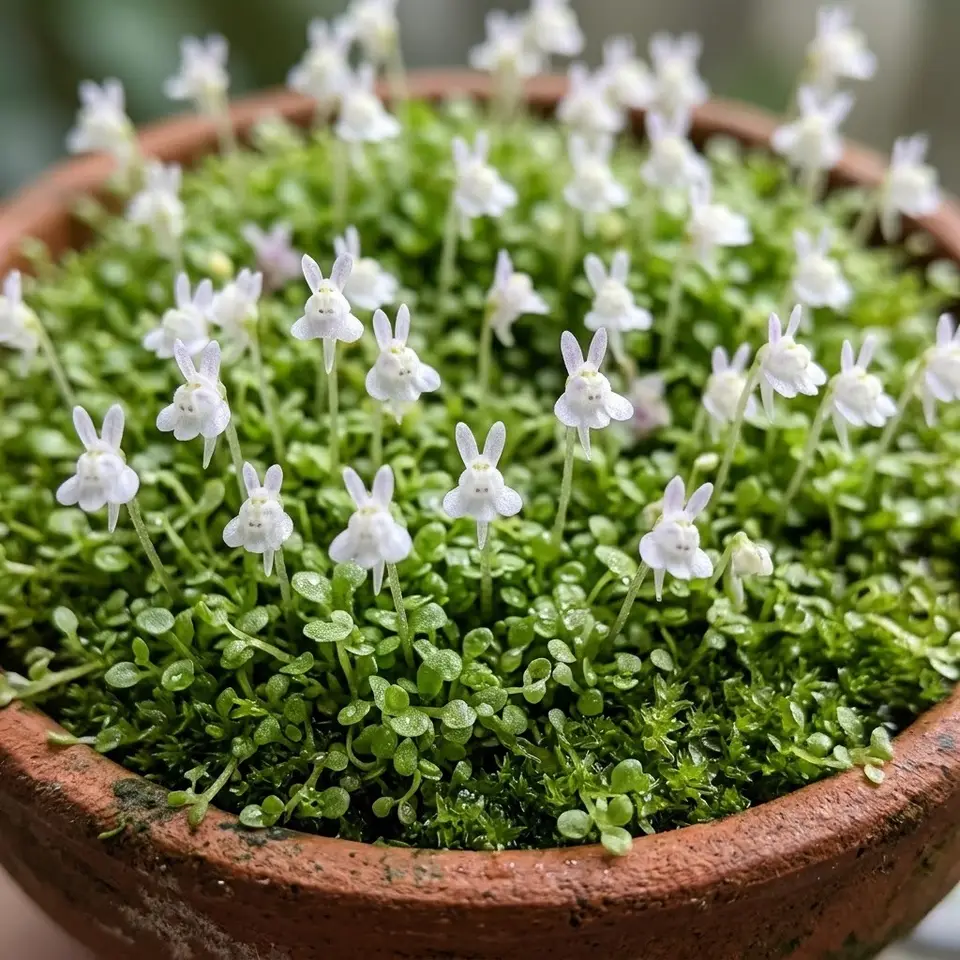
Terrestrial pots read as mossy grass 2-10 cm until sprays of snapdragon-ish blooms rise - purples, yellows, whites (U. sandersonii's 'angry bunnies' bloom nearly nonstop); traps are microscopic bladders in the medium.
Why People Grow It - Qualities & Benefits
- Nearly everblooming flowers (sandersonii famously)
- The fastest predation on earth in your pot (0.5 ms)
- Carpeting terrarium groundcover
- Zero trap-maintenance: it's all hidden
Care
Light: Bright indirect to some sun; blooming follows light.
Water: Rain, distilled or RO water ONLY - tap-water minerals poison carnivorous roots within months. The tray method (pot standing in 1-2 cm of pure water) is standard.
Soil: Nutrient-FREE mix: sphagnum peat + perlite/silica sand (roughly 1:1). Never potting soil, never fertilized media - fertility burns their roots. Kept WETTER than most. Many stand permanently in the tray.
Temperature & Dormancy: Common terrestrials (sandersonii, bisquamata): 15-28°C year-round, no dormancy - easy room residents.
Feeding: Micro-prey in the wet medium self-supplies; nothing to do - genuinely zero-touch.
Propagation
Division of the mat - tear a clump, pot it wet, done; it carpets onward.
Common Problems & Pests
- Drying out even briefly (the wettest-loving of the easy carnivores)
- Algae/moss competition in old pots: refresh occasionally
- No blooms = more light
- That's all: it's near-foolproof
Toxicity & Safety
Not on the ASPCA lists. The ASPCA Animal Poison Control Center's plant lists for cats and dogs have no entry for this plant, and we have no other checked source either way. If a pet chews it and seems unwell, call your vet or a pet poison helpline.
Pros & Cons
Pros
- Flowers all year (species-dependent)
- Effortless once sited
- Spreads to share
Cons
- Traps invisible (drama-free)
- Looks like plain grass between blooms
- Needs standing pure water
Best Suited For
- Terrarium carpets
- Flower-first carnivore fans
- Zero-maintenance collections
- Science-fascination growers
FAQ
Where are the traps?
Buried: microscopic bladders on root-like stolons vacuum protozoa and micro-bugs in half a millisecond - high-speed cameras made the genus famous; your eyes get the flowers instead.
Why 'angry bunnies'?
U. sandersonii's little white blooms wear two upright 'ears' and a scowl - the internet's favorite carnivore flower, produced practically without pause.
Gear for growing bladderwort
Links go to Amazon or a partner store (such as Adagio Teas) and may earn us a commission at no extra cost to you. As an Amazon Associate we earn from qualifying purchases. We link gear types, not sponsors' picks: you choose the exact product.