Paphiopedilum (Slipper Orchid)
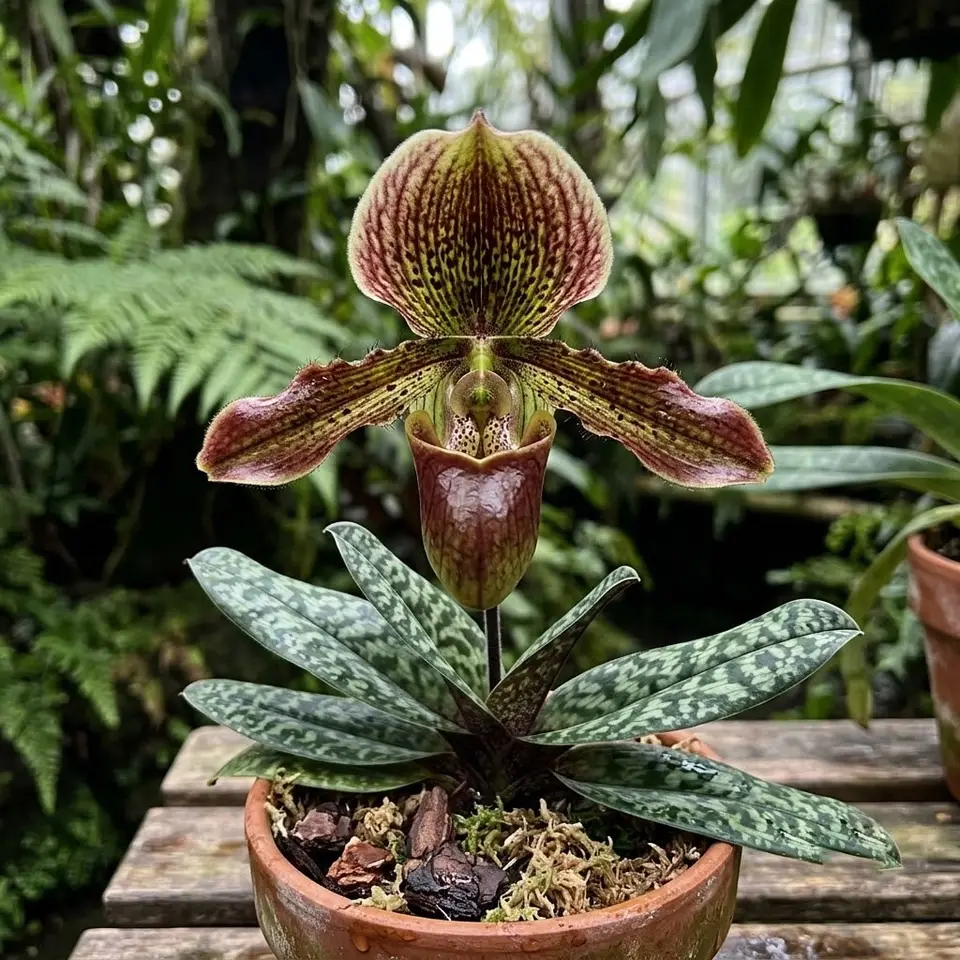
Paphiopedilums are the slipper orchids - pouched, waxy, almost carnivorous-looking blooms that last three months each, atop low-light-tolerant plants with handsome mottled foliage.
Last reviewed: October 2026
 AI illustration
Overview
Paphiopedilums are the slipper orchids - pouched, waxy, almost carnivorous-looking blooms that last three months each, atop low-light-tolerant plants with handsome mottled foliage. The shade-lover of the orchid world: where cattleyas starve for sun, paphs quietly thrive on a north sill. (Paphiopedilum.)
Origin & Natural Habitat
Forest floors and shaded limestone of Southeast Asia - terrestrial/semi-terrestrial in leaf litter, unlike the tree-dwellers.
Appearance
Fans of strap or beautifully mottled leaves 15-40 cm; single (or sequential) pouched blooms in mahogany, green, white, spotted and striped - lasting 8-12 weeks.
Why People Grow It - Qualities & Benefits
- Blooms last MONTHS, not weeks
- True low-light orchid: north windows work
- Mottled-leaf types are foliage plants between blooms
- Compact, slow, apartment-scale
Care
Light: Gentle: bright shade to morning-only sun - the Phalaenopsis-and-lower niche. Mottled-leaf types tolerate least; leaves burn easily.
Water: Evenly slightly moist (no pseudobulbs = no reserves) - water when the top 2-3 cm dry, never bone-dry, never swampy.
Potting medium: Fine bark with a little perlite/moss; they like it snugger and moister than epiphytes.
Temperature & Humidity: Mottled-leaf types: warm (18-27°C). Green-leaf types: cooler with a night drop. Both: average home humidity is fine - another paph virtue.
Feeding: Quarter-strength, every 2-3 weeks - light feeders; flush regularly (salt-sensitive roots).
Rest & rebloom: No dramatic rest; sequential bloomers push flower after flower. Steady modest care is the entire method.
Propagation
Division of multi-fan clumps at repotting - each division 2+ growths. Slow but sure.
Common Problems & Pests
- Crown rot from water sitting in the fan: water the mix, not the crown
- Salt-burn from hard water/heavy feeding
- Mealybugs at leaf bases
- Slow recovery from any mistake: prevention beats cure
Toxicity & Safety
Not on the ASPCA lists. The ASPCA Animal Poison Control Center's plant lists for cats and dogs have no entry for this plant, and we have no other checked source either way. If a pet chews it and seems unwell, call your vet or a pet poison helpline.
Pros & Cons
Pros
- Three-month blooms
- Low-light champion
- Handsome foliage year-round
- Compact and slow
Cons
- No reserves: watering must stay steady
- Singles (mostly) not sprays
- Quality plants cost more
Best Suited For
- North and east windowsills
- Offices and apartments
- Patient, steady-handed keepers
- Collectors of the strange and waxy
FAQ
Is the pouch carnivorous?
No - it's an insect-guiding pollination trap that releases visitors past the pollen, not a digestive pitcher. The menace is pure theatre.
Why did the crown turn black and soft?
Water sat in the leaf fan - the classic paph death. Water the medium from the side, morning-only, and airflow prevents it entirely.
Gear for growing paphiopedilum (slipper orchid)
Links go to Amazon or a partner store (such as Adagio Teas) and may earn us a commission at no extra cost to you. As an Amazon Associate we earn from qualifying purchases. We link gear types, not sponsors' picks: you choose the exact product.