Baby Tears (Soleirolia soleirolii - Angel's Tears)
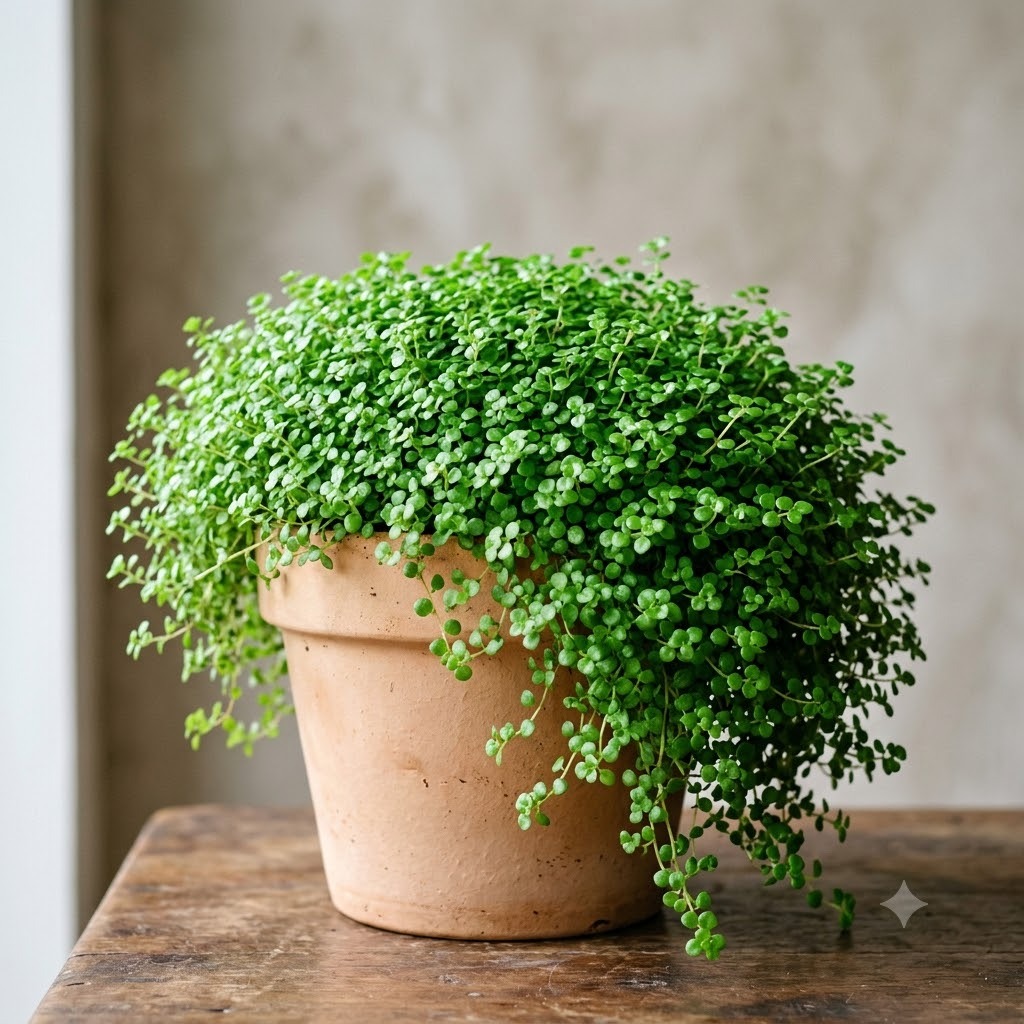
Baby Tears - also called Angel's Tears, Mind-Your-Own-Business, or by its botanical name Soleirolia soleirolii - is a soft, low, spreading plant made up of countless tiny leaves on thread-fine stems.
🗓️ Last reviewed: July 2026
Overview
Baby Tears - also called Angel's Tears, Mind-Your-Own-Business, or by its botanical name Soleirolia soleirolii - is a soft, low, spreading plant made up of countless tiny leaves on thread-fine stems. Rather than growing tall, it forms a dense, cushiony green mat that spills over the edge of a pot, carpets the floor of a terrarium, or fills the space around the base of taller plants. It has a delicate, mossy, almost cloud-like look that people fall for instantly. The catch is that it lives up to its name in one respect: let it dry out even briefly and it collapses in a heap of "tears." Keep it moist and humid, though, and it is fast, lush, and enchanting.
Origin & Natural Habitat
Soleirolia soleirolii is native to the western Mediterranean, especially the islands of Corsica and Sardinia and nearby coastal areas. There it grows as a creeping ground cover in cool, damp, shaded places - on moist rocks, shady banks, and the floors of humid woodlands, often near water. It roots as it spreads, knitting itself into a continuous green carpet.
This origin is the whole care guide in miniature. It is a plant of cool shade and constant moisture, not of sun and drought. Outdoors in mild, damp climates it is grown as a ground cover and can spread enthusiastically. Indoors, those same instincts make it a favorite for terrariums and humid spots.
Appearance
Baby Tears is unmistakable up close and from a distance:
- Leaves: minuscule, rounded, bright green leaves, each only a few millimeters across, densely packed along the stems.
- Stems: very fine, delicate, and creeping, forming a low mound or trailing curtain rather than an upright plant.
- Habit: a dense, soft, spreading mat, usually only a few centimeters tall but capable of covering a wide area or cascading over a pot rim.
- Overall look: cushion-like and mossy, sometimes mistaken for moss, giving a lush, carpeting effect.
There are also golden-leaved and silvery-variegated forms, which bring a lighter tone to the same soft texture.
Why People Love It - Qualities & Benefits
- Lush, soft texture: the fine, mossy carpet is uniquely calming and pretty, unlike any other common houseplant.
- Perfect for terrariums: it thrives in the humid, enclosed conditions of a terrarium or bottle garden and makes an ideal living ground cover.
- Fast-growing: in good conditions it fills in quickly, spreading over soil, around other plants, or over the edge of a container.
- Ground cover and detail: wonderful for softening the base of taller plants, dressing bonsai pots, or spilling from a hanging planter.
- Easy to multiply: small clumps root readily, so one plant quickly becomes many.
Care
Light
Bright, indirect light or gentle partial shade. It does not want harsh direct sun, which scorches and dries the delicate leaves. A north or east window, or a well-lit spot out of direct beams, keeps it happy. It also does well under grow lights in a terrarium.
Watering
This is the make-or-break of Baby Tears. It wants its soil kept consistently moist at all times - never soggy and waterlogged, but never allowed to dry out. If the soil dries, the plant wilts and browns alarmingly fast, often within a day. Check it frequently and water little and often to keep the surface damp. Watering from below or with a gentle spout avoids battering the fine foliage. If it does collapse from dryness, cut it back, water well, and it will often flush back from the base.
Soil & Potting
Use a moisture-retentive but well-draining potting mix. A standard houseplant compost works. It has shallow, fine roots, so a shallow pot or a broad container suits it. Always provide drainage so the roots stay moist but not standing in water.
Humidity & Temperature
High humidity is what it loves most - this is why it excels in terrariums, bathrooms, and kitchens. In dry room air the leaf tips brown and the mat thins. Raise humidity with a pebble tray, a humid location, or an enclosed container. It prefers cool to average temperatures, roughly 10-21 °C, and dislikes hot, dry heat.
Feeding
Feed lightly with a diluted balanced liquid fertilizer occasionally through spring and summer. It grows fast but is not a heavy feeder; a weak feed now and then is plenty.
Grooming
Trim it freely to keep the shape you want - it responds well to a haircut and quickly regrows denser. Pinch back straggly stems and remove any browned patches.
Propagation
Baby Tears could hardly be easier to propagate. Simply pull or cut off a small clump of stems with a few roots attached and press it onto the surface of moist compost, where it will quickly root and spread. Even short lengths of stem laid on damp soil will often take root at the nodes. Dividing an established mat into several pieces is the simplest way to make lots of new plants at once. Keep the new pieces humid and moist while they establish.
Common Problems & Pests
- Sudden collapse / browning: almost always because the soil dried out. Cut back the dead growth, water thoroughly, and it usually recovers from the base.
- Brown, crispy tips or thinning mat: air too dry - raise humidity or move it somewhere more humid.
- Yellowing, mushy patches: waterlogged, airless soil. It wants moist, not swampy, and needs some air at the roots.
- Scorched, faded leaves: too much direct sun.
- Legginess or bald spots: too little light, or old growth - trim it back to encourage fresh, dense regrowth.
- Pests: relatively pest-resistant, but aphids or fungus gnats (in constantly wet soil) can appear. Treat aphids with insecticidal soap and let the very surface dry slightly to discourage gnats.
Toxicity & Safety
Non-toxic and pet-friendly. Soleirolia soleirolii is not known to be poisonous to cats, dogs, or people and is considered a safe houseplant. It is a good choice for homes with curious pets and children. As always, it is not meant to be eaten, and large quantities could cause mild stomach upset, but there is no serious toxicity concern.
Pros & Cons
Pros
- Soft, lush, mossy carpet unlike any other common houseplant.
- Ideal terrarium and ground-cover plant.
- Fast-growing and quick to fill in.
- Very easy to propagate and divide.
- Non-toxic and pet-safe.
Cons
- Wilts and browns fast if it dries out even once.
- Needs high humidity to look its best.
- Demands frequent attention to moisture.
- Dislikes direct sun and hot, dry rooms.
- Can spread vigorously and needs trimming to stay neat.
Best Suited For
- Terrarium and bottle-garden builders wanting a living carpet.
- Humid rooms such as bathrooms and kitchens.
- Attentive owners who can keep the soil reliably moist.
- Anyone wanting a soft ground cover around the base of other plants.
Not ideal for forgetful waterers, dry centrally-heated rooms without added humidity, or sunny windowsills.
FAQ
Why did my Baby Tears suddenly go brown and flat? It dried out - even briefly. Cut away the collapsed growth, water it well, keep it humid, and it will usually flush back from the base.
Can I grow it in a terrarium? Yes - it is one of the best terrarium ground covers there is, thriving in the humid, enclosed conditions and quickly carpeting the floor.
Is it actually a moss? No. It just looks mossy. It is a flowering plant in the nettle family with tiny leaves, not a true moss.
How often do I water it? Often - keep the soil consistently moist at all times. Check it daily in dry conditions and never let it dry out completely.
Is it safe around my cat and dog? Yes, it is considered non-toxic and pet-friendly, making it a safe choice for homes with animals and children.