Streptocarpus (Cape Primrose)
Streptocarpus - commonly called Cape Primrose - is one of the most rewarding flowering houseplants you can grow, and one of the most underrated.
🗓️ Last reviewed: July 2026
Overview
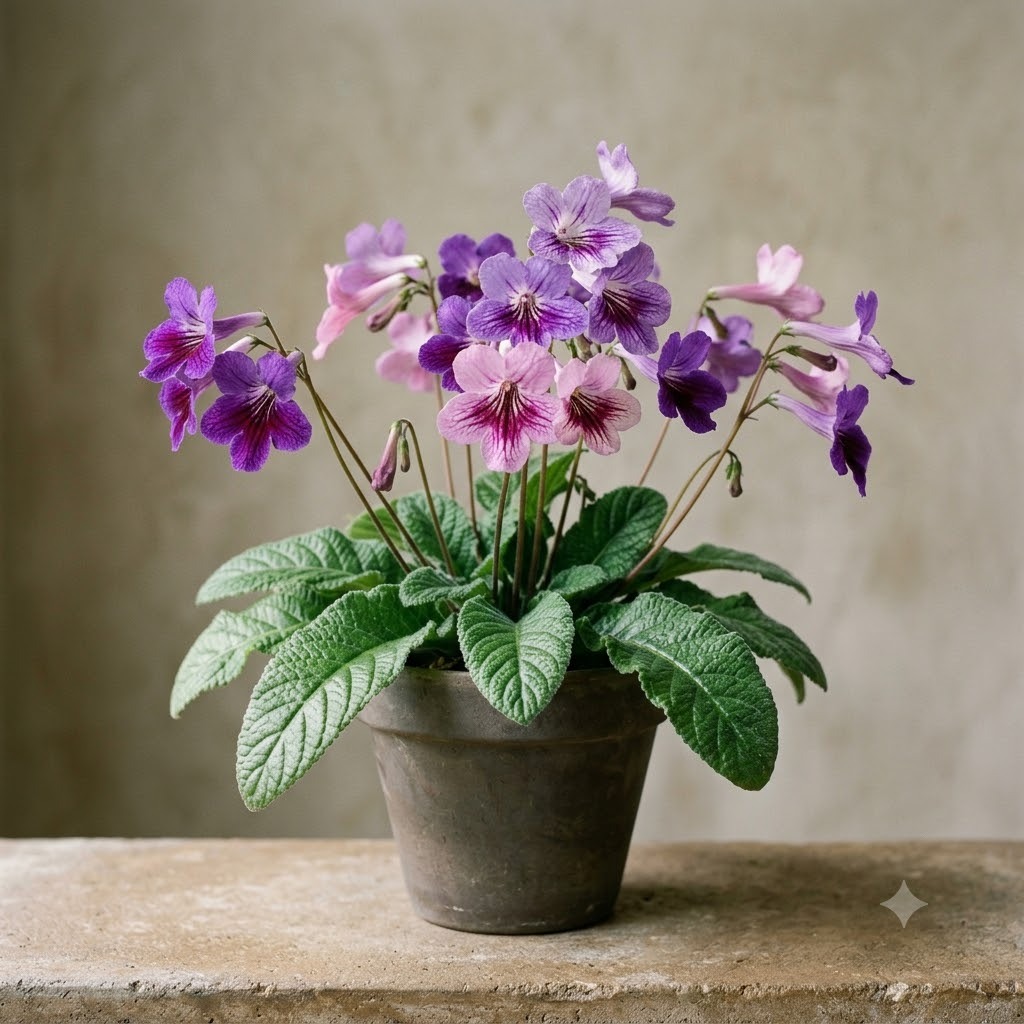
Streptocarpus - commonly called Cape Primrose - is one of the most rewarding flowering houseplants you can grow, and one of the most underrated. A close relative of the African Violet, it forms a low rosette of soft, wrinkled leaves and sends up delicate stems of trumpet-shaped flowers in an extraordinary range of colors: blues, purples, pinks, whites, wine-reds, and bicolors, often with intricate veining in the throat. Unlike many houseplants that flower once and stop, a happy Streptocarpus blooms for months on end, sometimes almost year-round. It is compact, easy to please, and astonishingly simple to propagate - a single leaf can become dozens of new plants.
Origin & Natural Habitat
Streptocarpus is native mainly to South Africa and other parts of southern and eastern Africa, where many species grow in shady, humid places - on rocky outcrops, forest floors, and mossy banks, often sheltered from direct sun. This tells you exactly what it wants at home: bright but filtered light, moderate warmth, and steady but never soggy conditions.
It belongs to the Gesneriad family, which makes it a cousin of the African Violet, and the two share the same broad likes and dislikes. The name Streptocarpus comes from Greek words meaning "twisted fruit," referring to the spiral seed pods the flowers leave behind. The plants sold as houseplants today are mostly modern hybrids, bred for large, long-lasting flowers and compact, tidy habit.
Appearance
Streptocarpus has a distinctive, low-growing look:
- Leaves: long, soft, strap-shaped, and quilted or wrinkled, mid-green, growing in a loose rosette or fan from the base rather than up a stem. They are slightly hairy and can be a little brittle.
- Flowers: carried on slender stalks that rise above the leaves, each a five-lobed trumpet, often with contrasting veined markings in the throat. Colors span blue, violet, purple, pink, red, white, and combinations.
- Habit: compact and rosette-forming, typically 20-30 cm across and not much taller in flower, making it ideal for windowsills and small spaces.
Because it stays small and flowers so freely, a mature plant can look like a permanent bouquet.
Why People Love It - Qualities & Benefits
- Extremely long flowering: blooms for months, and well-grown plants can flower nearly all year.
- Compact: stays small and neat, perfect for a windowsill or a shelf with limited space.
- Huge color range: from soft pastels to deep velvety wine tones, with beautiful throat veining.
- Easy propagation: a single leaf can be turned into many new plants - deeply satisfying and great for sharing.
- Less fussy than it looks: more forgiving than its delicate flowers suggest, and less prone to leaf-spotting than the African Violet.
Care
Light
Bright, indirect light is the sweet spot. An east or north window is ideal, giving good light without harsh sun. Too little light and it grows leafy but flowers poorly; too much direct sun scorches the soft leaves. A gently bright windowsill keeps it blooming.
Watering
Water carefully - this is where most people go wrong. Let the top of the soil dry slightly, then water thoroughly and let it drain. Streptocarpus dislikes both soggy soil and bone-dry roots; the fleshy base rots easily if kept wet. Where possible, water at the base or from below rather than over the crown and leaves, and use tepid water. It is better to keep it slightly on the dry side than to overwater. The plant wilts noticeably when thirsty and usually recovers once watered.
Soil & Potting
Use a light, airy, well-draining mix - a peat-free or peat-based houseplant compost loosened with perlite works well, similar to an African Violet mix. Shallow pots suit its shallow roots. Always use drainage holes.
Humidity & Temperature
Enjoys moderate humidity and comfortable room temperatures, roughly 15-24 °C. Avoid cold drafts and hot dry air right next to a radiator. It does not need misting, and wet leaves can spot or rot, so raise humidity with a pebble tray or grouping rather than spraying the foliage.
Feeding
Feed regularly through the growing season with a fertilizer higher in potassium (a "flowering" or tomato-type feed) at half strength to encourage continued blooming. Ease off in the darker winter months.
Grooming
Remove spent flower stalks and any yellowing or damaged leaves to keep the plant tidy and encourage more blooms. Deadheading regularly keeps the flowering going.
Propagation
Streptocarpus is one of the easiest of all houseplants to propagate, and it is genuinely fun. The classic method uses a leaf: take a healthy leaf and either cut it into sections across the midrib, or slice it lengthwise down either side of the central vein. Press the cut edges into moist, gritty compost. Along each cut vein, tiny new plantlets will sprout over the following weeks and months - a single leaf can yield many babies. Keep them warm, humid, and lightly moist while they root. You can also divide a large clump at repotting time.
Common Problems & Pests
- No flowers: usually not enough light, or too much high-nitrogen feed producing leaves instead of blooms. Move it brighter and switch to a flowering feed.
- Rotting crown or mushy base: overwatering or water sitting in the center of the plant. Water at the base and let it dry more between drinks.
- Wilting: commonly thirst - the soft leaves flag quickly and usually perk back up after watering; but persistent wilting with wet soil points to root rot.
- Brown, crisp leaf edges: air too dry or too much sun.
- Pests: mealybugs, aphids on flower stalks, and thrips are the usual culprits. Isolate the plant and treat with insecticidal soap.
Toxicity & Safety
Non-toxic and pet-friendly. Streptocarpus is not known to be poisonous to cats, dogs, or people, and like its relative the African Violet it is considered a safe choice for homes with pets and children. As with any plant, eating large amounts could cause mild stomach upset, so it is still best kept out of reach of determined nibblers, but there is no serious toxicity concern.
Pros & Cons
Pros
- Blooms for months, often nearly year-round.
- Compact and windowsill-friendly.
- Enormous range of flower colors and patterns.
- Extremely easy and fun to propagate from a leaf.
- Non-toxic and pet-safe.
Cons
- Soft leaves are brittle and mark easily.
- Rots quickly if overwatered or watered over the crown.
- Wilts fast when it dries out.
- Needs regular deadheading to look its best.
- Dislikes cold drafts and hot dry air.
Best Suited For
- Anyone who wants long-lasting flowers in a small space.
- Windowsill gardeners with bright, indirect light.
- Pet and child households needing a safe flowering plant.
- Propagation enthusiasts who love turning one plant into many.
Not ideal for very dark rooms, heavy-handed overwaterers, or spots with harsh direct sun or hot dry radiator air.
FAQ
Is Streptocarpus the same as an African Violet? They are close relatives in the same family and share similar care, but they are different plants. Streptocarpus has longer, strap-shaped leaves and taller flower stalks, and many people find it a little more tolerant.
Why has mine stopped flowering? Usually too little light or too much nitrogen-rich feed. Move it to a brighter (but not sunny) spot and switch to a high-potassium flowering fertilizer.
Should I mist it? No - wet leaves can spot or rot. Raise humidity with a pebble tray or by grouping plants instead of spraying the foliage.
How do I water it without rotting it? Water at the base or from below with tepid water, let the top of the soil dry slightly first, and never let water sit in the crown.
Can I really grow new plants from one leaf? Yes - it is one of the easiest houseplants to propagate. Cut a leaf into sections and press the cut edges into moist compost; plantlets sprout along the veins.