String of Dolphins (Senecio peregrinus)
String of Dolphins is one of the most charming novelty succulents you can grow.
🗓️ Last reviewed: July 2026
Overview
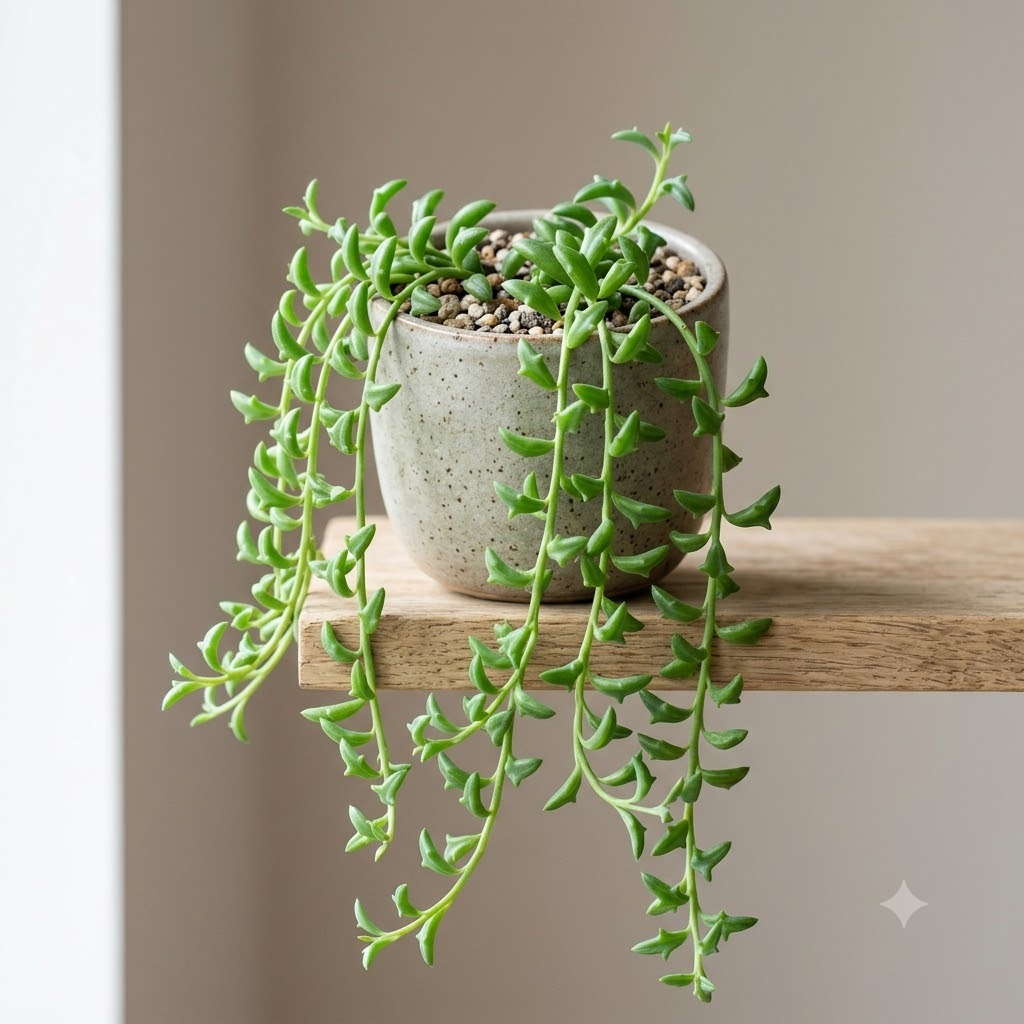
String of Dolphins is one of the most charming novelty succulents you can grow. Each little leaf is curved and finned in a way that looks remarkably like a tiny dolphin mid-leap, and a full plant sends dozens of these "dolphins" trailing over the edge of a pot in a pod of cascading green. It is a hybrid trailing succulent, a cross that inherited its leaf shape from two well-known relatives, and it makes a delightful hanging or shelf plant. It carries a reputation for being tricky, but it is not delicate so much as specific: give it strong light, gritty soil, and a sparse hand with the watering can, and the dolphins hold their shape and thrive.
Origin & Natural Habitat
String of Dolphins, Senecio peregrinus (also classed as Curio peregrinus), is not a wild species you would find in nature - it is a cultivated hybrid, a cross between String of Pearls (Senecio rowleyanus) and the candle plant (Senecio articulatus). Its parents come from the dry regions of southern Africa, and the dolphin plant inherited their succulent, drought-adapted nature.
That heritage is the whole care story. Both parents evolved in arid, sun-drenched conditions, storing water in fleshy leaves and stems and surviving long dry spells. So the dolphin plant wants what a desert succulent wants: bright light, extremely well-draining soil, and infrequent watering. Because it is a hybrid, its dolphin leaf shape is a happy accident of crossing - and, as owners often discover, that shape is not perfectly stable.
Appearance
The plant trails on slender stems studded with small, plump, curved leaves - the "dolphins."
- Leaves: each leaf is a small, fleshy green crescent with a little pair of "fins" and a curved "body," giving the leaping-dolphin silhouette. New leaves show the shape most clearly.
- Habit: trailing and cascading, with stems that lengthen and spill over a pot rim - a natural hanging plant.
- Flowers: mature plants can produce small, fluffy white puffball flowers that carry a light cinnamon-like scent - a modest bonus to the foliage.
- Size: stems commonly trail 30-90 cm over time, thickening into a full curtain of dolphins in good light.
The dolphin shape is at its best on healthy, well-lit new growth; stressed or low-light plants tend to produce plainer, less-defined leaves.
Why People Love It - Qualities & Benefits
- Irresistible novelty: the leaping-dolphin leaves are genuinely delightful and one of the most popular "must-have" succulents.
- Beautiful trailing display: it spills into a cascade that looks superb in a hanging pot or on a high shelf.
- Low water needs: as a succulent it thrives on neglect between waterings, ideal for busy or forgetful owners.
- Easy to propagate: cuttings root readily, so one plant becomes many.
- Compact: it takes little space and suits small, bright spots.
Care
Light
Bright light is essential - more than most trailing plants. Give it the brightest spot you can, such as very bright indirect light or a few hours of gentle direct sun near a south or east window. Strong light keeps the dolphin shape crisp and the growth compact. In low light the plant stretches, the gaps between leaves widen, and the dolphins lose their definition. A grow light works well in dim homes.
Watering
Water like a succulent: soak thoroughly, then let the soil dry out completely before watering again. In practice that is often every 1-2 weeks in summer and much less in winter. This plant is far more forgiving of underwatering than overwatering - soggy soil causes soft, mushy stems and rot fast. Plump, firm dolphins mean it is happy; shriveled, deflated leaves mean it is genuinely thirsty. When in doubt, wait.
Soil & Potting
Use a gritty, fast-draining cactus and succulent mix, or regular potting soil cut heavily with perlite, pumice, or coarse sand. Drainage holes are essential. A shallow pot suits its shallow roots and dries out faster, which this plant prefers.
Humidity & Temperature
It likes normal-to-dry room air and does not need extra humidity. It enjoys 18-27 C and must be kept warm - protect it from cold below about 10 C and from frost, which it will not survive.
Feeding
Feed sparingly - a diluted succulent fertilizer once or twice through spring and summer is plenty. It does not need or want heavy feeding.
General
Rotate the pot occasionally for even growth, and trim any long or bare stems to keep the plant full - the trimmed pieces propagate easily.
Propagation
String of Dolphins propagates very easily from stem cuttings. Snip a few centimeters of healthy stem, remove the lowest leaves to expose a node or two, and let the cut end dry and callus for a day or two. Then lay or lightly press the stem onto the surface of dry, gritty succulent mix so the nodes contact the soil, and water only sparingly. Roots form within a few weeks. Laying several cuttings across the top of the parent pot is the classic way to thicken a sparse plant.
Common Problems & Pests
- Stretched, sparse growth with wide gaps: not enough light - the number-one issue. Move it much brighter or add a grow light.
- Dolphins losing their shape / reverting to plain leaves: often low light or stress; well-lit new growth usually shows the dolphin form best. Some shape variation is normal for a hybrid.
- Soft, mushy, translucent stems: overwatering and rot. Stop watering, remove the mush, and re-root any firm healthy sections.
- Shriveled, deflated dolphins: underwatering - give it a thorough soak.
- Pests: mealybugs are the main pest (white fluff tucked among the leaves), plus occasional aphids or spider mites. Wipe them off and treat with insecticidal soap.
Toxicity & Safety
Toxic to cats, dogs, and people if eaten. Like other Senecio succulents, String of Dolphins can cause vomiting, drooling, and digestive upset if chewed or swallowed, and its sap may irritate skin. It is not usually deadly in small amounts, but as a trailing plant it dangles temptingly within reach - hang or place it where curious pets and small children cannot nibble the trailing stems.
Pros & Cons
Pros
- Adorable, novel dolphin-shaped leaves.
- Gorgeous trailing cascade for baskets and shelves.
- Low, succulent-style water needs.
- Very easy to propagate.
- Compact and space-friendly.
Cons
- Demands strong light to keep its shape.
- Rots quickly if overwatered.
- Dolphin shape can revert or fade in poor light.
- Toxic to pets and children.
- Can look sparse or leggy without enough light and pruning.
Best Suited For
- Succulent lovers who want something unusual.
- Very bright windows, sunrooms, or grow-light setups.
- Hanging baskets and high shelves out of pets' reach.
- Owners who prefer infrequent watering.
Not ideal for dim rooms, chronic overwaterers, or homes where pets can reach trailing stems.
FAQ
Why don't my leaves look like dolphins anymore? Usually low light or stress. The dolphin shape is clearest on healthy, well-lit new growth. Move it brighter and watch new leaves. Because it is a hybrid, some variation in leaf shape is also normal.
How often should I water it? Only when the soil is completely dry - often every week or two in summer and much less in winter. It far prefers being too dry to too wet; overwatering causes rot.
Why are the stems turning mushy? That is rot from too much water or poor drainage. Cut away the soft parts, let it dry out, and re-root any firm sections in gritty mix.
Is String of Dolphins safe for pets? No - it is toxic if eaten and can upset cats and dogs. Hang it out of reach and discourage chewing.
Why is my plant growing long and sparse? Not enough light, and it may need trimming. Give it a much brighter spot and pinch or cut back leggy stems to encourage a fuller plant.