Stromanthe Triostar (Stromanthe Sanguinea 'Triostar')
The Stromanthe Triostar is one of the most spectacularly colored houseplants you can grow.
🗓️ Last reviewed: July 2026
Overview
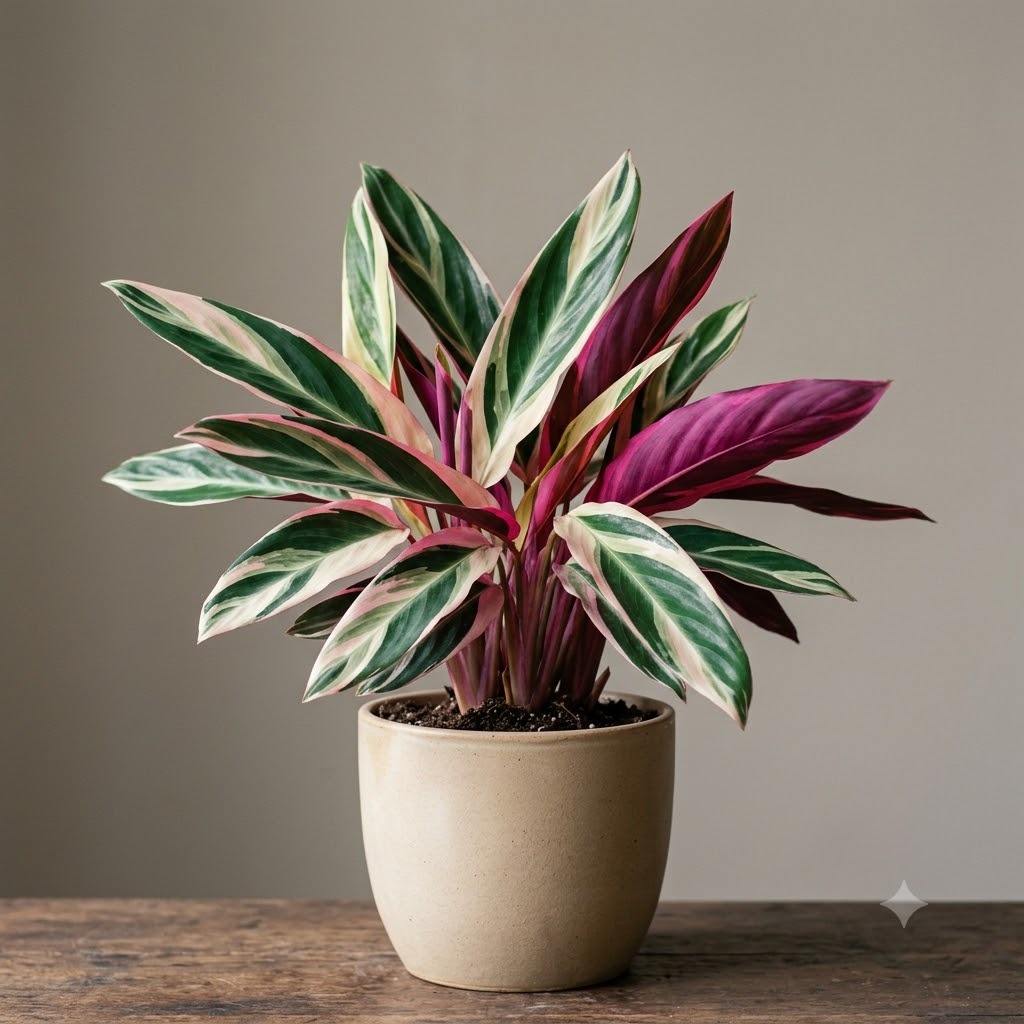
The Stromanthe Triostar is one of the most spectacularly colored houseplants you can grow. Its long, pointed leaves are painted in bold streaks of green, cream, and pink, and the undersides glow a deep magenta-pink that flashes as the plant moves. It belongs to the prayer-plant family, so it folds its leaves upward at night and lowers them again by day, giving it a quietly animated presence. It is undeniably a diva - it wants warmth, humidity, and clean water, and it will sulk at dry air - but for owners willing to meet its needs, few plants offer this much color. Think of it as a reward for a bit of attention rather than a beginner starter plant.
Origin & Natural Habitat
Stromanthe sanguinea, the species behind the 'Triostar' cultivar, is native to the tropical rainforests of Brazil. There it grows on the shaded forest floor beneath the canopy, in warm, consistently humid air and rich, moist (but not waterlogged) soil. It is a member of the Marantaceae - the prayer-plant family that also includes Calathea, Maranta, and Ctenanthe.
Understanding this habitat explains everything about its care. It is used to filtered light, high humidity, warm stable temperatures, and soft rainwater. The dry air, cold drafts, and hard tap water of a typical home are the exact opposite - which is why this plant rewards owners who recreate a little slice of that humid, sheltered forest floor.
Appearance
The Triostar is grown entirely for its foliage, which is genuinely striking. Each lance-shaped leaf is variegated in irregular streaks and brushstrokes of dark green, pale green, and creamy white, with pink tones washed through the new growth. Turn a leaf over and the underside is a rich burgundy-pink - so a full plant seems to shimmer between green above and pink below.
Key features:
- Multicolor variegation: green, cream, and pink, with no two leaves alike.
- Magenta undersides: the dramatic pink reverse that flashes as leaves move.
- Prayer-plant movement: leaves rise and fold at night, lower and open by day.
- Clumping habit: it grows as a bushy clump of upright, slightly arching leaves rather than a vine.
Indoors it typically reaches 60-90 cm tall and forms a fuller, wider clump over time. New leaves often emerge tightly rolled and blushed pink before unfurling.
Why People Love It - Qualities & Benefits
- Extraordinary color: the pink, cream, and green combination is among the most vivid in the houseplant world - it looks almost painted.
- Living movement: the daily raising and lowering of the leaves gives it real character.
- Compact and bushy: it stays a manageable clump, good for tabletops and plant shelves.
- Non-climbing and tidy: no pole or training needed, unlike the aroid climbers.
- Humidity and calm: like most rainforest foliage plants it adds moisture and a soothing green presence to a room, and its color brings warmth to a space.
Care
Light
Bright, indirect light is ideal - enough to keep the variegation vivid, but never harsh direct sun, which scorches the leaves and fades the colors. An east-facing window or a spot set back from a brighter window is perfect. Too little light dulls the pink and cream markings, so it needs good light to stay colorful, just not direct rays.
Watering
Keep the soil lightly and evenly moist during the growing season - not soggy, but never bone dry. Water when the top centimeter or two begins to dry, and let excess drain away. This plant is sensitive to water quality: hard, chlorinated, or fluoridated tap water often causes brown leaf edges. Where possible use filtered water, rainwater, or tap water left to stand overnight. Reduce watering in winter but do not let the plant dry out completely.
Soil & Potting
Use a light, moisture-retentive but well-draining mix - a peat- or coir-based potting mix with some perlite works well. Always use a pot with drainage holes.
Humidity & Temperature
This is the make-or-break factor. The Triostar wants high humidity, ideally 60% or more. In dry indoor air the leaf edges brown and curl. Group it with other plants, stand it on a pebble-and-water humidity tray, or run a humidifier. Keep it warm at 18-27 °C and away from cold drafts, radiators, and anything below about 15 °C.
Feeding
Feed every 2-4 weeks through spring and summer with a balanced liquid houseplant fertilizer at half strength. It is sensitive to fertilizer salt buildup, so err on the light side and flush the soil occasionally. Stop feeding in winter.
Repotting
Repot every 1-2 years in spring when it becomes crowded, moving up one pot size. This is also the ideal time to divide the clump if you want more plants.
Propagation
Stromanthe is propagated by division, not by cuttings. At repotting time, gently tease the root ball apart into clumps, making sure each section has both healthy roots and several leaves. Pot each division into fresh moist mix, keep it warm and humid, and be patient - divisions can sulk for a few weeks while they settle before resuming growth. Stem cuttings in water do not work reliably for this plant.
Common Problems & Pests
- Brown, crispy leaf edges: the classic Triostar complaint - usually dry air, underwatering, or hard/chlorinated water. Raise humidity and switch to filtered or rested water.
- Curling or folding leaves that stay closed: thirst or very low humidity.
- Faded, dull variegation: too little light (or, less often, too much direct sun bleaching it).
- Yellowing lower leaves: overwatering or soggy soil.
- Pests: spider mites love the dry conditions that stress this plant - watch for fine webbing and stippling. Mealybugs can also appear. Raise humidity, wipe the leaves, and treat with insecticidal soap or neem oil.
Toxicity & Safety
Non-toxic to cats and dogs. Stromanthe, like other members of the prayer-plant family, is considered pet-safe and is not poisonous to people. That makes it a good colorful choice for homes with curious pets or children, though as with any plant it is still best not to let animals or toddlers chew the leaves.
Pros & Cons
Pros
- Among the most vividly colored houseplants available.
- Charming daily leaf movement.
- Compact, tidy, non-climbing clump.
- Pet-safe and non-toxic.
- Rewarding for attentive owners.
Cons
- Fussy about humidity - browns easily in dry air.
- Sensitive to hard and chlorinated water.
- Not a beginner-proof plant.
- Can be prone to spider mites when stressed.
- Divisions can be slow to settle.
Best Suited For
- Owners who want maximum foliage color and enjoy attentive care.
- Humid rooms, or homes where a humidifier or pebble tray is realistic.
- Pet households wanting a colorful non-toxic plant.
- Bright spots out of direct sun.
Not ideal for absolute beginners, very dry heated rooms with no humidity boost, or people who want a plant they can ignore.
FAQ
Why do my Triostar's leaf edges turn brown and crispy? Almost always dry air, underwatering, or hard/chlorinated tap water. Raise the humidity above 60%, keep the soil evenly moist, and switch to filtered, rested, or rainwater.
Why are the leaves folding up and not opening? Some folding at night is normal prayer-plant behavior. If leaves stay tightly folded during the day, the plant is usually thirsty or the air is too dry.
Is it safe for cats and dogs? Yes. Stromanthe is non-toxic to pets and people, so it is a good pet-friendly colorful plant - though it is still wise to discourage chewing.
How do I propagate it? By division at repotting time - split the clump so each piece has roots and leaves. Water cuttings do not work well for this plant.
Why has the pink and cream color faded? Usually not enough light. Move it to a brighter spot with indirect light to keep the variegation vivid, but avoid direct sun, which bleaches it.