Swedish Ivy (Plectranthus verticillatus)
Swedish Ivy - Plectranthus verticillatus - is one of the easiest and fastest trailing houseplants you can grow, which is a big part of why it has stayed popular for decades.
🗓️ Last reviewed: June 2026
Overview
Swedish Ivy - Plectranthus verticillatus - is one of the easiest and fastest trailing houseplants you can grow, which is a big part of why it has stayed popular for decades. The name is doubly misleading: it is not from Sweden and it is not a true ivy at all. What it actually is, is a member of the mint family with neat, glossy, scalloped round leaves that spill over the edge of a pot in soft green curtains. It grows quickly, forgives neglect, roots from a cutting almost without trying, and asks for very little in return. If you want a lush, full hanging basket or a shelf plant that fills out fast and tolerates a beginner's mistakes, this is about as friendly as houseplants get. It is not a dramatic flowering showpiece - it is a reliable, good-looking green plant that simply works.
Origin & Natural Habitat
Plectranthus verticillatus comes from southern Africa, where it grows in warm, frost-free regions across South Africa, Eswatini, and into tropical East Africa. In the wild it behaves as a low, spreading groundcover, sending out trailing stems that root where they touch moist soil, forming dense mats in dappled shade beneath larger plants. It belongs to the mint family, Lamiaceae - the same family as basil, coleus, and true mints - which explains its square stems and its eager, almost weedy willingness to grow. The "Swedish" in the common name is thought to come from how widely it was grown as a houseplant in Sweden and across Scandinavia, where it became a windowsill staple; the "ivy" is simply borrowed for the trailing, cascading habit. Neither word is botanically accurate, but the name stuck. The species name verticillatus means "whorled," a reference to the way the leaves and small flower spikes are arranged in tiers along the stem.
Appearance
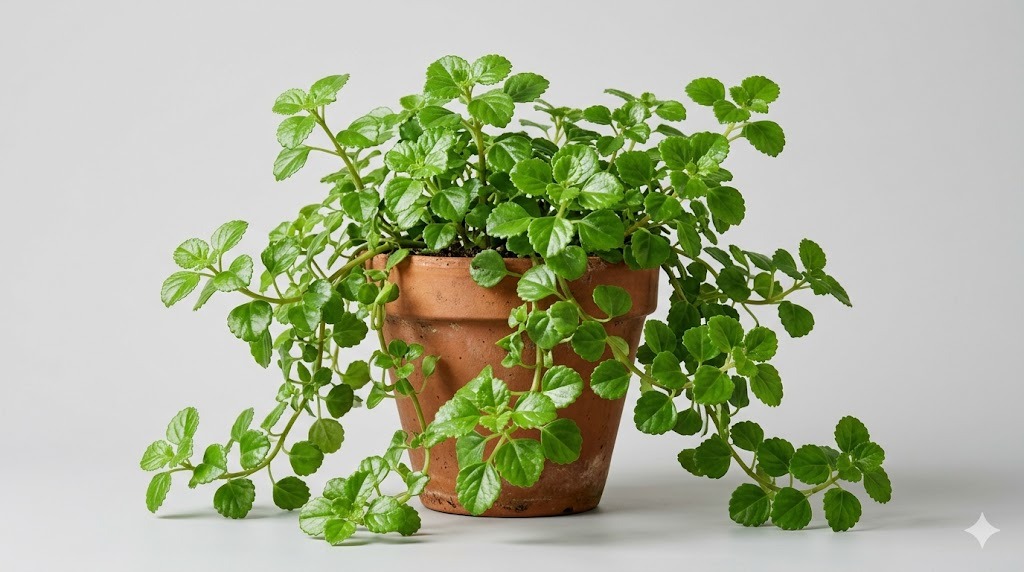
Picture soft, trailing stems lined with pairs of glossy, rounded leaves that have gently scalloped edges, like small green coins with wavy rims. The foliage is the whole point: bright fresh green, faintly succulent and slightly fleshy to the touch, sometimes with a subtle purplish tint to the leaf undersides or stems, and often carrying a faint herbal scent when brushed - a giveaway of its mint-family roots. The stems are square in cross-section, another mint-family trait, and they trail and tumble rather than climb. Now and then the plant pushes up small spikes of pale white or lilac tubular flowers, but these are modest and incidental; nobody grows Swedish Ivy for the blooms.
- Leaves: glossy, rounded, with scalloped or crenate edges, slightly fleshy, fresh green, often with a purplish tint beneath.
- Stems: square in cross-section (a mint-family signature), soft and trailing, rooting readily where they touch soil.
- Flowers: occasional small spikes of pale white-to-lilac tubular blooms - a minor bonus, not the reason to grow it.
- Growth habit: a fast, spreading trailer that cascades over the edge of a pot and fills out quickly.
Indoors the trailing stems commonly reach around 30-60 cm or more, spilling generously over the sides of a basket within a single season.
Why People Love It - Qualities & Benefits
- Genuinely easy and forgiving: this is one of the best beginner houseplants there is - it tolerates irregular watering, average light, and ordinary indoor conditions without sulking.
- Fast-growing: it fills out a pot or basket quickly, so you get a lush, full plant in weeks rather than waiting years.
- Pet-safe and non-toxic: it is listed as non-toxic to cats and dogs, a real reassurance for homes with curious animals.
- Ridiculously easy to propagate: cuttings root in a glass of water almost on their own, so one plant becomes many for free.
- Perfect for hanging baskets and shelves: the soft trailing habit does the styling work for you, spilling attractively over any edge.
- Atmosphere: like most leafy plants it adds a little humidity and a lot of life to a room. (The popular "air-purifying" claims are real but modest in a normal home; the bigger benefit is psychological, since greenery measurably lifts mood and lowers stress.)
Care
Light
Bright, indirect light is ideal and keeps the plant compact, full, and a healthy fresh green. A spot near an east window, or set back from a brighter south or west window, suits it perfectly. It will happily tolerate medium light, which is part of why it is so beginner-friendly, but in low light it stretches: the stems grow long and bare, with wide gaps between leaves, reaching for the window. Avoid harsh direct midday sun, which can scorch and pale the leaves, though a little gentle morning sun is welcome. If your plant is getting leggy and sparse, the usual fix is simply more light.
Watering
Water when the top inch (about 2-3 cm) of soil has dried out, then water thoroughly until it drains through. The slightly fleshy leaves hold a little water, so the plant copes well if you are a day or two late, but it does not want to sit in constantly soggy soil - that is the fast route to root rot. In winter, when growth slows, let it dry a bit more between waterings. Learn to read it: limp, wilting stems usually mean it is thirsty and perk back up after a drink, while yellowing, mushy lower leaves point the other way, toward overwatering. When in doubt, check the soil with your finger before reaching for the can.
Soil & Potting
Use a standard, good-quality, well-draining potting mix. It is not fussy, but adding a little perlite improves drainage and keeps the roots happy. The one firm rule is drainage: always plant into a container with drainage holes, since soggy roots are the main way people kill an otherwise unkillable plant.
Humidity & Temperature
Swedish Ivy is relaxed about humidity and does just fine in normal household air, which is another point in its favour. It prefers comfortable room temperatures, roughly 15-24 C, and dislikes cold drafts and frost - keep it away from chilly windowsills in winter and never let it sit below about 10 C. Average indoor warmth and humidity suit it well, so you generally do not need to fuss with misting or pebble trays.
Feeding
Feed every 2-4 weeks through spring and summer with a balanced liquid fertilizer at half strength to support its fast growth. It is a vigorous grower and appreciates the food, but it is not demanding - ease off in autumn and stop feeding in winter while growth has slowed.
Repotting
This is a fast grower, so it can fill its pot more quickly than slower houseplants. Repot in spring when you see roots crowding the surface or creeping out of the drainage holes, moving up just one pot size. Because it grows so readily from cuttings, many people simply refresh a tired, leggy plant by taking cuttings and starting over rather than repotting an old specimen.
Pinching & pruning to keep it bushy
This is the single best habit for a great-looking Swedish Ivy, so it earns its own note. Because the plant grows fast and naturally trails, it can turn long and bare over time. The fix is easy: pinch out the growing tips regularly. Each time you pinch a stem, it branches into two, so frequent pinching keeps the plant dense, full, and bushy instead of stringy. Do not throw the pieces away - every tip you pinch is a ready-made cutting. A plant that is pinched often stays compact and lush for years.
Propagation
Swedish Ivy is famously, almost comically easy to propagate - it is one of the best plants to learn on. Take a stem-tip cutting a few inches long, strip the lower leaves, and drop it into a glass of water. Roots usually appear within a week or two, sometimes faster, because the stems root so eagerly in the wild. Once you have a small bundle of roots, pot the cutting up in moist soil. You can also push cuttings straight into damp potting mix and skip the water step entirely. For the fullest, most impressive result, root several cuttings and plant them together in one basket so it fills out into a thick, lush trailing plant in no time.
Common Problems & Pests
- Leggy, bare stems: the most common complaint, usually caused by too little light - move it somewhere brighter and pinch the tips to encourage a bushier shape.
- Yellowing lower leaves: most often a sign of overwatering and soggy roots - let the mix dry more between waterings.
- Limp, wilting stems: usually simple thirst; the plant typically recovers quickly after a good drink.
- Brown leaf edges: can come from underwatering, very dry air, or too much harsh direct sun.
- Pale, scorched leaves: too much direct midday sun - move it back from the window into brighter indirect light.
- Sparse, thin growth: a symptom of low light combined with no pinching; brighten its spot and pinch regularly.
- Pests: generally trouble-free, but watch for mealybugs, aphids, spider mites, and occasionally whitefly. Isolate the plant and treat with insecticidal soap or neem oil.
Toxicity & Safety
Non-toxic and pet-safe. Swedish Ivy (Plectranthus verticillatus) is listed as non-toxic to cats, dogs, and humans, which makes it a genuinely reassuring choice for homes with curious pets and small children. This is a care note rather than an invitation to eat it - it is an ornamental plant, not food - but a nibbling cat or dog will not be poisoned by it, and that peace of mind is one of its quiet strengths, especially for a trailing plant that dangles within easy reach.
Pros & Cons
Pros
- Extremely easy and forgiving - an ideal first houseplant.
- Fast-growing and quick to fill out a basket or shelf.
- Non-toxic and pet-safe for homes with animals and children.
- Roots almost effortlessly from cuttings.
- Tolerates average light and ordinary indoor conditions.
Cons
- Goes leggy and bare in low light without regular pinching.
- Flowers are small and insignificant - grown for foliage, not bloom.
- Fast growth means more frequent pinching and occasional repotting.
- Stems can get stringy and tired with age, often best refreshed from cuttings.
- Sensitive to overwatering and cold drafts.
Best Suited For
- Beginners who want a near-foolproof, fast-growing plant.
- Homes with curious pets, thanks to its non-toxic status.
- Hanging baskets and high shelves where the stems can cascade.
- Anyone who wants quick, lush, free plants from easy cuttings.
Not ideal for very dark rooms, anyone wanting a showy flowering plant, or those who dislike the regular pinching it needs to stay full.
FAQ
Is Swedish Ivy actually from Sweden, and is it a real ivy? No on both counts. It is native to southern Africa and belongs to the mint family, not the ivy family. The "Swedish" name comes from how widely it was grown as a houseplant in Scandinavia, and "ivy" simply describes its trailing habit.
Why is my Swedish Ivy getting long and bare? Almost always too little light, often combined with not enough pinching. Move it to a brighter indirect spot and pinch out the growing tips regularly - each pinch makes the stem branch, which keeps the plant full and bushy.
Is Swedish Ivy safe for cats and dogs? Yes. Plectranthus verticillatus is listed as non-toxic to cats and dogs, so it is a safe choice for pet households - though it is still an ornamental plant, not something to be eaten.
How often should I water it? Water when the top inch of soil has dried out, then water thoroughly and let it drain. The slightly fleshy leaves store some water, so it forgives the odd missed day, but it dislikes sitting soggy - so check the soil rather than following a fixed schedule, and water less in winter.
How do I propagate it? Take a stem-tip cutting a few inches long, strip the lower leaves, and put it in a glass of water. Roots usually form within a week or two, after which you can pot it up in soil. It is one of the easiest plants of all to propagate.