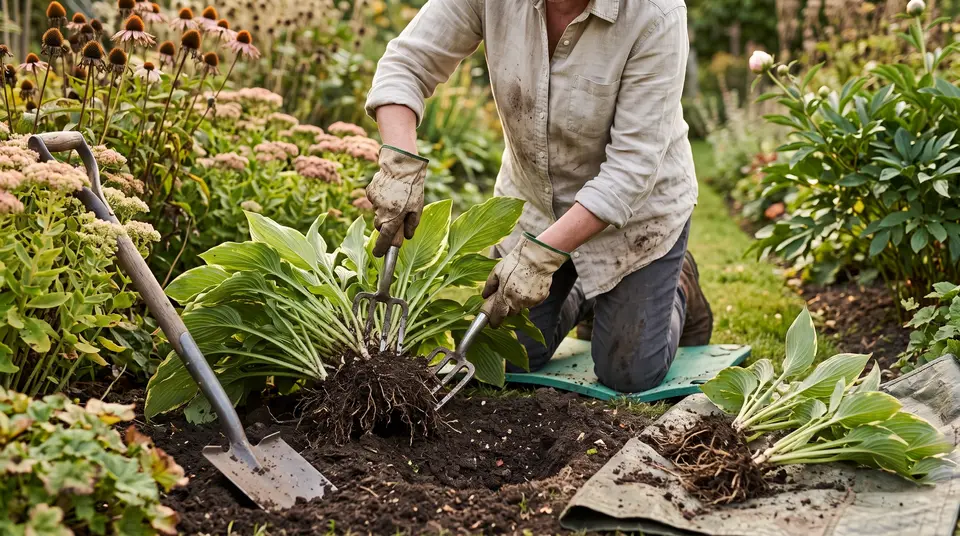
How to Overwinter Tender Plants
Tender plants do not need a heated greenhouse to survive winter: they need to be lifted or moved at the first warning of frost and kept frost-free. The timing, the RHS method for dahlias, cannas, pelargoniums and fuchsias, and the mistakes that rot a tuber.
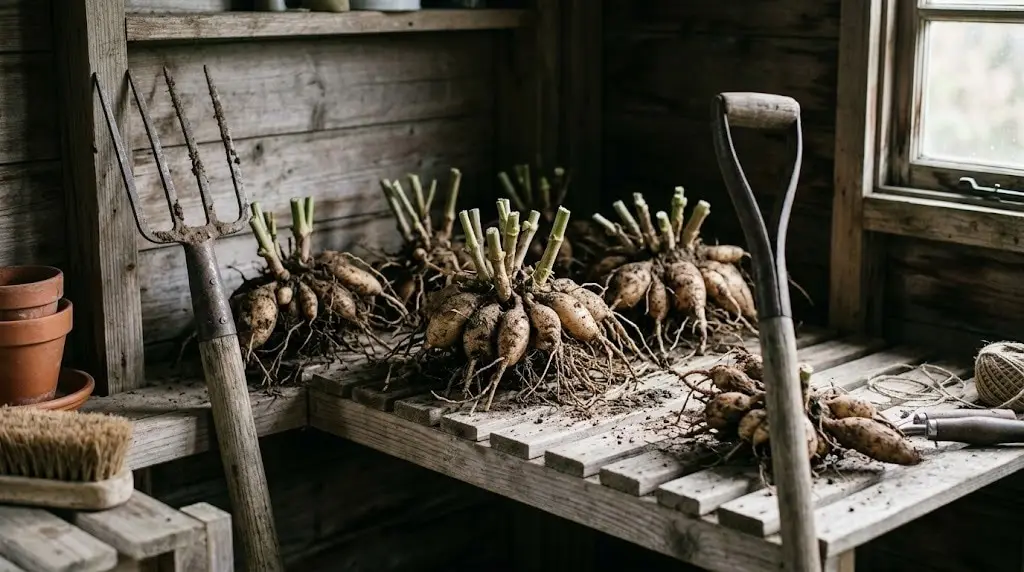
Tender plants are often lost in storage rather than in the ground, and most of those losses are rot. The Royal Horticultural Society’s method comes down to three things: lift or move them at the first warning of frost, dry them off properly, and store them somewhere frost-free. For overwintering, the RHS treats a frost-free place as one where the night-time minimum stays around 4°C (39°F), such as a cool greenhouse or conservatory; for dormant tubers, a dark, cool but frost-free shed or garage does the job.
Tender here means plants that will not survive being frozen: dahlias, cannas, tuberous begonias, gladioli, pelargoniums and tender fuchsias among them. In milder areas and in sheltered, well-drained parts of the garden, the RHS notes, some can stay in the ground under a thick mulch.
Get the timing right
The trigger is the first frost forecast, not the calendar. The RHS says tender plants need protection at the first warning of frost, usually between September and November in the UK.
Lift dahlias and cannas after the first frost has blackened the foliage. The RHS adds that if the frosts come late, dahlias should still be dug up by late November.
Bring pelargoniums and tender fuchsias in before the first autumn frosts. The RHS advises bringing container pelargoniums under cover, and lifting and potting those in the ground, before the first frosts.
To pin the dates for your own area, check your zone with the hardiness zone lookup and then work backwards from your local average first frost date.
Dahlias
The RHS considers it safest to store dahlia tubers inside over winter, especially on heavy soil, which tends to be colder and wetter in winter. Its method:
- Dig carefully. Use a fork to lift the plants without cutting or bruising the tubers, because damage can lead to rot in storage. Shake off as much soil as possible.
- Trim, but don’t divide. Cut the stems back to 5-15cm (2-6in) and trim off any damaged tubers. If you want to split the clump, wait until spring: wounds made now are an entry point for rot.
- Dry them completely. Turn the tubers upside down for a few weeks so all the moisture drains out of the hollow stems.
- Pack them. Lay them in shallow crates or open-topped boxes and cover them with dry spent potting compost, sand, straw or newspaper. Label each cultivar.
- Store them dark, cool and frost-free, such as in a shed or garage. In very cold spells, cover them with newspaper or old fleece.
- Check them regularly and remove any tubers that show signs of rot.
Only store dry, healthy, undamaged tubers. If you live in a milder area or have light, free-draining soil, the RHS says you can leave dahlias in the ground: cut the stems down and cover the crowns with 15cm (6in) of mulch such as garden compost, chopped stems or bark chippings. It is the easiest option but a risk, because a harsh or very wet winter can lead to losses. Our dahlia profile covers the growing side.
Cannas and tuberous begonias
Cannas (RHS): after the foliage has been blackened by frost, cut the stems back to 5cm (2in) from the base, prise the plants out with a fork without damaging the roots or fleshy rhizomes, and remove debris and loose soil. Store them in trays of sand, coir or vermiculite with the crown just showing, and keep them just moist in a cold, frost-free greenhouse or conservatory. Cannas in containers can stay in their pots after cutting back.
Tuberous begonias are lifted and stored in the same way as dahlias (RHS).
Pelargoniums
The RHS describes three ways to overwinter pelargoniums:
- Cuttings. Rooted cuttings kept in trays of compost on a well-lit indoor windowsill. The RHS calls this more reliable than keeping plants semi-dormant, and good for large numbers of soft-stemmed types such as Zonal pelargoniums.
- Plants in containers under glass, for a small number. Pot up plants from the ground in John Innes No. 1 compost, cut them back to 10cm (4in) if space is short, and keep them in a light, airy, frost-free place. Check plants in active growth at least once a week and water if they are drying; cut-back plants need barely any water until growth resumes in spring. Open vents on mild days to reduce rotting off.
- Bare-rooted plants, the least reliable method and only for varieties with tough, woody stems. Lift them before the first frosts, shake off the soil, let the leaves and stems dry off in crates in a frost-free place, then wrap them in newspaper or hang them upside down from the roof of a frost-free shed or garage. In early spring, keep those that show signs of growth, soak the roots for a few hours, pot them up and cut all stems back to about 10cm (4in).
The RHS adds that many pelargoniums keep flowering at 7-10°C (45-50°F), and that in winter they should be watered only sparingly, so the compost can dry between waterings.
Tender fuchsias
The RHS guide to tender fuchsias overwinters them in a frost-free greenhouse, on a windowsill or in a conservatory, and plants them out after the last frosts in early summer. How much cold a fuchsia takes depends on its hardiness rating, which is on the label.
Before anything comes indoors
The University of Illinois Extension advises inspecting plants for insects and disease before bringing them back into the house, and keeping them away from your other indoor plants for two to three weeks, because they may bring pests or disease in with them.
What can stay outside
Not everything needs lifting. Where lifting and storing are not necessary, the RHS says a thick, dry mulch over the crown of non-woody plants may be all the winter protection they need. In mild areas cannas and dahlias can be overwintered this way, as can deciduous agapanthus and globe artichokes. Straw, garden compost, chipped bark or well-rotted manure all work. The RHS notes that mulched plants may come into growth and flower a little later than those lifted and replanted in spring.
Where it is not practical to lift or move a tender plant, the RHS advice is to wrap it up, and it lists wrapping pots among the ways to prevent winter damage. Our guide on winter frost protection goes into the wrapping methods in more detail.
The mistakes that cost you plants
- Damaged or wounded tubers. Cuts and bruises let rot in during storage, so lift carefully and leave dividing until spring (RHS).
- Storing wet. Drying the tubers upside down for a few weeks is the step that matters most for dahlias (RHS).
- No labels. The RHS advises labelling each cultivar when you pack them.
- Never checking. Check stored tubers regularly and remove any that show rot (RHS).
- Overwatering pelargoniums in winter. Water sparingly so the compost dries between waterings (RHS).
Get the timing and the dryness right and overwintering is low effort. Most of the work is in autumn, and most of the reward arrives when you unpack a crate in spring and find everything firm and ready to start again. For everything else that needs doing this season, the fall garden checklist covers the rest of the autumn jobs.
Sources
- Royal Horticultural Society, Overwintering tender plants: lifting and mulching, How to grow dahlias, How to grow pelargoniums, How to grow tender fuchsias. Read 28 October 2026.
- University of Illinois Extension, Houseplants: care. Read 28 October 2026.
Recommended Gear on Amazon
- Frost protection fleece - browse current options and reviews on Amazon.
- Min-max thermometer - browse current options and reviews on Amazon.
- Storage crates - browse current options and reviews on Amazon.
As an Amazon Associate, we earn from qualifying purchases - at no extra cost to you. This helps us keep producing free, in-depth guides.