Agapanthus (Lily of the Nile)
Agapanthus, often called Lily of the Nile or African Lily, is a favourite for its bold, rounded flower heads that hover on tall stems above a fountain of glossy, strap-shaped leaves.
🗓️ Last reviewed: July 2026
Overview
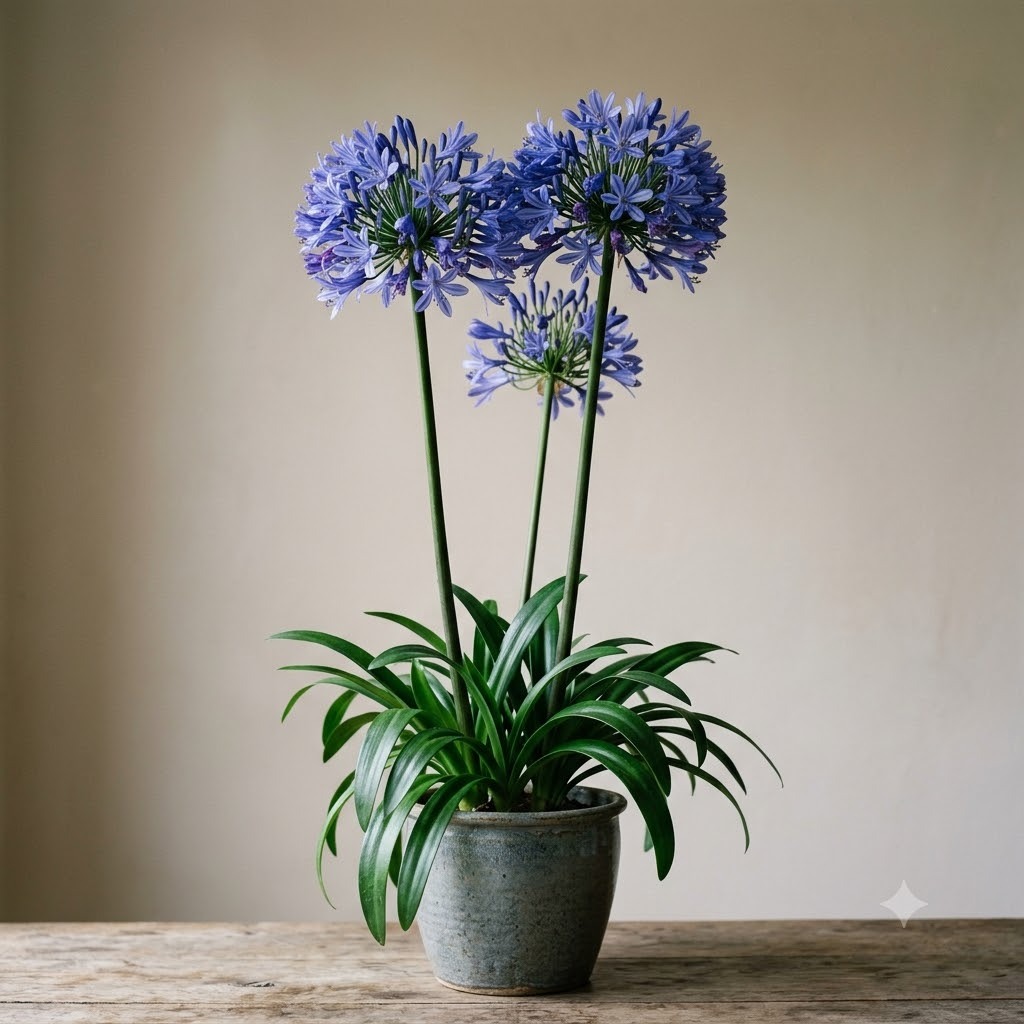
Agapanthus, often called Lily of the Nile or African Lily, is a favourite for its bold, rounded flower heads that hover on tall stems above a fountain of glossy, strap-shaped leaves. Each flower head is a firework-like sphere of many trumpet-shaped blooms, most famously in shades of blue and violet, but also in crisp white. Flowering in mid to late summer, Agapanthus brings a cool, architectural elegance to borders, containers, and driveways alike. It is a South African plant that loves sun and good drainage and is genuinely easy to grow in the right spot. The main thing to know is that some types are deciduous and hardier while others are evergreen and more tender - matching the type to your climate is the key to success.
Origin & Natural Habitat
Agapanthus is native to South Africa, where it grows from coastal areas and grassy slopes to rocky hillsides. Some species come from summer-rainfall regions and die back in winter (deciduous types), while others come from milder climates and keep their leaves year-round (evergreen types). This origin explains its love of sun, warmth, and good drainage, and the crucial hardiness difference between the two groups. Knowing whether your variety is a tougher deciduous type or a more tender evergreen one tells you how to grow and overwinter it well.
Appearance
Agapanthus forms a clump of arching, strap-shaped leaves, usually deep green and glossy, growing from fleshy roots. In summer, tall bare stems rise well above the foliage - anywhere from around 45 cm to 1.2 m depending on variety - each topped by a rounded umbel: a spherical cluster of many small trumpet- or star-shaped flowers. The classic colours are blues and violets, from pale sky-blue to deep indigo, alongside pure white and bicolored forms. Deciduous types tend to have narrower leaves and die back in winter, while evergreen types are broader-leaved and keep their foliage. After flowering, the seed heads are attractive and can be left for structure or dried. The combination of neat foliage and floating flower globes makes Agapanthus both tidy and striking.
Why People Grow It - Qualities & Benefits
- Striking flower globes: bold, rounded heads of blue, violet, or white that float above the foliage.
- Long summer display: flowers in mid to late summer, with attractive seed heads afterward.
- Architectural foliage: neat, glossy, strap-shaped leaves look good even out of flower.
- Excellent in pots: thrives in containers, where it even flowers better when a little root-bound.
- Sun- and drought-tolerant: copes well with heat and dry, sunny positions once established.
- Pollinator-friendly: the nectar-rich flowers attract bees and other pollinators.
- Good cut flower: the long-stemmed heads last well in a vase.
Care
Light & Position
Full sun is best - at least 6 hours a day - for the most flowers and the sturdiest stems. Agapanthus will tolerate a little light shade but flowers less freely there. A warm, sheltered, sunny spot, or a container that can be moved, suits it well.
Soil
Agapanthus wants fertile, well-drained soil and dislikes heavy, waterlogged ground, especially in winter. In pots, use a good, free-draining compost. Sharp drainage is particularly important for overwintering the crown safely.
Watering
Water regularly through spring and summer while in growth and flower, especially plants in pots, which dry out quickly. Reduce watering in autumn and keep plants much drier over winter, particularly evergreen and container-grown ones, to avoid rotting the roots.
Feeding
Feed through the growing season for the best flowering, especially in containers where nutrients are limited - a potassium-rich feed encourages flowers. Ease off feeding in late summer and stop over winter.
Flowering & Grooming
Deadhead spent flower stems at the base unless you want the seed heads for structure. Tidy away dead or tatty leaves. Congested clumps flower well but eventually decline; divide them every few years to keep them vigorous. Pot-grown plants actually flower best when slightly root-bound, so avoid over-potting.
Hardiness & Winter Care
This is the key point: deciduous types are noticeably hardier and can often stay in the ground in milder gardens with a protective winter mulch, while evergreen types are more tender and need protection in cold areas. In cold-winter regions, protect the crowns with a thick, dry mulch, or grow Agapanthus in pots that can be moved to a frost-free, light place (a cool greenhouse, porch, or shed) over winter. Keep overwintering plants on the dry side, as cold plus wet is what damages the crowns. In frost-prone gardens, choosing a deciduous variety greatly improves your chances.
Planting & Propagation
Plant Agapanthus in spring, once frost has passed, in a sunny, well-drained spot or a container, with the crown at or just below soil level. In borders, space clumps to allow them to fill out. The easiest propagation method is division in spring: lift the clump and separate it into sections, each with roots and shoots, then replant. Species can also be grown from seed, but seedlings take several years to flower and named varieties will not come true from seed, so division is the reliable route for keeping a particular colour or form.
Common Problems & Pests
- Winter cold and wet damage: the main problem, especially for evergreen types - cold, waterlogged crowns rot or freeze. Choose hardier types, protect crowns, and keep them dry in winter.
- Failure to flower: usually too much shade, an over-large pot, too much leaf-promoting nitrogen feed, or a very young plant. Give full sun, a snug pot, and a flower-promoting feed.
- Snails and slugs: can damage the fleshy young growth and flower stems in spring.
- Agapanthus gall midge: a pest in some regions that distorts and browns the flower buds.
- Occasional rots: in poorly drained soil.
In a sunny, well-drained spot with the right variety, Agapanthus is largely trouble-free.
Toxicity & Safety
Agapanthus is considered mildly toxic to cats, dogs, and humans if eaten, and the sap can irritate the skin in some people. The rhizomes and leaves contain irritant compounds that can cause mouth irritation, drooling, vomiting, or diarrhoea if chewed or swallowed. It is sensible to keep pets and small children from eating any part of the plant, and to wear gloves when dividing or handling cut roots if you have sensitive skin. Serious poisoning is uncommon, but if a pet eats a significant amount and shows symptoms, contact a vet.
Pros & Cons
Pros
- Striking blue, violet, or white flower globes on tall stems.
- Neat, architectural, often glossy foliage.
- Excellent in containers, and flowers better when root-bound.
- Sun- and drought-tolerant once established; good for pollinators.
- Long-lasting cut flowers and attractive seed heads.
Cons
- Evergreen types are tender and need winter protection in cold areas.
- Dislikes heavy, wet soil and cold, wet winters.
- Can be shy to flower in shade, over-large pots, or with too much nitrogen.
- Mildly toxic if eaten; sap can irritate skin.
- Clumps need occasional dividing to stay vigorous.
Best Suited For
- Sunny borders and driveways needing bold summer flowers.
- Containers, pots, and patios (where they excel).
- Coastal and Mediterranean-style gardens.
- Warm, sheltered, well-drained positions.
- Pollinator and cutting gardens.
Not ideal for deep shade, heavy wet clay, or cold gardens - unless you choose hardy deciduous types or grow in pots that can be moved under cover for winter.
FAQ
Why won't my Agapanthus flower? The usual reasons are too much shade, too large a pot, too much nitrogen-rich feed, or simply a young plant. Give it full sun, keep it slightly root-bound in a snugger pot, use a potassium-rich feed, and be patient - it may need a season or two to settle.
Are Agapanthus hardy? Can I leave them outside in winter? It depends on the type. Deciduous varieties are noticeably hardier and often survive in the ground in milder gardens with a protective mulch. Evergreen types are more tender and usually need winter protection or to be grown in pots that can be moved somewhere frost-free.
Do Agapanthus grow better in pots or in the ground? They do very well in both, but containers suit them beautifully - they flower well when a little root-bound, and pots can be moved to a sheltered spot for winter. Just water and feed potted plants more attentively in the growing season.
When and how do I divide Agapanthus? Divide congested clumps in spring, lifting and splitting them into sections, each with roots and shoots, then replant. This keeps them vigorous and is the reliable way to increase a particular variety.
Is Agapanthus safe around pets? Treat it as mildly toxic. The leaves and roots can cause mouth irritation and stomach upset if eaten, and the sap may irritate skin. Keep pets and children from chewing it, wear gloves when handling the roots if your skin is sensitive, and see a vet if a pet eats a lot.