Aster (Symphyotrichum spp.)
The Aster is one of the great stars of the autumn garden - a daisy-flowered perennial that explodes into clouds of starry blooms just as most other plants are fading.
🗓️ Last reviewed: June 2026
Overview
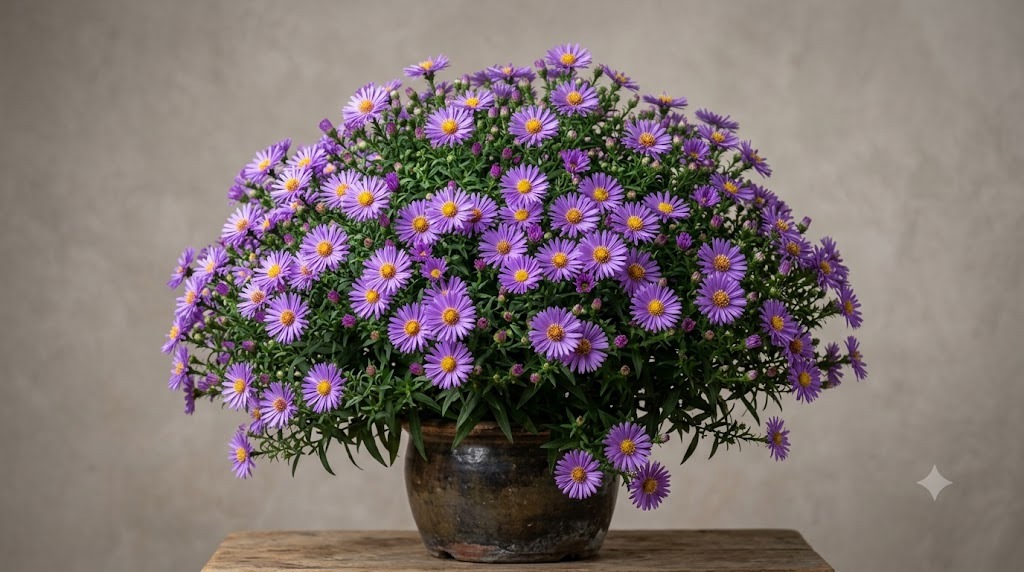
The Aster is one of the great stars of the autumn garden - a daisy-flowered perennial that explodes into clouds of starry blooms just as most other plants are fading. Their name comes from the Greek word for star, and that is exactly what they look like: masses of small, ray-petaled flowers in purple, blue, pink, lavender, and white, each with a yellow eye. Asters bridge the gap between summer and the first frosts, carrying color and life into October. They are easygoing, reliable, and beloved by late-season pollinators, making them a backbone plant for any garden that wants to keep performing right to the end of the season.
Origin & Natural Habitat
Most of the showy garden asters now classified as Symphyotrichum (including the New England and New York asters) are native to North America, where they grow wild in meadows, prairies, woodland edges, and along roadsides and streambanks. Other related asters come from Europe and Asia. In the wild they are tough, adaptable plants of open, sunny ground with seasonal moisture. Understanding this background explains their core needs in the garden: full sun, reasonably fertile soil, and steady moisture through the growing season, with excellent natural hardiness in temperate climates.
Appearance
Asters are clump-forming herbaceous perennials with upright, often branching stems clothed in narrow, lance-shaped green leaves. In late summer and autumn the plants are smothered in daisy-like flowers, each composed of slender ray petals around a central disc, usually golden-yellow. Flower color ranges across purple, violet-blue, lavender, pink, magenta, and white. Sizes vary widely by type: compact cushion-forming asters stay around 30 cm and form neat mounds, while the tall New England asters can reach 1.2 to 1.5 m. The overall effect in bloom is a dense, billowing haze of small stars, alive with bees and butterflies.
Why People Grow It - Qualities & Benefits
- Late-season color: asters bloom in late summer and autumn when most perennials are finished.
- Pollinator magnet: a vital nectar source for bees and butterflies heading into winter.
- Reliable and hardy: tough, long-lived perennials that return faithfully each year.
- Range of sizes: from low cushion types for the front of the border to tall back-of-border varieties.
- Beautiful daisy flowers: masses of starry blooms in rich purples, blues, pinks, and white.
- Easy to grow: undemanding plants that thrive in ordinary garden conditions.
Care
Light & Position
Asters perform best in full sun, which gives the strongest flowering and the sturdiest, most disease-resistant growth. They will tolerate light or partial shade, but in too much shade they flower less and grow leggy and floppy. Choose an open position with good air circulation, which helps reduce the powdery mildew that asters can be prone to.
Soil
Asters prefer moderately fertile, well-drained but moisture-retentive soil. They are not especially fussy and grow in most ordinary garden soils, but they dislike ground that bakes dry in summer or stays waterlogged in winter. Improving the soil with compost before planting helps retain the steady moisture they like.
Watering
Keep asters reasonably moist through the growing season, especially in dry spells, as drought stress encourages mildew and leaf drop. They are not bog plants, so the aim is steady, even moisture rather than constant wetness. Water at the base to keep the foliage dry, which further reduces the risk of fungal disease.
Feeding
Asters are not heavy feeders. A spring mulch of compost or a single application of a balanced general fertilizer as growth begins is usually enough for the whole season. Avoid overfeeding with high-nitrogen fertilizer, which produces soft, floppy growth at the expense of flowers and increases disease susceptibility.
Pruning
Cut the old stems down to the ground in late autumn or late winter once they have finished and died back. For the tall types, a useful technique is the "Chelsea chop" - cutting the stems back by about a third in early summer - which produces bushier, sturdier, more floriferous plants that are less likely to need staking. Tall varieties may still need support in exposed gardens.
Hardiness & Winter Care
Most garden asters are very hardy, with many Symphyotrichum types reliable to around USDA zone 4. They are herbaceous, dying back to the ground in winter and resprouting in spring, so little winter protection is needed in temperate climates. A mulch over the crown in very cold regions gives extra insurance, and good drainage in winter is more important than cold protection.
Planting & Propagation
Plant container-grown asters in spring or autumn, spacing them according to their eventual size and giving the tall types plenty of room. Asters spread into clumps over time and benefit from being lifted and divided every two to three years in spring - this keeps them vigorous, controls their spread, and provides free new plants. They can also be propagated from basal cuttings taken in spring, and species types can be raised from seed. Division is the easiest and most reliable method for named garden varieties.
Common Problems & Pests
- Powdery mildew: the most common aster problem - a white powdery coating on the leaves, worst in dry, stressed conditions and poor air circulation. Choose resistant varieties, ensure airflow, and keep plants watered.
- Aster wilt and root rot: fungal problems in poorly drained or overly wet soil, causing wilting and collapse.
- Aphids: can cluster on soft new growth - hose off or tolerate, as predators usually keep them in check.
- Slugs and snails: may damage fresh spring shoots on emerging plants.
- Legginess and flopping: tall types in shade or rich soil can sprawl - the early-summer chop and good light prevent this.
Good air circulation, full sun, and steady moisture prevent most aster troubles.
Toxicity & Safety
Generally considered non-toxic to cats, dogs, and humans. True asters and the closely related Symphyotrichum species are not regarded as poisonous, and they are widely grown in family and pet-friendly gardens. As with any plant, nibbling large amounts may cause mild stomach upset in pets, so it is sensible to discourage that. (Note: some unrelated plants carry "aster" in a common name; this guide covers the true ornamental garden asters.)
Pros & Cons
Pros
- Valuable late-summer and autumn color.
- Excellent nectar source for bees and butterflies.
- Hardy, reliable, and long-lived.
- Range of sizes for every part of the border.
- Easy to grow and to propagate by division.
Cons
- Can be prone to powdery mildew, especially if dry or crowded.
- Tall types may need staking or an early-summer chop.
- Spread into clumps that need dividing every few years.
- Need full sun for the best display.
- Flower only in the later part of the season.
Best Suited For
- Autumn borders and late-season color schemes.
- Pollinator and wildlife gardens.
- Mixed perennial and cottage-garden borders.
- The front of the border (cushion types) or the back (tall types).
- Naturalistic and prairie-style planting.
Not ideal for very shady gardens, soils that bake dry in summer, or gardeners wanting flowers in the early part of the year.
FAQ
When do asters flower? Asters are late-season stars, blooming from late summer through autumn, often right up to the first frosts. This makes them invaluable for keeping a garden colorful when most other perennials have finished.
Why does my aster have white powdery leaves? That is powdery mildew, the most common aster problem. It is worst when plants are dry, stressed, or crowded with poor air circulation. Choose mildew-resistant varieties, keep plants watered in dry spells, give them full sun, and space them for good airflow.
How do I stop tall asters from flopping? Give them full sun, avoid overfeeding, and use the "Chelsea chop" - cut the stems back by about a third in early summer. This produces shorter, bushier, sturdier plants that flower well and are far less likely to need staking.
Are asters safe for pets? Yes, true ornamental asters are generally considered non-toxic to cats and dogs. As with any plant, it is best to discourage pets from eating large quantities, which could cause mild stomach upset.
Do asters come back every year? Yes, garden asters are hardy herbaceous perennials. They die back to the ground in winter and resprout each spring, returning reliably for many years. Dividing the clumps every two to three years keeps them vigorous.