Balloon Flower (Platycodon grandiflorus)
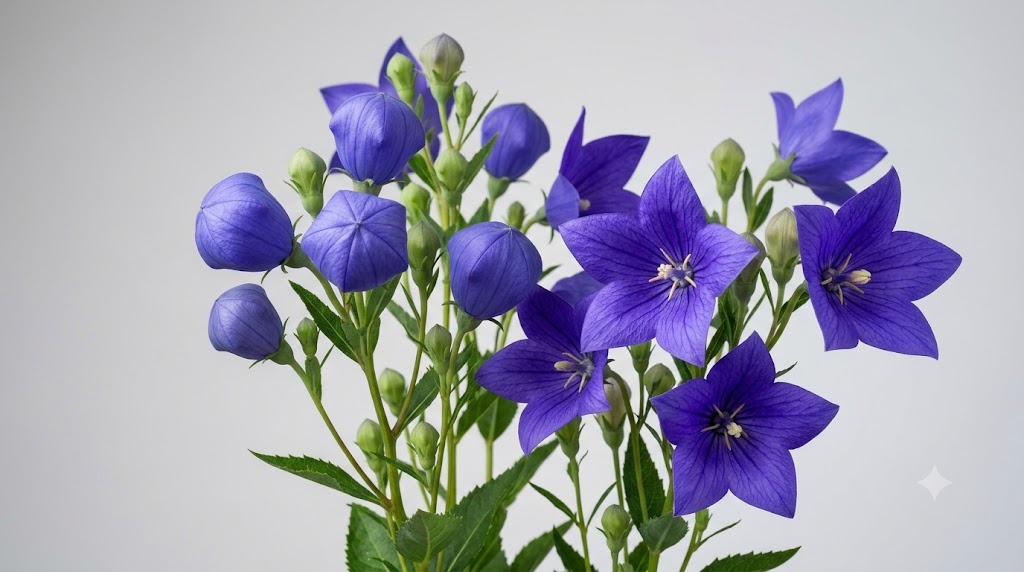
The Balloon Flower is one of the most charming and well-behaved perennials you can grow, and it owes its name to a delightful trick: before it opens, each bud swells into a puffy, balloon-like pod, plump and inflated, that finally pops open into a wide, upward-facing, five-pointed star.
🗓️ Last reviewed: June 2026
Overview
The Balloon Flower is one of the most charming and well-behaved perennials you can grow, and it owes its name to a delightful trick: before it opens, each bud swells into a puffy, balloon-like pod, plump and inflated, that finally pops open into a wide, upward-facing, five-pointed star. The flowers, in a lovely blue-violet (with white and pink forms too), have a clean, simple, slightly cupped shape and a calm, satisfying character. Balloon flowers bloom through much of summer, are happy in full sun to part shade, and are wonderfully long-lived once settled - a quiet, dependable plant that comes back year after year. They are a perennial favorite with children, who love to gently pop the inflated buds, and they ask very little of the gardener in return.
Origin & Natural Habitat
The balloon flower, Platycodon grandiflorus, is the only species in its genus and a member of the bellflower (Campanula) family. It is native to East Asia - China, Korea, Japan, and eastern Siberia - where it grows wild in open grassy meadows, on sunny slopes and hillsides, and at the edges of woodland, in well-drained ground. It has a long history of cultivation and use in those regions, where the thick, fleshy root is a traditional food and herbal ingredient. This wild heritage explains its garden nature: it likes sun or light shade, wants soil that drains freely, dislikes being waterlogged, and forms a deep, fleshy taproot that makes it long-lived but resentful of being moved.
Appearance
Balloon flowers form a neat, rounded, upright clump usually 30 to 60 cm tall, clothed in slightly bluish-green, oval, toothed leaves. The real magic is in the buds: each one inflates into a smooth, five-sided, balloon-shaped pod before splitting open at the seams into a broad, flat-faced, five-pointed star flower, typically 5 to 8 cm across, held facing upward. The classic color is a rich blue-violet with darker veining, but there are also pure white and soft pink forms, as well as semi-double types with extra layers of petals. Dwarf varieties stay compact at around 20 to 25 cm, ideal for the front of a border or a container. The overall effect is tidy, upright, and quietly elegant.
Why People Grow It - Qualities & Benefits
- The balloon buds: the inflated, puffy buds are unique and genuinely delightful, especially for children.
- Long-lived and reliable: a true perennial that returns and improves year after year.
- Long flowering season: blooms through much of summer, especially if deadheaded.
- Beautiful star flowers: clean, upward-facing five-pointed stars in blue-violet, white, or pink.
- Easy and low-maintenance: undemanding, trouble-free, and rarely bothered by pests.
- Pet-safe and family-friendly: non-toxic and a favorite with kids.
Care
Light & Position
Balloon flowers do well in full sun to part shade. In cooler climates, full sun gives the sturdiest, most upright plants and the most flowers. In hot summer regions, a little afternoon shade is welcome and keeps the colors from fading and the plants from flopping. Aim for at least four to six hours of sun a day. In too much shade they grow leggy and flower less, and may need staking; in full sun in cooler areas they stay compact and self-supporting.
Soil
They want moist but well-drained soil, ideally moderately fertile and humus-rich, with a neutral to slightly acidic pH. The single most important thing is good drainage - their fleshy taproot will rot in heavy, wet, waterlogged ground, especially over winter. Improve dense clay with organic matter to open it up. In light, free-draining soil they are very happy and long-lived. They are not fussy about fertility, growing well in ordinary garden soil.
Watering
Balloon flowers like even moisture during the growing season and appreciate watering in dry spells, particularly young plants in their first year while the taproot is developing. Once established, the deep root makes them reasonably drought-tolerant, and mature clumps cope well with ordinary summers. The thing to avoid is waterlogging - soggy soil rots the root. Water steadily but make sure the ground drains; aim for moist, never sodden.
Feeding
They are light feeders and grow well in ordinary soil without much attention. A spring mulch of compost or a single light feeding of a balanced general fertilizer at the start of the growing season is plenty. Avoid heavy, high-nitrogen feeding, which encourages soft, floppy, leafy growth at the expense of flowers and sturdiness. Lean and steady suits them well.
Pruning
Deadheading spent flowers regularly keeps balloon flowers blooming for longer through the summer and tidies the plant. Taller types in rich soil or shade can flop and may benefit from staking or a discreet support early in the season. In autumn the foliage dies back; cut it down then or leave it and tidy in spring. The most important seasonal note is not pruning at all but patience: they are very slow to emerge in spring, so do not give up on them or dig them out by mistake.
Hardiness & Winter Care
Balloon flowers are fully hardy, reliable across USDA zones 3 to 8, and need no special winter protection in their range. The plant dies back completely to its root over winter and reappears the following spring. The one real risk in winter is wet, heavy soil rotting the dormant taproot, so good drainage is the key to long life. Because they are reliably perennial and long-lived, a well-placed clump will return for many years.
Planting & Propagation
Balloon flowers are easily grown from seed, sown in spring (they may flower in their first or second year), and are also widely sold as young potted plants. Plant them in spring or early autumn in well-drained soil, spacing clumps around 30 cm apart. The big thing to know is that they form a deep, fleshy taproot and strongly resent disturbance - they rarely need dividing, dislike being moved, and are slow to re-establish if you do. So choose their spot carefully and plant them where they are to stay. Mark the position clearly, because they emerge very late in spring and are easily forgotten and dug up. If you must propagate, basal cuttings in spring are gentler than digging up and splitting the root.
Common Problems & Pests
- Root rot in wet soil: the main weakness - the fleshy taproot rots in heavy, waterlogged ground, especially over winter. Ensure good drainage.
- Slugs and snails: can nibble the soft new shoots as they emerge in spring.
- Flopping: taller types in rich soil or too much shade may need staking.
- Slow spring emergence: not a disease but a common worry - they appear very late, so gardeners fear they have died (and sometimes dig them up).
- Occasional pests: generally trouble-free, with only rare problems from things like aphids.
- Disturbance damage: they sulk and recover slowly if dug up, moved, or divided.
Overall they are one of the more problem-free perennials; good drainage and a little patience in spring cover most of it.
Toxicity & Safety
Non-toxic and considered safe for cats, dogs, and humans. Balloon flowers are not listed among the poisonous garden plants and are widely grown in family and pet-friendly gardens; the root has in fact long been used as a traditional food and herbal ingredient in East Asia. This makes them a relaxed, worry-free choice around children and animals, and they are a particular favorite with kids, who love to gently pop the inflated balloon buds. As with any plant, eating large quantities of an ornamental is not advisable, but there is no toxicity concern to be aware of.
Pros & Cons
Pros
- Unique, delightful balloon-like buds that children love to pop.
- Genuinely long-lived and reliable perennial.
- Long summer flowering, especially with deadheading.
- Easy, low-maintenance, and rarely troubled by pests.
- Non-toxic and completely pet- and family-safe.
Cons
- Very slow to emerge in spring - easy to give up on or dig up by mistake.
- Resents disturbance; dislikes being moved or divided.
- Taproot rots in heavy, wet, poorly drained soil.
- Taller types may flop and need staking.
- Slower to establish than fast-growing fillers.
Best Suited For
- The front and middle of borders and cottage-garden schemes.
- Low-maintenance, long-lived perennial planting.
- Containers and the edge of beds (dwarf forms especially).
- Sunny or lightly shaded sites with well-drained soil.
- Family and pet-friendly gardens, and gardens with curious children.
Not ideal for heavy, wet, poorly drained soil, gardeners who like to move plants around, or anyone too impatient to wait for their late spring emergence.
FAQ
Why hasn't my balloon flower come up in spring - is it dead? Almost certainly not. Balloon flowers are notoriously slow to emerge, often appearing weeks after most other perennials are well up. This is completely normal and not a sign of trouble. The real danger is impatient gardeners deciding the plant has died and digging it up or planting over it. Mark the spot clearly in autumn, and simply wait - it will reappear.
Why is it called a balloon flower? Because of its buds. Before each flower opens, the bud swells and inflates into a smooth, puffy, five-sided pod that looks just like a little balloon. It then splits open at the seams into a wide, upward-facing, five-pointed star flower. Children especially love to gently squeeze and pop the inflated buds, which is part of the plant's charm.
Do balloon flowers need dividing? No, and it is best not to. Balloon flowers form a deep, fleshy taproot and strongly resent disturbance. They are long-lived and happy left alone for years, and dividing or moving them sets them back badly. If you want more plants, grow them from seed or take basal cuttings in spring rather than splitting the root.
Are balloon flowers safe for pets and children? Yes. Balloon flowers are non-toxic and considered safe for cats, dogs, and people - the root is even a traditional food in East Asia. They are widely grown in family and pet-friendly gardens and are a favorite with children, who enjoy popping the balloon-like buds. There is no toxicity concern to worry about.
How much sun do balloon flowers need? They do well in full sun to part shade. In cooler climates, full sun gives the sturdiest, most upright plants and the most flowers. In hot-summer regions, a little afternoon shade is welcome to protect the colors and keep the plants from flopping. Aim for at least four to six hours of sun a day for good blooming.