Baptisia (False Indigo)
Baptisia, commonly called False Indigo, is one of the finest long-lived perennials for a low-maintenance garden.
🗓️ Last reviewed: July 2026
Overview
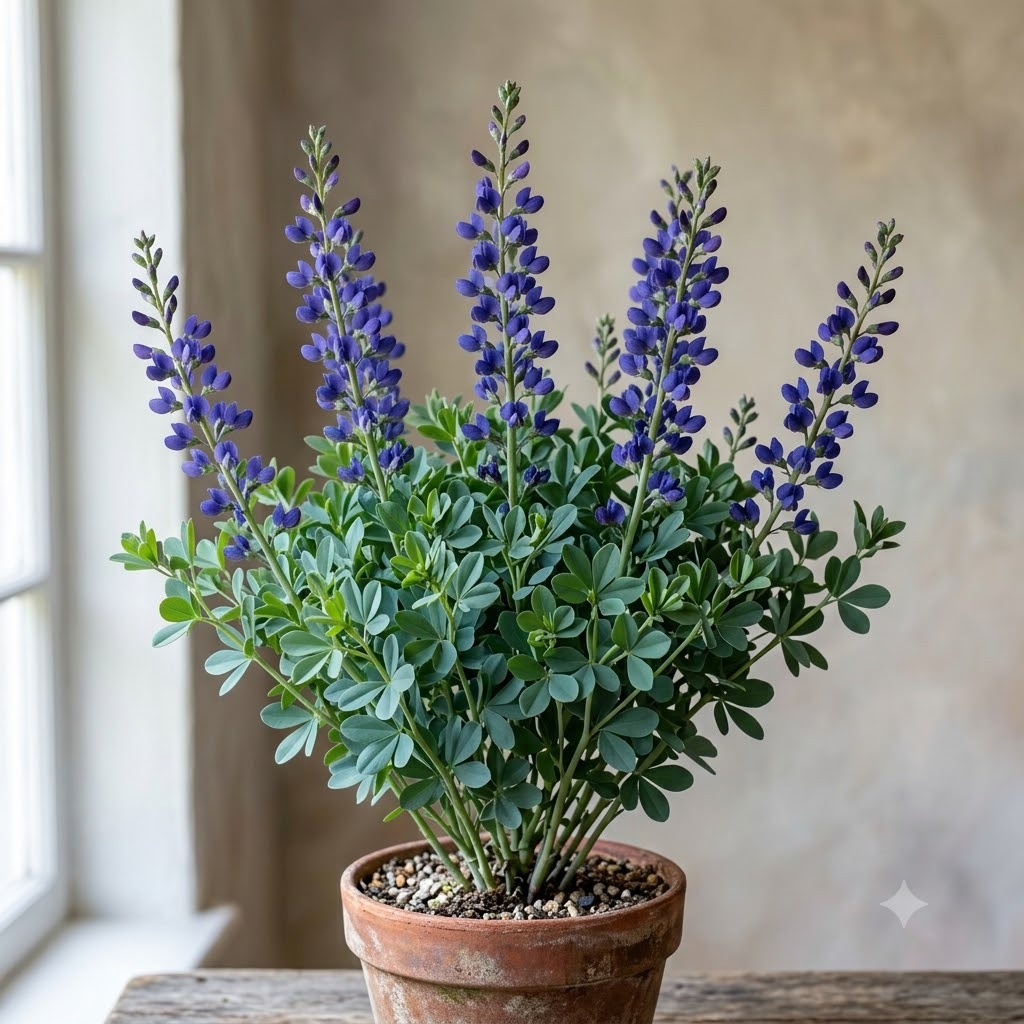
Baptisia, commonly called False Indigo, is one of the finest long-lived perennials for a low-maintenance garden. It forms a substantial, shrub-like clump of blue-green foliage topped in late spring and early summer by tall spikes of pea-like flowers, most famously in rich indigo-blue. Once established, it is remarkably tough - drought-tolerant, pest-resistant, and capable of thriving in the same spot for decades with almost no attention. The trade-off is patience: Baptisia grows a deep taproot and takes a few years to reach its full, impressive size, and that same taproot makes it very difficult to move once settled. Choose its position carefully, plant it, and then largely leave it alone - and it will reward you for years.
Origin & Natural Habitat
Baptisia is native to central and eastern North America, where it grows in prairies, open woodlands, meadows, and along stream banks and roadsides. It is a member of the pea and bean family (Fabaceae), which means, like clover and lupins, its roots fix nitrogen from the air with the help of soil bacteria - one reason it thrives in poor soil and needs little feeding. The name "false indigo" comes from its historical use as a substitute for true indigo dye. Its prairie origins explain its love of full sun, its deep drought-defeating taproot, and its ability to shrug off heat, poor soil, and neglect.
Appearance
Baptisia forms a rounded, bushy, almost shrub-like mound, typically 90 to 120 cm tall and wide at maturity. The foliage is attractive in its own right - blue-green, clover-like leaflets arranged in threes on upright stems that stay handsome all season. In late spring to early summer, it sends up spikes of pea- or lupin-like flowers. The classic species, Baptisia australis, bears rich violet-blue blooms, but modern hybrids offer yellow, white, purple, and bicolored flowers. After flowering, the plant produces charcoal-black, inflated seed pods that rattle when dry and add ornamental interest into autumn and winter. Its size and structure let it work almost like a small flowering shrub in the border.
Why People Grow It - Qualities & Benefits
- Exceptionally long-lived: a true "plant it and forget it" perennial that can thrive for decades.
- Tough and drought-tolerant: the deep taproot makes established plants highly resistant to drought.
- Handsome all season: the blue-green foliage and shrubby form look good long after the flowers fade.
- Beautiful spring flowers: spikes of blue, yellow, or white pea-like blooms.
- Ornamental seed pods: black rattling pods extend interest into autumn.
- Pollinator-friendly and nitrogen-fixing: attracts bees and improves poor soil.
- Pest- and deer-resistant: rarely troubled by pests or browsing animals.
Care
Light & Position
Full sun is best - at least 6 hours a day - for the strongest, most upright growth and the most flowers. Baptisia tolerates light or part shade but tends to grow looser and floppier and may need support. Choose the position carefully at planting: because of the deep taproot, Baptisia strongly dislikes being moved once established.
Soil
Baptisia is unfussy and adapts to poor, average, or lean soils, including sandy and rocky ground. Good drainage matters most; it dislikes heavy, permanently wet soil. Being a nitrogen-fixer, it does not need or want rich, fertile soil.
Watering
Water regularly through the first year or two while the taproot develops. After that, Baptisia is notably drought-tolerant and rarely needs supplemental watering except in extreme drought.
Feeding
Little to no feeding is needed. As a nitrogen-fixing legume, Baptisia makes much of its own, and rich feeding produces weak, floppy growth. Skip the fertilizer.
Pruning & Support
After flowering, you can leave the seed pods for ornamental interest or cut the plant back for a tidier shape. Cut the whole plant down to the ground in late autumn or winter once it has died back. In shadier sites or richer soil, a grow-through support ring placed early in the season keeps the clump upright.
Hardiness & Winter Care
Baptisia is a hardy herbaceous perennial that dies back to the ground each winter and resprouts vigorously in spring. It is very cold-tolerant and needs no special winter protection in most temperate gardens. Be patient in spring - it can be one of the later perennials to emerge.
Planting & Propagation
Plant potted Baptisia in spring or autumn, choosing its final position carefully because it does not transplant well once the taproot is established. Give it room to reach its full shrubby size. Propagation is best done from seed, which germinates more readily after scarifying (nicking the hard seed coat) or a period of cold; seedlings take a few years to reach flowering size. Division is possible but difficult and risky because of the deep, brittle taproot - if attempted, do it in early spring and expect the plant to sulk for a season afterward. For most gardeners, buying a young plant or growing from seed is easier than dividing.
Common Problems & Pests
- Slow to establish: Baptisia takes a few years to reach full size - this is normal, not a fault. Patience is essential.
- Flopping: usually caused by too much shade or over-rich soil; give full sun and lean ground, or use a support ring.
- Transplant shock: moving an established plant often sets it back badly or kills it because of the deep taproot - site it right the first time.
- Occasional pests: generally very pest-free; you may occasionally see minor leaf damage from weevils or caterpillars, rarely serious.
Baptisia is one of the most trouble-free perennials once established.
Toxicity & Safety
Baptisia contains compounds (including alkaloids) that can be mildly toxic if eaten in quantity, and it is generally considered to have low-level toxicity to humans and pets. The seeds and pods in particular should not be eaten. In practice, poisoning is rare because the plant is unpalatable, but it is sensible to keep children and pets from chewing the foliage, pods, or seeds. If a pet consumes a significant amount and shows symptoms such as vomiting, contact a vet.
Pros & Cons
Pros
- Extremely long-lived and low-maintenance.
- Very drought-tolerant once established.
- Attractive blue-green foliage and shrubby form all season.
- Beautiful spring flower spikes and ornamental seed pods.
- Pest- and deer-resistant; nitrogen-fixing; good for pollinators.
Cons
- Slow to establish - takes a few years to reach full size.
- Deep taproot makes it very hard to move once planted.
- Can flop in shade or rich soil.
- Foliage, pods, and seeds are mildly toxic if eaten.
Best Suited For
- Sunny borders and mixed perennial beds needing a shrub-like anchor.
- Prairie, meadow, and naturalistic plantings.
- Low-maintenance and drought-tolerant gardens.
- Poor and lean soils where other plants struggle.
- Pollinator gardens.
Not ideal for gardeners who want instant impact, shady sites, heavy wet soil, or anyone likely to want to rearrange the border often.
FAQ
Why is my Baptisia growing so slowly? That is completely normal. Baptisia puts its early energy into a deep taproot and can take three or more years to reach full, flowering size. Be patient - it is worth the wait and lives for decades.
Can I move my Baptisia to another spot? It is best not to. The deep taproot makes established plants very difficult to transplant, and they often sulk or die afterward. Choose the position carefully at planting so you never have to move it.
Why is my Baptisia flopping open in the middle? Usually too much shade or too-rich soil. Give it full sun and lean ground for a firm upright shape, or place a support ring over the clump early in the season.
Do I need to feed or water it much? No. As a nitrogen-fixing legume with a deep taproot, established Baptisia needs little feeding and little water. Overfeeding actually causes weak, floppy growth.
Is Baptisia safe around pets and children? It is best treated as mildly toxic - the foliage, pods, and seeds should not be eaten. Poisoning is uncommon because the plant is unpalatable, but keep pets and small children from chewing it, and see a vet if a pet ingests a lot.