Blue Grama Grass
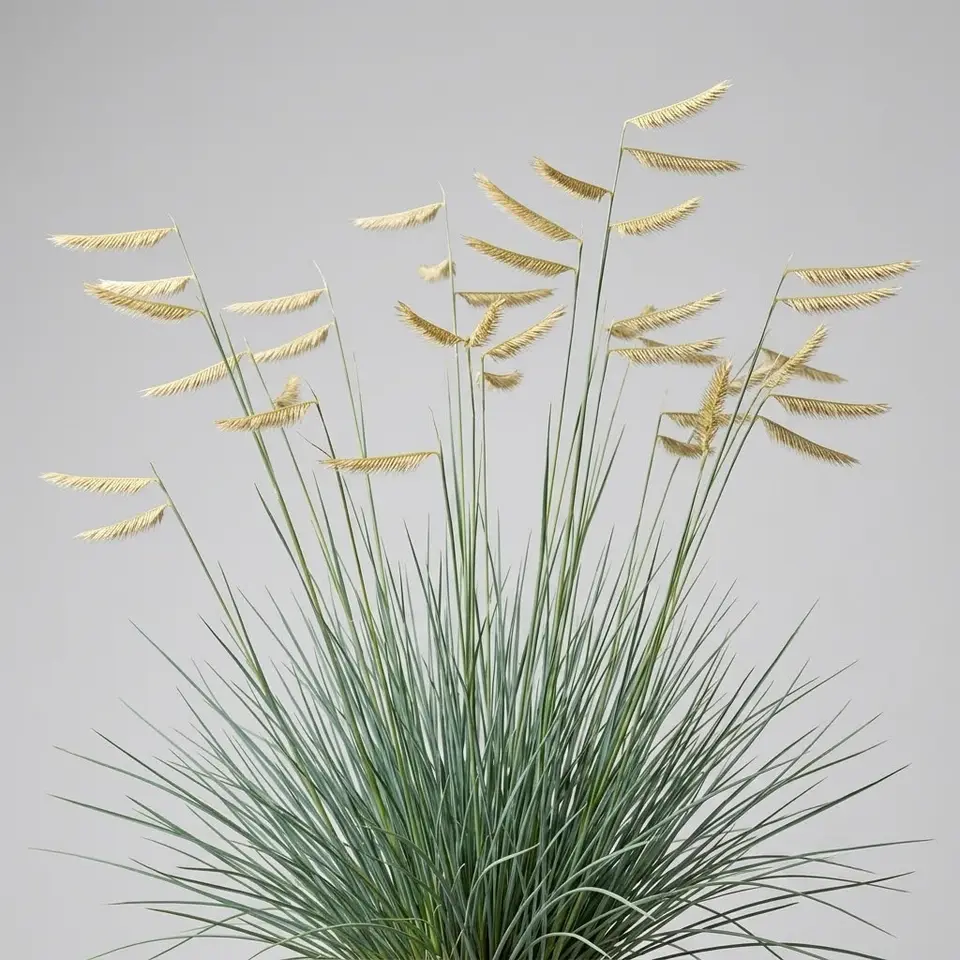
Blue Grama's seed heads hang sideways like tiny combs or false lashes, hovering over a tough shortgrass native that survives on about 25 cm of rain a year.
Last reviewed: October 2026
 AI illustration
Overview
Blue Grama's seed heads hang sideways like tiny combs or false lashes, hovering over a tough shortgrass native that survives on about 25 cm of rain a year. As lawns shrink and water bills grow, this little prairie stalwart keeps finding new gardens. (Bouteloua gracilis.)
Origin & Natural Habitat
The shortgrass prairie backbone from Canada to Mexico - one of North America's most drought-adapted grasses. Hardy zones 3-10.
Appearance
Fine gray-green tufts 20-40 cm; midsummer flowers hang horizontally like blonde eyelash combs ('Blonde Ambition' holds them tallest and longest), curling charmingly as they dry.
Why People Grow It - Qualities & Benefits
- The comic, beloved eyelash seed heads
- Extreme drought + cold tolerance (zone 3, 25 cm rain)
- Native lawn alternative: mowable or meadow
- Tidy scale for hell-strips and gravel
Care
Light: Full sun.
Water: Very low - among the most drought-proof plants in horticulture; overwatering is the real risk.
Soil: Any drained soil incl. clay and caliche; lean preferred.
Temperature & Hardiness: Zones 3-10; warm-season.
Feeding: Never.
Maintenance: As ornamental clump: cut to 8 cm in spring, done. As eco-lawn: sow or plug, mow monthly at 8 cm or not at all; it tops out around ankle height by itself. 'Blonde Ambition' is the showpiece cultivar.
Planting & Propagation
Seed (easy, and the lawn route) or spring division of clumps. Establishes fast for a native.
Common Problems & Pests
- Overwatering rot: the modern gardener's hazard
- Sparse look in rich shade (wrong assignment)
- Otherwise weatherproof to a fault
Toxicity & Safety
Not on the ASPCA lists. The ASPCA Animal Poison Control Center's plant lists for cats and dogs have no entry for this plant, and we have no other checked source either way. If a pet chews it and seems unwell, call your vet or a pet poison helpline.
Pros & Cons
Pros
- Hilarious, photogenic seed heads
- Runs on rain alone in most climates
- Native lawn alternative
- Zone-3 bulletproof
Cons
- Modest until it blooms
- Not for shade or irrigation-heavy beds
- Eco-lawn look is 'meadow', not 'golf'
Best Suited For
- Water-wise and xeriscape gardens
- No-mow native lawns
- Hell-strips, slopes, gravel
- Pollinator meadows (it's a skipper host)
FAQ
Can it really replace a lawn?
In sun with modest traffic, yes - seeded blue grama (often blended with buffalograss) makes an ankle-high, walkable, nearly unwatered green space. It won't fake a putting green; it will halve the water bill.
What's the best ornamental form?
'Blonde Ambition' - taller, with chartreuse eyelash flowers held horizontally on stiff stems into winter; a deserved award-winner.
How little water is 'very little'?
Established plantings live on natural rainfall almost everywhere south of the boreal line - supplemental water is for looks in true desert only.
Gear for growing blue grama grass
Links go to Amazon or a partner store (such as Adagio Teas) and may earn us a commission at no extra cost to you. As an Amazon Associate we earn from qualifying purchases. We link gear types, not sponsors' picks: you choose the exact product.