Calla Lily (Zantedeschia)
The Calla Lily is one of the most elegant flowers in the garden - prized for its smooth, sculptural, trumpet-shaped blooms that seem almost too perfect to be real.
🗓️ Last reviewed: July 2026
Overview
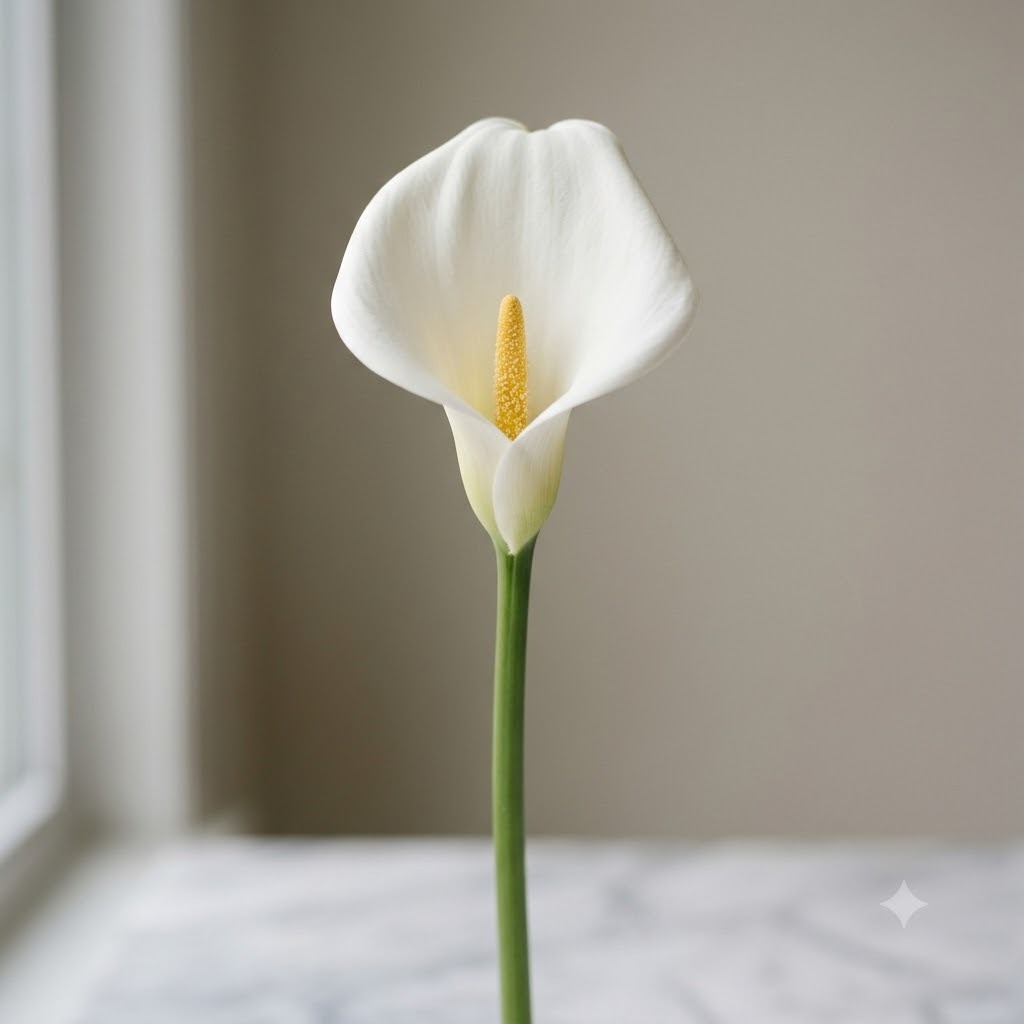
The Calla Lily is one of the most elegant flowers in the garden - prized for its smooth, sculptural, trumpet-shaped blooms that seem almost too perfect to be real. Despite the name, it is not a true lily; it belongs to the genus Zantedeschia. Its signature "flower" is actually a curved, flaring spathe wrapped around a central finger-like spadix, held on a tall bare stem above glossy, often spotted, arrow-shaped leaves. The classic white calla is a florist's favourite for weddings, while modern coloured hybrids bring rich shades of yellow, orange, pink, purple, and near-black to summer containers and borders. It grows from a rhizome, is tender to frost, and is toxic if eaten - a graceful plant that repays a little understanding of its two growing styles.
Origin & Natural Habitat
Calla lilies are native to southern Africa. The classic white species, Zantedeschia aethiopica, grows in marshy ground, along stream banks, and in seasonally wet places, and is naturally a moisture-loving, semi-aquatic plant. The coloured hybrids descend largely from other Zantedeschia species that grow in areas with a distinct dry dormant season and prefer drier conditions once dormant. This split origin is the single most useful thing to know: white aethiopica wants steady moisture and can even sit at a pond edge, while the coloured hybrids want moisture during growth but a drier rest, and rot easily in cold, wet soil.
Appearance
Calla lilies grow from rhizomes, producing clumps of upright, glossy, arrow- or heart-shaped leaves, often speckled with translucent white or silver spots. From the foliage rise tall, smooth, leafless stems, each topped by the classic calla bloom: a single elegant spathe curled into a funnel around a slender central spadix. The white calla is the iconic form, but hybrids come in warm yellows and oranges, soft pinks, deep burgundy, purple, and dramatic near-black. The white species is the largest and most robust, reaching around 60-90 cm, while many coloured hybrids are more compact, making them ideal for pots. The overall look is clean, modern, and sculptural.
Why People Grow It - Qualities & Benefits
- Elegant, sculptural flowers: the smooth spathe is uniquely graceful and modern.
- Superb cut flower: long-lasting and iconic in bouquets and wedding arrangements.
- Rich colour range: coloured hybrids offer yellow, orange, pink, purple, and near-black.
- Attractive foliage: glossy arrow-shaped leaves, often spotted, look good even out of flower.
- Container-friendly: compact hybrids are excellent in pots and patio displays.
- Waterside option: the white species thrives in moist ground and at pond margins.
Care
Light & Position
Calla lilies do best in full sun to light, partial shade. In hot climates a little afternoon shade helps prevent scorching, while in cooler regions they want as much sun as possible for the best flowering. The white species is the most tolerant of damp, shadier, waterside spots.
Soil
Give callas rich, fertile soil improved with plenty of compost. Drainage matters most for the coloured hybrids, which rot in cold, waterlogged ground. The white aethiopica, by contrast, tolerates and even enjoys constantly moist, boggy soil.
Watering
This is where the two types differ. Water the white aethiopica generously and keep it reliably moist - it never wants to dry out fully in growth. For coloured hybrids, keep the soil moist during active growth and flowering, but avoid waterlogging and let them dry out as they enter dormancy, when overwatering causes rhizome rot.
Feeding
Feed during the growing season with a balanced fertilizer to support strong stems and repeated flowering. Avoid overly high-nitrogen feeds, which can encourage leaves at the expense of flowers.
Grooming
Remove faded blooms and yellowing leaves to keep plants tidy and reduce disease. As coloured hybrids die back naturally in autumn, allow the foliage to yellow before cutting it down, so the rhizome can recharge.
Hardiness & Winter Care
Calla lilies are tender and damaged by frost. In frost-free and mild climates they can stay in the ground, and the white species is the hardiest of the group. In cold-winter regions, treat them as tender: lift the rhizomes in autumn before hard frost, dry them, and store them somewhere cool, dark, and frost-free until spring, or grow them in pots that can be moved under cover for winter.
Planting & Propagation
Plant rhizomes in spring after the danger of frost has passed, setting them a few centimetres deep with the growing points facing up, in a warm spot. In cold regions you can start them indoors in pots in late winter for an earlier display. The main method of propagation is division: lift and separate the rhizomes when dormant or in early spring, ensuring each piece has a healthy growing point. Callas can also be raised from seed, but this is slow and hybrids will not come true.
Common Problems & Pests
- Rhizome rot: the most common problem, caused by cold, wet, waterlogged soil - especially in coloured hybrids. Ensure good drainage and ease off water during dormancy.
- Aphids: cluster on soft new growth and flower stems - hose off or squash.
- Slugs and snails: can damage emerging shoots and foliage.
- Grey mould (Botrytis): in cool, damp, still air - improve airflow and remove affected parts.
- Poor flowering: usually from too much shade, overly rich nitrogen feeding, or a rhizome that has not had a proper dormant rest.
Toxicity & Safety
Toxic if eaten. Calla lilies contain insoluble calcium oxalate crystals throughout the plant. If chewed or swallowed by pets or people, they can cause intense burning and irritation of the mouth, drooling, and difficulty swallowing, and stomach upset. Keep the plant, cut stems, and any lifted rhizomes away from curious pets and children, and wash your hands after handling. The sap can also irritate sensitive skin, so gloves are sensible when dividing rhizomes.
Pros & Cons
Pros
- Elegant, sculptural, iconic flowers.
- Excellent long-lasting cut flower.
- Rich colour range in modern hybrids.
- Attractive, often spotted foliage.
- White species thrives in moist, waterside spots.
Cons
- Tender - needs lifting or moving under cover in cold winters.
- Coloured hybrids rot easily in cold, wet soil.
- Toxic if eaten (calcium oxalate) - a hazard for pets and children.
- Coloured types need a proper dry dormancy to flower well.
Best Suited For
- Elegant borders and modern, sculptural planting schemes.
- Containers and patio displays (compact coloured hybrids).
- Pond and bog margins (the white aethiopica).
- Cutting gardens and wedding or event flowers.
Not ideal for cold gardens left unprotected in winter, homes with pets or children likely to chew plants, or gardeners wanting a fully hardy, plant-and-forget perennial.
FAQ
Is a calla lily a true lily? No. Despite the name, calla lilies are Zantedeschia, not true lilies. They are a separate genus native to southern Africa and grow from rhizomes.
Why is my calla lily rotting? The usual cause is cold, wet, poorly drained soil, especially with coloured hybrids. Improve drainage, avoid overwatering, and let hybrids dry out as they enter dormancy.
Are calla lilies safe for pets? No. They contain calcium oxalate crystals and are toxic if chewed or eaten, causing painful mouth irritation, drooling, and stomach upset. Keep them away from pets and children.
What is the difference between the white and coloured callas? The white species (Zantedeschia aethiopica) loves constant moisture and even boggy ground. The coloured hybrids want moisture in growth but a drier dormant rest and sharper drainage, or they rot.
Do I need to lift calla lilies for winter? In frost-free climates they can stay in the ground. In cold-winter regions they are tender - lift and store the rhizomes frost-free, or grow them in pots you can move under cover.