Candytuft (Iberis)
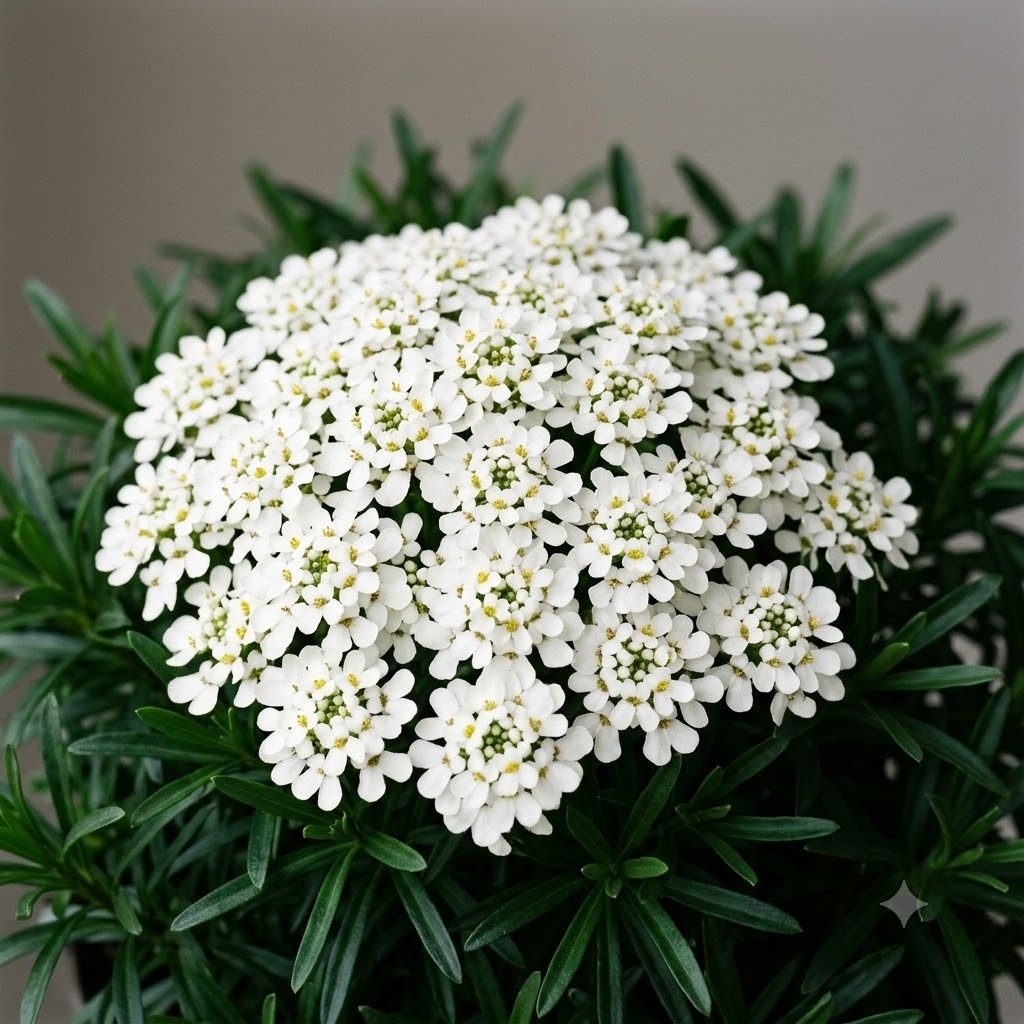
Candytuft is a low, spreading evergreen plant that erupts into such a dense sheet of pure white flowers in spring that the foliage almost disappears beneath it.
🗓️ Last reviewed: July 2026
Overview
Candytuft is a low, spreading evergreen plant that erupts into such a dense sheet of pure white flowers in spring that the foliage almost disappears beneath it. Forming a neat, weed-smothering mound of narrow dark-green leaves, it is one of the most reliable and rewarding edging and rockery plants for a sunny, well-drained spot. The perennial types are evergreen and tough, returning bigger every year, while annual candytufts add pink, lilac, and purple to the mix. Undemanding, drought-tolerant, and covered in flowers loved by bees and butterflies, candytuft is a classic front-of-border and rock-garden performer that asks for little more than sun and good drainage.
Origin & Natural Habitat
Candytuft belongs to the genus Iberis, in the cabbage family, native to southern Europe and the Mediterranean region, extending into western Asia - the name "Iberis" refers to the Iberian Peninsula where many species grow. In the wild it is found on sunny rocky slopes, cliffs, screes, and stony, free-draining ground, often on alkaline (limy) soils. This mountain and Mediterranean origin explains its garden character perfectly: it wants full sun, sharp drainage, and lean stony soil, and it shrugs off heat and drought. Its low, spreading, evergreen habit is an adaptation to bright, exposed, rocky sites.
Appearance
The most popular garden candytuft, the perennial Iberis sempervirens, forms a low, dense, spreading evergreen mound - typically 15-30 cm tall and wider across - of narrow, glossy dark-green leaves. In mid to late spring it becomes smothered in flat-topped clusters of small, pure-white flowers, so profuse they can hide the leaves entirely. The individual flowers are tiny four-petalled crosses (a giveaway of its cabbage-family kinship), massed into showy heads. Annual candytufts (such as Iberis umbellata) are looser and more upright, offering flowers in white plus shades of pink, lilac, rose, and purple. The evergreen perennial's year-round foliage makes it valuable even out of bloom.
Why People Grow It - Qualities & Benefits
- Spectacular spring flowering: a solid sheet of white that smothers the whole plant.
- Evergreen (perennial types): neat dark foliage provides year-round structure.
- Excellent edging and groundcover: low, spreading, and weed-suppressing.
- Drought-tolerant and tough: thrives on poor, dry, stony soil once established.
- Pollinator magnet: bees and butterflies flock to the flowers.
- Low-maintenance: undemanding beyond a shear after flowering.
Care
Light & Position
Full sun is essential - at least 6 hours of direct sun a day - for the best flowering and a compact habit. In shade it grows sparse, flowers poorly, and becomes leggy. Give it an open, sunny, well-drained position.
Soil
Sharp drainage is the key requirement. Candytuft wants light, gritty, free-draining soil and tolerates poor, lean, stony ground happily. It prefers neutral to alkaline conditions and dislikes heavy, wet soils, where it is prone to rot. On clay, add grit or plant on a raised bed, wall, or slope.
Watering
Very drought-tolerant once established. Water new plants until settled, then only in prolonged dry spells. Overwatering and wet winter soil are the main dangers - both cause rot far more often than drought does.
Feeding
Candytuft needs little feeding and performs well on poor soil. A light general feed in spring is ample; overfeeding produces soft, floppy, less floriferous growth.
Trimming After Flowering
The single most useful task: shear the whole plant back by about a third straight after flowering. This keeps the mound compact and tidy, stops it going bare and woody in the centre, and encourages fresh dense growth and a good display the following year. Left unclipped, perennial candytuft tends to open out and become sparse.
Hardiness & Longevity
Perennial candytuft is a tough, hardy evergreen that generally needs no winter protection, though good drainage matters far more than cold for winter survival. It is long-lived if sheared regularly. Annual types complete their life in one season.
Planting & Propagation
Plant candytuft in spring or early autumn in a sunny, sharply drained spot, spacing plants to allow the mounds to spread and knit together for edging or groundcover. Perennial candytuft is easily propagated by softwood or semi-ripe cuttings taken in summer, rooted in gritty compost - the best way to keep old plants renewed and to increase your stock. It can sometimes be divided or layered, though the woody base does not always split cleanly. Annual candytufts are quick and easy from seed sown in spring, often flowering the same year and self-seeding where happy.
Common Problems & Pests
- Rot in wet soil: the main killer - crown and root rot on heavy, damp, or poorly drained ground. Sharp drainage prevents it.
- Going bare and woody: unclipped perennial plants open out and lose vigour in the centre; shear after flowering to prevent this.
- Legginess in shade: sparse, floppy growth and poor flowering in too little sun.
- Club root: as a cabbage-family plant, it can occasionally be affected by this soil disease where brassicas have grown.
- Slugs and flea beetles: may nibble young plants and seedlings.
Candytuft is largely trouble-free; nearly all problems come from soil that is too wet or a position that is too shady.
Toxicity & Safety
Generally considered non-toxic. Candytuft (Iberis) is not listed among the plants known to be poisonous to cats and dogs and is regarded as non-toxic and low-risk. As with any plant, a pet eating a large amount could get a mild digestive upset, but candytuft poses no significant toxicity concern to pets, children, or adults.
Pros & Cons
Pros
- Spectacular, dense white spring flowering.
- Evergreen year-round foliage (perennial types).
- Excellent low edging and weed-smothering groundcover.
- Drought-tolerant and thrives on poor, dry soil.
- Non-toxic and great for pollinators.
Cons
- Needs full sun and sharp drainage - rots in wet or shade.
- Main flowering is one big spring flush.
- Goes bare and woody if not sheared after flowering.
- Dislikes heavy, damp clay soils.
- Leggy and poor-flowering in shade.
Best Suited For
- Sunny front-of-border edging and low groundcover.
- Rockeries, gravel gardens, and raised beds.
- Draping over low walls, banks, and slopes.
- Containers with gritty, free-draining compost.
- Pollinator plantings and cottage gardens.
Not ideal for shady, damp, or heavy clay gardens, or as a source of long, continuous season-long colour without other plants alongside.
FAQ
When does candytuft flower? The evergreen perennial candytuft flowers profusely in mid to late spring, producing a dense sheet of white blooms. Annual types can flower a little later and for a longer stretch through summer, adding pinks and purples.
Why has my candytuft gone bare and woody in the middle? It was probably not trimmed. Perennial candytuft opens out and becomes sparse if left unclipped. Shear the whole plant back by about a third right after flowering each year to keep it dense, compact, and flowering well.
Why did my candytuft rot and die? Almost certainly wet or heavy soil, especially over winter. Candytuft needs sharp drainage and full sun. Add grit, plant on a raised bed or slope, and avoid overwatering - it tolerates drought far better than damp.
Is candytuft safe for pets? Yes - candytuft is generally regarded as non-toxic to cats and dogs. Eating a large amount might cause a mild stomach upset, as with many plants, but it poses no significant toxicity concern.
Does candytuft need sun or shade? Full sun - at least 6 hours of direct sun a day. In shade it becomes leggy and sparse and flowers poorly. An open, sunny, well-drained spot gives the best, densest display.