Canna Lily (Canna)
The Canna Lily is one of the boldest, most dramatic plants you can add to a summer garden.
🗓️ Last reviewed: July 2026
Overview
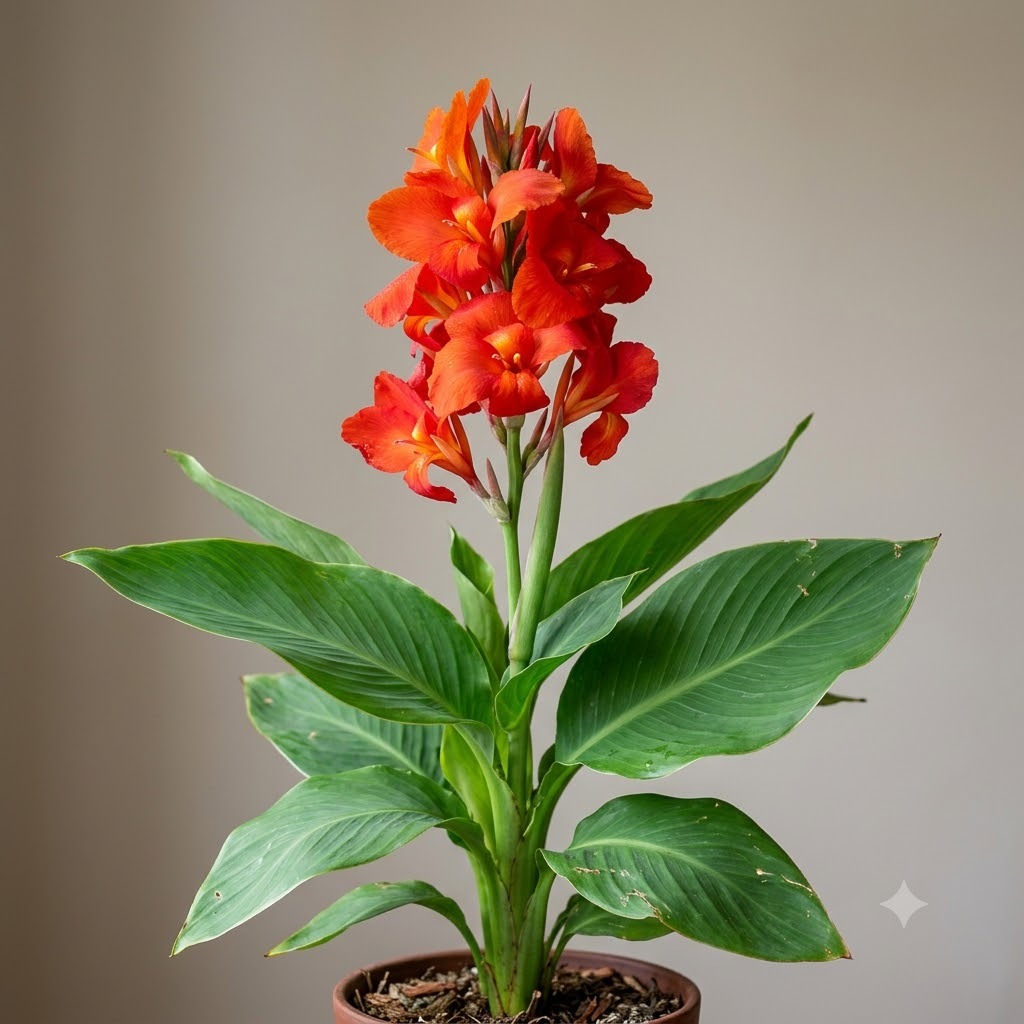
The Canna Lily is one of the boldest, most dramatic plants you can add to a summer garden. Despite the name, it is not a true lily - it is a tropical rhizome grown for its enormous paddle-shaped leaves and its flamboyant spikes of red, orange, and yellow flowers. Where many garden plants whisper, the canna shouts: it brings a lush, jungle-like, almost architectural presence that transforms borders, containers, and poolside plantings. It is a fast-growing, sun-loving, moisture-loving plant that rewards generous feeding and watering with weeks of colour from midsummer into autumn. In cold-winter regions it is treated as a tender plant whose rhizomes are lifted and stored over winter.
Origin & Natural Habitat
Cannas are native to the tropical and subtropical Americas, from the southern United States through Central America and into South America. In the wild they grow in warm, moist places - along stream banks, in damp meadows, and on the edges of woodland - where the ground stays reliably moist and the sun is strong. Understanding this heritage explains everything about their care: they crave heat, full sun, plenty of moisture at the roots, and rich soil. They are not adapted to cold, so frost sends them into dormancy and can kill exposed rhizomes. Many modern garden cannas are hybrids bred for larger flowers, richer leaf colour, and a more compact habit.
Appearance
Cannas grow from thick underground rhizomes, sending up sturdy upright stems clothed in large, broad, paddle-shaped leaves. The foliage is a feature in its own right - it can be fresh green, deep bronze-purple, or striped and variegated in green, cream, yellow, and even pink tones, giving strong structure even before the plant flowers. At the top of each stem rise clusters of showy, slightly irregular flowers in hot shades of red, orange, yellow, coral, and cream, sometimes spotted or bicoloured. Sizes range widely: dwarf types stay around 50-60 cm, while the tallest varieties can reach 1.8-2.4 m, towering over a border. The overall effect is lush, tropical, and unmistakably bold.
Why People Grow It - Qualities & Benefits
- Dramatic tropical look: big bold leaves and flamboyant flowers create instant jungle style.
- Long summer display: flowers from midsummer through to the first frosts.
- Striking foliage: bronze, purple, and variegated leaves are decorative on their own.
- Fast growth: rhizomes bulk up quickly, filling space in a single season.
- Great in containers and water margins: thrives in big pots and at the edge of ponds.
- Pollinator interest: the bright flowers attract bees, butterflies, and hummingbirds where present.
Care
Light & Position
Full sun is essential for strong growth, good flowering, and the richest leaf colour - aim for at least 6 hours of direct sun a day. In too much shade, cannas grow leggy and flower poorly. Give them a warm, sheltered spot, as their large leaves can tatter in strong wind.
Soil
Cannas want rich, fertile, moisture-retentive soil. Improve the planting area generously with compost or well-rotted manure. They tolerate heavy soils better than many plants and even grow in the boggy margins of ponds, but they still appreciate good fertility.
Watering
Keep cannas consistently moist through the growing season - they are thirsty plants, especially in hot weather and in containers. Never let them dry out while in active growth and flower. In very warm climates they can even grow in shallow standing water at a pond edge.
Feeding
Cannas are hungry, fast-growing plants. Feed regularly through the growing season with a balanced fertilizer, and mulch with compost to feed the soil and lock in moisture. Well-fed cannas produce bigger leaves and more flower spikes.
Grooming
Remove faded flower heads to keep the plant tidy and encourage further blooms; each spike produces a succession of flowers. Cut back the whole plant after the first frost blackens the foliage in cold climates.
Hardiness & Winter Care
Cannas are tender and damaged by frost. In frost-free and warm climates they can stay in the ground year-round and will re-sprout each spring. In cold-winter regions, after the first frost blackens the leaves, cut the stems down, carefully lift the rhizomes, let them dry, remove excess soil, and store them somewhere cool, dark, and frost-free (packed in barely-moist material) until replanting in spring after frost has passed.
Planting & Propagation
Plant rhizomes in spring once the soil has warmed and all danger of frost has passed, setting them a few centimetres deep with the growing points (eyes) facing up. To get a head start in cold regions, pot rhizomes indoors in late winter and plant out after the last frost. The easiest way to propagate cannas is by division: lift a clump in spring (or when storing in autumn) and cut the rhizome into sections, each with at least one healthy growing point. Cannas can also be grown from seed, but the hard seed coat needs soaking or nicking first, and seedlings may not match the parent.
Common Problems & Pests
- Canna leaf-rolling caterpillars: larvae that bind and chew the young rolled leaves - pick off or unfurl and treat.
- Slugs and snails: can shred emerging shoots, especially in wet weather.
- Canna rust: orange spots on the leaves in humid conditions - improve airflow and remove affected leaves.
- Canna virus: streaked, mottled, or distorted leaves; there is no cure, so remove and destroy badly affected plants to stop spread.
- Frost damage: blackened foliage after cold - expected in autumn, but a late frost can harm new spring growth.
Toxicity & Safety
Cannas are generally regarded as non-toxic and are not listed as poisonous to cats, dogs, or humans; the starchy rhizomes of some species are even eaten as food in parts of the world. As with any plant, discourage pets from chewing the foliage, since ingesting plant material can still cause mild stomach upset. Handling the plant poses no special hazard.
Pros & Cons
Pros
- Bold tropical foliage and flamboyant summer flowers.
- Long flowering season from midsummer to frost.
- Fast-growing and easy in warm, moist, sunny sites.
- Excellent in large containers and at pond margins.
- Generally non-toxic.
Cons
- Tender - needs lifting and storing over winter in cold climates.
- Thirsty and hungry - needs regular water and feeding.
- Large leaves can tatter in strong wind.
- Can be affected by canna virus and leaf-rolling caterpillars.
Best Suited For
- Sunny, sheltered borders wanting a bold tropical accent.
- Large containers and poolside or patio plantings.
- Pond and bog margins (in warm climates).
- Gardeners who want fast, dramatic summer colour.
Not ideal for cold-exposed sites left unprotected over winter, shady gardens, or those wanting a plant that needs no lifting or storing.
FAQ
Is a canna lily really a lily? No. Despite the common name, cannas are not true lilies. They are a distinct tropical genus grown from rhizomes, related more closely to gingers and bananas than to lilies.
Do I have to dig up my cannas in winter? In frost-free or warm climates you can leave them in the ground. In cold-winter regions, lift the rhizomes after the first frost, dry them, and store them somewhere cool, dark, and frost-free until spring.
Why isn't my canna flowering well? The most common causes are too much shade, not enough water, or poor feeding. Cannas need full sun, rich moist soil, and regular feeding to flower freely.
Are cannas safe around pets? Cannas are generally considered non-toxic to cats and dogs. Still, it is sensible to discourage pets from chewing the leaves, as any plant material can cause mild stomach upset.
Can cannas grow in water? Yes - in warm climates many cannas thrive in the shallow margins of ponds and in boggy ground, as long as they get plenty of sun.