Cockscomb (Celosia)
Celosia is one of the most vivid plants you can grow, valued for its intensely coloured blooms in glowing red, orange, magenta, pink, and gold.
🗓️ Last reviewed: July 2026
Overview
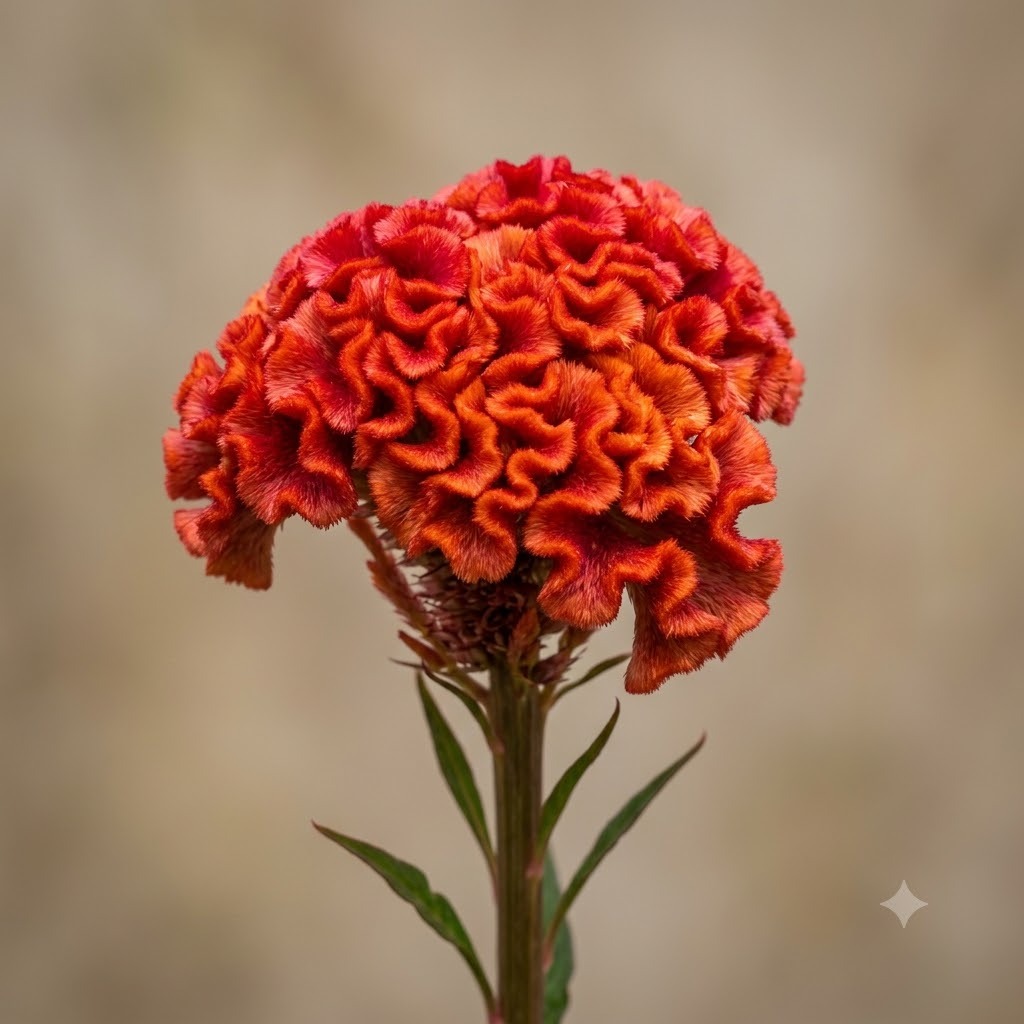
Celosia is one of the most vivid plants you can grow, valued for its intensely coloured blooms in glowing red, orange, magenta, pink, and gold. It comes in two dramatic forms: the plume or feather types, with soft flame-like flower heads, and the crested "cockscomb" types, whose densely folded flower heads look like brightly coloured brains or the comb of a rooster. A heat-loving tender annual, Celosia thrives in summer sun and warmth, blooms for months, and holds its colour beautifully both as a cut flower and as a dried flower. It brings almost tropical intensity to beds, containers, and bouquets.
Origin & Natural Habitat
Celosia belongs to the amaranth family (Amaranthaceae) and originates in the warm regions of Africa, Asia, and the Americas, where several species grow as annuals in hot, sunny, open ground. Some species are also grown as leafy vegetables and grains in parts of Africa and Asia. Its tropical and subtropical roots explain its garden needs precisely: it wants heat, full sun, and free-draining soil, and it resents cold, damp conditions. Understanding that Celosia is a fast-growing warm-season plant is the key to success - it is built to sprint through a single hot summer.
Appearance
Celosia forms an upright, bushy plant with green or often bronze-tinted leaves and eye-catching flower heads made of countless tiny flowers. There are three main groups. Plumosa (plume) types carry soft, feathery, pointed plumes like coloured flames. Cristata (crested cockscomb) types have thick, velvety, convoluted flower heads resembling brains or a rooster's comb. Spicata (wheat) types produce slim, upright spikes, often in pink and silver. Colours are famously saturated - fire-engine red, hot orange, magenta, cerise, yellow, and cream. Sizes range from compact bedding plants around 20-30 cm to cut-flower varieties well over 90 cm tall.
Why People Grow It - Qualities & Benefits
- Intense colour: some of the most saturated reds, oranges, and pinks in the garden.
- Unusual forms: the flame-like plumes and brain-like crests are real conversation pieces.
- Long bloom: flowers for months through the heat of summer into autumn.
- Excellent cut flower: long-lasting in the vase and prized by florists.
- Superb dried flower: holds its colour and shape well when air-dried.
- Heat and drought tolerance: thrives where many plants sulk in summer heat.
- Easy from seed: fast-growing and generous from a spring sowing.
Care
Light & Position
Celosia demands full sun - at least six hours of direct sun a day - and warmth. It flowers best and stays sturdiest in a hot, sunny position. It is not a plant for shade, where it grows weak and blooms poorly.
Soil
Give it moderately fertile, well-drained soil enriched with a little compost. Good drainage is essential; heavy, wet soil leads to rot and disease. It performs well in raised beds and containers where drainage is reliable.
Watering
Water regularly to keep the soil evenly moist while plants establish and during dry spells, especially for containers. Once established, Celosia tolerates some drought. Avoid overwatering and wetting the foliage, which encourages fungal problems - water at the base.
Feeding
A moderate feeder. Enrich the soil with compost at planting and give a balanced liquid feed occasionally through the season for containers. Avoid heavy high-nitrogen feeding, which produces leaves at the expense of flowers.
Temperature & Timing
Celosia is very frost-sensitive and dislikes cold. Do not plant it out until the soil and nights are warm and all danger of frost has passed. Cold checks its growth and can leave it permanently stunted, so patience in spring pays off.
Deadheading & Maintenance
Deadhead spent blooms on plume types to encourage more flowers and keep plants tidy. For drying, cut stems when the flower heads are fully coloured and hang them upside down in a dry, airy place. Little other maintenance is needed.
Hardiness & Winter Care
Celosia is a tender annual in temperate gardens and is killed by frost. It is not overwintered; simply sow fresh each spring. Avoid relying on specific hardiness zones, as its survival depends entirely on warmth and the absence of frost.
Planting & Propagation
Celosia is grown from seed. Sow indoors in warmth in spring, barely covering the fine seed, and keep it warm for good germination. Harden off carefully and plant out only once the weather is reliably warm - it hates any chill. It can also be direct-sown once the soil is warm. Handle young plants gently and avoid disturbing the roots, as Celosia dislikes being checked or transplanted roughly. Space plants for good airflow to reduce disease.
Common Problems & Pests
- Root and stem rot: the main problem, caused by cold, wet, poorly drained soil - ensure warmth and good drainage.
- Damping off: young seedlings can collapse in cold, damp compost - keep them warm and not overwatered.
- Aphids and spider mites: can appear, especially on stressed or indoor-raised plants.
- Leaf spot and fungal disease: in humid, crowded, or wet conditions - space plants and water at the base.
- Stunting from cold: planting out too early in cold soil can permanently check growth.
Warmth, sun, and good drainage prevent almost all of Celosia's troubles.
Toxicity & Safety
Generally considered non-toxic. Celosia is not listed among the common plants toxic to cats and dogs, and several species are actually grown and eaten as leafy vegetables in Africa and Asia. It is regarded as a safe ornamental around pets and people. As with any plant, eating large amounts of ornamental garden material could cause mild stomach upset, so it is still sensible to discourage pets and children from grazing on it, but Celosia carries no serious toxicity concern.
Pros & Cons
Pros
- Extremely vivid, saturated flower colours.
- Striking plume and crested forms.
- Long summer-to-autumn bloom.
- Excellent as both a cut and a dried flower.
- Heat- and drought-tolerant; non-toxic.
Cons
- Very frost-tender - killed by cold, grown only as an annual.
- Needs full sun and warmth to perform.
- Prone to rot in cold, wet, poorly drained soil.
- Dislikes being planted out too early or transplanted roughly.
- Poor performer in cool, dull summers.
Best Suited For
- Hot, sunny beds and borders wanting bold colour.
- Containers and pots in full sun.
- Cutting gardens and cut-flower growers.
- Dried-flower and everlasting arrangements.
- Tropical-style and high-impact summer plantings.
Not ideal for shady gardens, cool damp climates with short summers, or gardeners wanting a frost-hardy permanent plant.
FAQ
What is the difference between plume and cockscomb celosia? Plume (Plumosa) types have soft, feathery, flame-shaped flower heads, while crested cockscomb (Cristata) types have thick, folded, velvety heads that look like a brain or a rooster's comb. Both come in the same intense colours; it is purely a difference in flower shape.
Can I dry celosia flowers? Yes - it is one of the best flowers for drying. Cut the stems when the heads are fully coloured, strip the lower leaves, and hang them upside down in a dry, airy spot. They keep their colour and shape well for lasting arrangements.
Why is my celosia growing so slowly? Celosia hates cold. If it was planted out too early into cool soil, or is sitting through a cold spell, it can be permanently checked and stay stunted. It needs consistent warmth and full sun to grow strongly, so wait for reliably warm conditions before planting.
Is celosia safe for pets? It is generally considered non-toxic and is not on the common lists of plants poisonous to cats and dogs - some species are even eaten as vegetables. As with any plant, it is still wise to stop pets from eating large quantities to avoid mild stomach upset.
How much sun does celosia need? Full sun - at least six hours of direct sunlight a day. It is a heat-loving plant that flowers poorly and grows weakly in shade, so give it the hottest, sunniest spot you have.