Coreopsis / Tickseed (Coreopsis grandiflora)
Coreopsis, commonly known as tickseed, is one of the most cheerful and dependable perennials you can grow - a tough North American native that throws out masses of bright, golden-yellow, daisy-like flowers from early summer right through to autumn.
🗓️ Last reviewed: June 2026
Overview
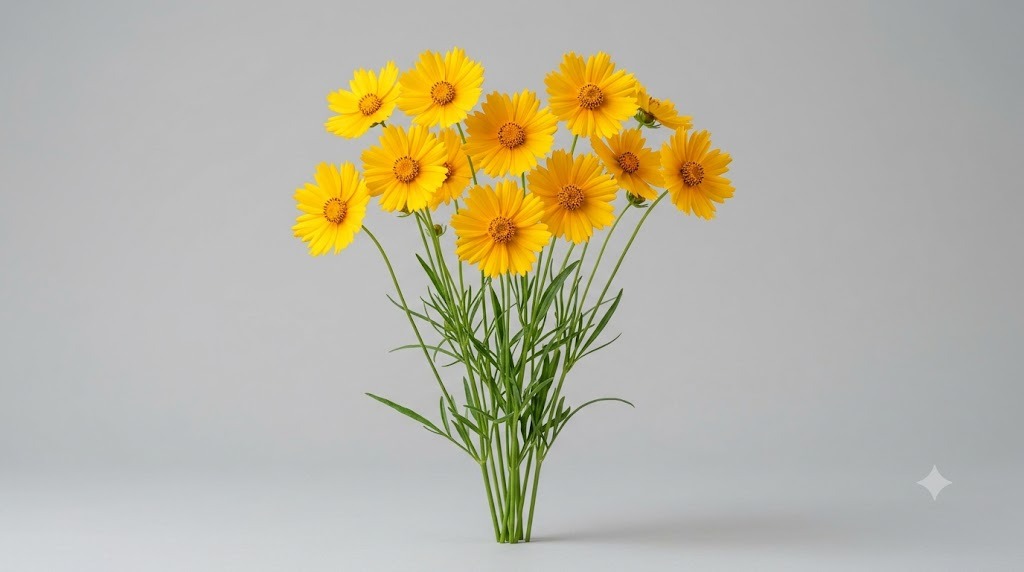
Coreopsis, commonly known as tickseed, is one of the most cheerful and dependable perennials you can grow - a tough North American native that throws out masses of bright, golden-yellow, daisy-like flowers from early summer right through to autumn. The flowers, carried on slender stems above a low mound of fine green foliage, have a sunny, simple, open-faced charm that draws bees and butterflies all season long. Coreopsis grandiflora is famously easy: it shrugs off heat and drought, asks for almost nothing in the way of feeding, and rewards a quick deadheading with weeks of extra bloom. For a low-maintenance, long-flowering, pollinator-friendly splash of sunshine in a sunny border, the tickseed is hard to beat.
Origin & Natural Habitat
Coreopsis grandiflora is native to North America, where it grows across the central, southern, and southeastern United States in open, sunny places - prairies, roadsides, dry slopes, glades, and disturbed sandy or gravelly ground. It is a true child of the open meadow, accustomed to baking sun, lean soil, and dry spells. This wild heritage explains its garden character exactly: it craves full sun, thrives in poor and well-drained soil, tolerates heat and drought with ease, and resents nothing so much as rich, soggy ground. Understanding that it is a sun-loving prairie plant is the key to growing it well. The common name "tickseed" comes from the small, flat seeds, which were thought to resemble ticks.
Appearance
Coreopsis grandiflora forms a low, tidy mound of slender, bright green leaves, typically 30 to 60 cm tall, above which rise wiry stems each topped by a single flower. The flowers are classic daisies, usually 4 to 6 cm across, with broad golden-yellow ray petals - often notched or toothed at the tips - surrounding a darker golden-yellow central disc. Many named varieties exist, some with semi-double or fully double flowers, some with a deeper red or maroon zone at the base of the petals, but the pure, bright, sunshine-yellow single form is the classic. In full bloom the plant becomes a haze of cheerful yellow stars hovering above the foliage, alive with bees - a simple, sunny, unpretentious effect that suits any informal or naturalistic planting.
Why People Grow It - Qualities & Benefits
- Extremely long flowering: blooms from early summer to autumn, especially if deadheaded.
- Cheerful color: masses of bright, sunny, golden-yellow daisy flowers.
- Very low-maintenance: tough, undemanding, and forgiving of neglect.
- Drought-tolerant: copes easily with heat and dry spells once established.
- Pollinator magnet: loved by bees, butterflies, and other beneficial insects.
- Native and adaptable: a hardy North American prairie plant that thrives in poor soil.
Care
Light & Position
Coreopsis demands full sun - at least six hours of direct sun a day, and the more the better. In full sun it grows compact, flowers profusely, and stands up well. In shade or even part shade it grows leggy and floppy, flowers poorly, and is more prone to disease. Give it the hottest, brightest, most open spot you have. As a prairie plant, it is in its element in baking, exposed sun where many other plants struggle.
Soil
This is a plant that genuinely prefers poor soil. It thrives in lean, average, well-drained ground, including sandy and gravelly soils, and good drainage is the single most important thing. It dislikes rich, heavy, or waterlogged soil, which causes soft, floppy growth, fewer flowers, and root rot, and can shorten its life. Do not improve the soil for it - it performs best where the ground is unpromising. Sharp drainage, especially in winter, matters far more than fertility.
Watering
Coreopsis is notably drought-tolerant once established, thanks to its prairie origins. Water new plants regularly through their first season to settle them in, but after that it needs very little - only occasional watering during prolonged dry spells. Avoid overwatering above all else; soggy ground is the quickest way to kill it. Established plants are happiest kept on the dry side, and far more are lost to wet than to drought.
Feeding
Coreopsis needs little or no feeding and actively prefers lean conditions. Rich soil and heavy feeding produce lush, soft, floppy foliage at the expense of flowers, so resist the urge to fertilize. At most, a very light feed or thin mulch of compost in spring is plenty, and even that is optional in reasonable soil. Lean and hungry is exactly how this plant likes to live.
Pruning
The single most rewarding job is deadheading - removing spent flowers regularly through the season prevents seed set and pushes the plant to keep producing new blooms for weeks longer. If flowering slows or the plant gets straggly by midsummer, a harder shear back of the whole plant by about a third refreshes it and brings on a strong second flush. In autumn, you can cut the old growth down, or leave the seedheads standing to feed birds and provide winter interest, tidying up in spring instead.
Hardiness & Winter Care
Coreopsis grandiflora is hardy, reliable across roughly USDA zones 4 to 9. It is, however, often short-lived as a perennial, sometimes behaving as a biennial or lasting only two or three years, particularly in heavy or wet soil. Good drainage, especially over winter, is the key to helping it survive the cold, damp months - winter wet kills it far more readily than cold. It usually self-seeds gently, and these volunteer seedlings, together with periodic division, keep a planting going over the long term.
Planting & Propagation
Coreopsis is easily raised from seed, sown in spring, and grandiflora types often flower in their first year from an early sowing. It can also be bought as plants and set out in spring or early autumn, spaced about 30 to 45 cm apart in a sunny, well-drained spot. Established clumps are best divided every two or three years in spring or autumn - this not only makes more plants but rejuvenates the clump and counteracts the plant's tendency to be short-lived. Division and gentle self-seeding are the easiest ways to keep a healthy, long-lasting stand of tickseed in the garden.
Common Problems & Pests
- Root rot and crown rot: the main killer, caused by rich, heavy, or waterlogged soil - prevent with sharp drainage and by not overwatering.
- Short lifespan: plants can be short-lived, especially in poor drainage; divide regularly and let some self-seed to keep them going.
- Powdery mildew: can appear in humid, crowded, or shady conditions or on stressed plants - improve airflow and give full sun.
- Floppiness: caused by too much shade or too-rich soil; full sun and lean ground keep growth compact.
- Aphids and slugs: may occasionally trouble soft new growth, but rarely a serious problem.
- Reduced flowering: usually a sign of insufficient sun, overfeeding, or a lack of deadheading.
Keeping it sunny, lean, well-drained, and regularly deadheaded prevents nearly all of its problems.
Toxicity & Safety
Generally considered non-toxic and pet-safe for cats, dogs, and humans. Coreopsis is not listed among the poisonous garden plants and is widely grown in family and pet-friendly gardens without concern. It is a safe, pollinator-friendly ornamental, and there are no significant toxicity warnings associated with it. As with any plant, it is not intended for eating, and it is always sensible to discourage pets from chewing on ornamentals, but tickseed poses no recognized poisoning risk to people or animals.
Pros & Cons
Pros
- Exceptionally long flowering, from early summer to autumn.
- Bright, cheerful, sunshine-yellow daisy flowers.
- Extremely low-maintenance and forgiving.
- Tough, heat- and drought-tolerant prairie native.
- Excellent for bees and butterflies; non-toxic and pet-safe.
Cons
- Often short-lived as a perennial.
- Needs sharp drainage - hates wet, heavy soil.
- Requires full sun; flops and sulks in shade.
- Best flowering depends on regular deadheading.
- Can self-seed where not wanted.
Best Suited For
- Sunny borders, prairie and naturalistic plantings, and gravel gardens.
- Hot, dry, exposed spots and poor, well-drained soil.
- Low-maintenance, water-wise, and pollinator gardens.
- Adding long-lasting cheerful color all summer.
- Cottage gardens and informal mixed borders.
Not ideal for shady gardens, heavy or wet soil, or gardeners wanting a long-lived, set-and-forget perennial without occasional division.
FAQ
Why is my coreopsis flopping over and not flowering well? The usual cause is too little sun or soil that is too rich. Coreopsis is a prairie plant that needs full sun - at least six hours a day - and lean, well-drained soil. In shade or in rich, fed ground it grows soft, leggy, and floppy and produces fewer flowers. Move it to the brightest spot you have, stop feeding it, and it will grow far more compact and bloom much better.
How do I get coreopsis to flower for longer? Deadhead it regularly. Removing the spent flowers stops the plant setting seed and pushes it to keep producing new blooms for many extra weeks. If it gets straggly or slows down by midsummer, shear the whole plant back by about a third to refresh it and trigger a strong second flush of flowers.
Does coreopsis come back every year? Coreopsis grandiflora is a hardy perennial across roughly zones 4 to 9, but it is often short-lived, sometimes lasting only two or three years, especially in heavy or wet soil. Good winter drainage helps it survive, and dividing the clumps every couple of years - plus letting it self-seed a little - keeps a planting going strongly over the long term.
Is coreopsis safe for pets? Yes, coreopsis is generally considered non-toxic and pet-safe for both cats and dogs, and it is not on the lists of poisonous garden plants. It is widely grown in pet-friendly gardens. As with any ornamental, it is not meant to be eaten, but tickseed poses no recognized poisoning risk to pets or people.
Does coreopsis need a lot of watering? No. Once established, coreopsis is very drought-tolerant and needs little water, only an occasional drink in prolonged dry spells. Water new plants through their first season to settle them in, but after that keep it on the dry side. Overwatering and soggy soil are far more dangerous to it than drought.