Dogwood (Cornus)
Dogwood is a versatile group of garden plants grown for two very different reasons.
🗓️ Last reviewed: July 2026
Overview
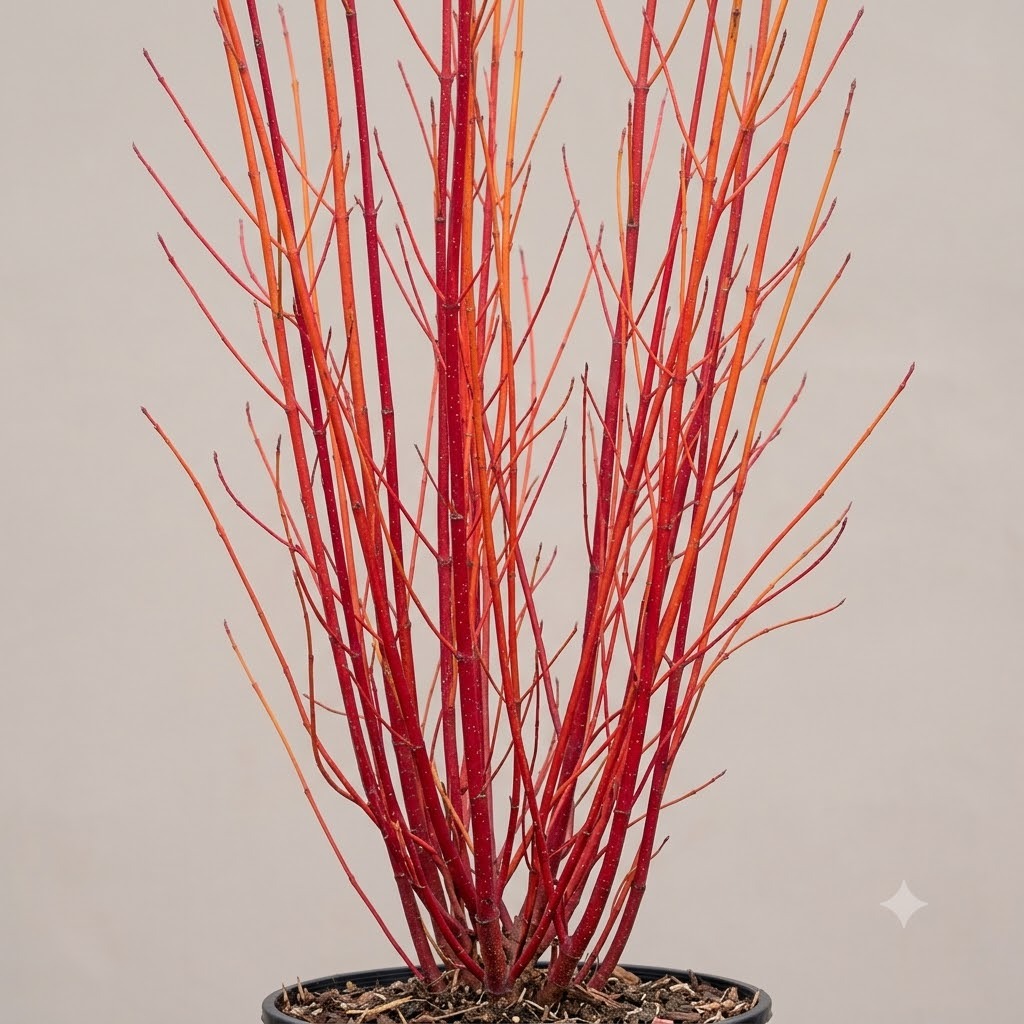
Dogwood is a versatile group of garden plants grown for two very different reasons. Some dogwoods are elegant small flowering trees, prized for their showy spring "flowers" (actually colorful bracts), followed by berries and fiery autumn leaf color. Others are tough shrubby dogwoods grown mainly for their vividly colored winter stems - flaming red, orange, yellow, and near-black - which glow in the bare winter garden. Between these two groups, the genus Cornus offers year-round interest: spring bracts, summer foliage, autumn color and berries, and winter stems. Most are easygoing, hardy, and adaptable, making dogwoods a favorite for both beauty and reliability.
Origin & Natural Habitat
Dogwoods (genus Cornus) are native across the temperate Northern Hemisphere - North America, Europe, and Asia. The flowering dogwood tree types come mainly from North America and East Asia, growing as understory trees at woodland edges. The shrubby, colored-stem dogwoods often grow wild in damp ground along riverbanks, in wet woodland, and in marshy thickets. This origin is a useful clue: the shrubby dogwoods tolerate and even enjoy moist soil and part shade, while the flowering tree types like woodland-edge conditions with dappled light and good soil.
Appearance
The genus splits into two main garden groups. Flowering dogwood trees (such as Cornus florida, Cornus kousa, and Cornus hybrids) are small trees or large shrubs. Their spring display comes from large, petal-like bracts in white or pink surrounding the true tiny flowers, often followed by red or pink berries and rich autumn foliage. Shrubby dogwoods (such as Cornus alba, Cornus sanguinea, and Cornus sericea) are multi-stemmed shrubs grown for their brilliantly colored bare winter stems - the young growth carries the strongest color. Their leaves often color well in autumn, and some have variegated foliage. Sizes range from 1-3 m shrubby dogwoods to flowering dogwood trees of 5-10 m.
Why People Grow It - Qualities & Benefits
- Winter stem color: shrubby types glow red, orange, yellow, or black when the garden is bare.
- Spring bracts: flowering types put on a beautiful show of white or pink.
- Multi-season interest: flowers or stems, summer foliage, autumn color, and berries.
- Wildlife value: flowers feed pollinators; berries feed birds.
- Tough and adaptable: many tolerate damp soil and part shade.
- Low maintenance: easygoing once established.
Care
Light & Position
Most dogwoods do best in full sun to part shade. Shrubby, colored-stem dogwoods produce their brightest winter stem color in full sun, though they tolerate part shade. Flowering dogwood trees often prefer light dappled shade or a spot with some shelter, echoing their woodland-edge origins, and appreciate protection from harsh drying winds.
Soil
Dogwoods like fertile, moist but reasonably well-drained soil. The shrubby types are notably tolerant of damp and even wet ground, making them useful for boggy spots and pond edges. Flowering dogwood trees prefer good, humus-rich soil that does not dry out; some, like Cornus florida, prefer slightly acidic conditions.
Watering
Keep young dogwoods watered while they establish and during dry spells - especially the flowering tree types, which resent drought. Shrubby dogwoods are more forgiving thanks to their tolerance of moist ground, but still benefit from watering when newly planted.
Feeding
Dogwoods are not demanding feeders. A spring mulch of compost or well-rotted manure feeds the soil, conserves moisture, and keeps them healthy. A light spring feed can help, particularly on poorer soils.
Pruning
Pruning depends entirely on the type. Shrubby, colored-stem dogwoods are pruned hard - a technique called coppicing or stooling - in early spring, because the brightest stem color comes from young growth. Cutting a proportion of the stems close to the base each year (or all of them every couple of years) keeps a supply of vivid young shoots. Flowering dogwood trees need little pruning; just remove dead, damaged, or crossing branches to maintain a good shape, ideally when dormant or after flowering.
Hardiness & Winter Care
Most dogwoods are hardy and well suited to cold-winter climates - indeed, the shrubby types are grown precisely for their winter interest. Little special winter care is needed. Newly planted flowering dogwood trees benefit from shelter from cold, drying winds in their first seasons.
Planting & Propagation
Plant dogwoods in autumn or spring in improved, moisture-retentive soil, setting them at the depth they grew in the pot. Shrubby dogwoods are very easy to propagate from hardwood cuttings taken in autumn or winter, and by layering. Flowering dogwood trees can be propagated by softwood or semi-ripe cuttings, by grafting (common commercially), by layering, and from seed, though seed can be slow to germinate.
Common Problems & Pests
- Dogwood anthracnose: a serious fungal disease of some flowering dogwoods (notably Cornus florida), causing leaf blotches and dieback; choosing resistant species like Cornus kousa helps.
- Powdery mildew: white coating on leaves, worse in dry, crowded conditions.
- Poor stem color: shrubby dogwoods that are not coppiced lose their vivid winter color as the stems age - regular hard pruning is the fix.
- Leaf scorch: on trees stressed by drought or too much hot sun.
- Scale insects and aphids: occasional sap-sucking pests.
Choosing the right species for your conditions prevents most trouble.
Toxicity & Safety
Generally considered non-toxic to cats, dogs, and humans. Dogwoods (genus Cornus) are not listed among plants known to poison pets, and the garden species are regarded as non-toxic. The berries of some species are eaten by wildlife; while a few are edible to people (such as Cornus mas, the cornelian cherry), others are not palatable, so berries are best not eaten unless the species is known. There are no thorns or significant physical hazards.
Pros & Cons
Pros
- Two very different garden uses: winter stems or spring flowers.
- Multi-season interest.
- Wildlife value (flowers and berries).
- Tolerant, hardy, and adaptable.
- Non-toxic.
Cons
- Shrubby types need hard annual pruning for best color.
- Some flowering dogwoods are prone to anthracnose.
- Flowering trees dislike drought.
- Can need space depending on type.
- Neglected colored-stem types lose their winter brilliance.
Best Suited For
- Winter gardens and mixed borders (colored-stem shrubs).
- Damp ground, pond edges, and boggy spots (shrubby types).
- Woodland-edge and dappled-shade gardens (flowering trees).
- Specimen and focal planting (flowering dogwood trees).
- Wildlife-friendly gardens.
Not ideal for hot, dry, exposed sites (flowering trees), or gardeners unwilling to coppice shrubby types for color.
FAQ
Why aren't my dogwood stems very colorful? Colored-stem shrubby dogwoods produce their brightest color on young growth. If the stems have aged, cut them back hard (coppice) in early spring - close to the base - to force fresh, vivid young shoots. Growing them in full sun also improves color.
What's the difference between the two kinds of dogwood? Flowering dogwoods are small trees grown for their showy spring bracts and berries. Shrubby dogwoods are multi-stemmed shrubs grown mainly for their brilliant bare winter stems, which you cut back hard each year. They are different plants for different jobs.
Are dogwoods safe for pets? Dogwoods are generally considered non-toxic to cats and dogs and are not on the common poisonous-plant lists. As always, discourage pets from eating berries or foliage.
Do dogwoods like wet soil? The shrubby, colored-stem types are notably tolerant of moist and even wet ground, making them ideal for damp spots and pond edges. Flowering dogwood trees prefer moist but well-drained, humus-rich soil and dislike being waterlogged.
When do I prune a dogwood? Coppice shrubby colored-stem types hard in early spring for the best stem color. Flowering dogwood trees need only light pruning to remove dead or crossing branches, done when dormant or after flowering.