Fountain Grass (Pennisetum)
Fountain grass is one of the most graceful and popular ornamental grasses for the garden, grown for its arching, fountain-like mounds of fine foliage and its soft, fuzzy, bottlebrush flower plumes.
🗓️ Last reviewed: July 2026
Overview
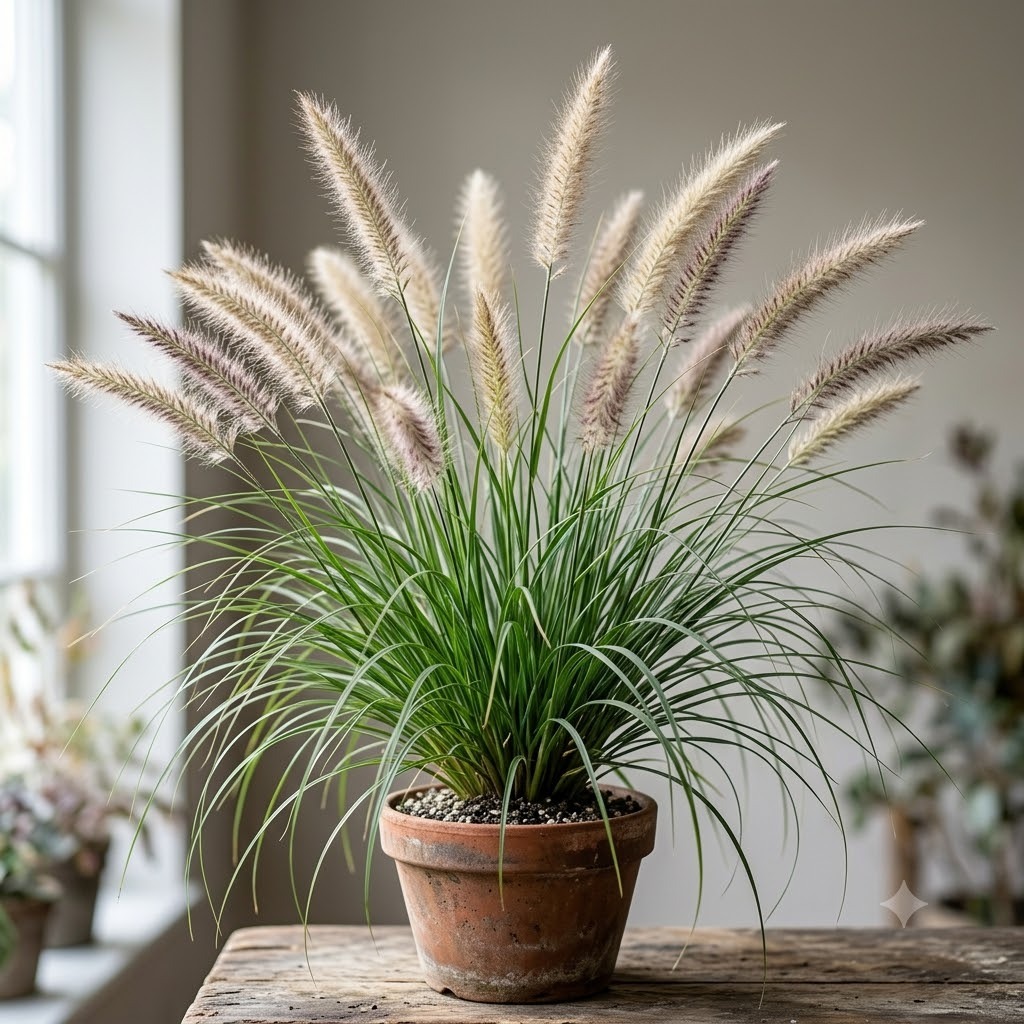
Fountain grass is one of the most graceful and popular ornamental grasses for the garden, grown for its arching, fountain-like mounds of fine foliage and its soft, fuzzy, bottlebrush flower plumes. From late summer into autumn those plumes rise above the leaves in shades of cream, pink, coppery-red, or purple-black, catching the light and moving beautifully in the wind. Fountain grasses are generally easy, low-maintenance, and long-flowering, but there is an honest note to sound: some types are hardy perennials, while others are tender and grown as annuals in cold climates, and a few relatives are invasive - so it pays to know which one you have.
Origin & Natural Habitat
Fountain grasses belong to the genus Pennisetum (with some species now reclassified under Cenchrus), native to warm-temperate and tropical regions of Africa, Asia, and Australia, where they grow in open grasslands, savannas, and sunny disturbed ground. Their origins in warm, sunny climates explain their love of full sun and warmth, their drought tolerance once established, and why several are only reliably perennial in mild regions and treated as annuals where winters are cold. Their vigor in the wild is also why certain species - notably crimson fountaingrass and some Cenchrus relatives - have become invasive weeds in warmer parts of the world.
Appearance
Fountain grasses form neat, rounded, arching clumps of slender leaves that spill outward like a fountain, hence the name. In late summer and autumn they produce their signature flowers: soft, cylindrical, bottlebrush-like plumes held on slender stems above the foliage. Colors vary by type - the hardy Pennisetum alopecuroides (fountain grass) has silvery to pinkish tan plumes; Pennisetum orientale has soft pink plumes; and the tender Pennisetum setaceum 'Rubrum' (purple fountain grass) has striking burgundy foliage and rosy-purple plumes. Sizes generally range from compact clumps around 30-60 cm to larger types reaching 1-1.5 m in flower.
Why People Grow It - Qualities & Benefits
- Graceful form: soft, arching fountain-shaped mounds add movement and elegance.
- Beautiful plumes: fuzzy bottlebrush flowers in cream, pink, copper, or purple.
- Long season of interest: flowers from late summer well into autumn and winter.
- Movement and texture: foliage and plumes sway in the wind and catch the light.
- Low maintenance: easy, tough, and drought-tolerant once established.
- Versatile: superb in borders, gravel gardens, pots, and mass plantings.
Care
Light & Position
Fountain grasses need full sun to grow well and flower freely - they flower poorly and flop in too much shade. Give them an open, sunny position. The colorful-leaved tender types especially need warmth and sun to develop their best foliage color.
Soil
They prefer fertile, moist but well-drained soil and dislike heavy, wet, waterlogged ground, particularly over winter, which can rot the crowns of the hardy perennial types. They tolerate a range of soils and are quite adaptable once established, coping with poorer, drier ground.
Watering
Water regularly while establishing in the first season. Once settled, fountain grasses are fairly drought-tolerant and need little supplementary water except in prolonged dry spells. Good drainage matters more than frequent watering, especially for winter survival of the perennial types.
Feeding
Fountain grasses are not heavy feeders. On reasonable soil they need little or no feeding; overfeeding can cause soft, floppy growth. A light spring feed or a compost mulch is plenty on poorer ground.
Pruning
Cut hardy perennial fountain grasses back in late winter or early spring, before new growth appears, removing the old foliage and spent plumes to make way for fresh shoots. The dead foliage and plumes can be left standing over winter for interest and to give some protection to the crown. Tender types grown as annuals are simply removed at the end of the season.
Hardiness & Winter Care
Hardiness varies a lot by species. Some, like Pennisetum alopecuroides, are reliably hardy perennials in temperate gardens; others, like purple fountain grass (P. setaceum 'Rubrum'), are tender and grown as annuals or lifted and overwintered under cover in cold regions. Good drainage greatly improves winter survival of the hardy types, and leaving the old growth in place until spring helps protect the crown.
Planting & Propagation
Plant fountain grasses in spring, once the soil is warming, so they have a full season to establish before winter - this is especially important for the hardier perennials. They are propagated mainly by division of established clumps in spring, and can also be grown from seed, though tender types are often bought fresh each year. Where a species is known to be invasive, avoid allowing it to self-seed and prevent seed spread; choosing well-behaved or sterile cultivars is the responsible option.
Common Problems & Pests
- Winter losses: the biggest issue for hardy types - crowns rot in cold, wet, poorly drained soil. Good drainage is the key.
- Confusion over hardiness: buying a tender type expecting it to survive winter leads to disappointment; know which species you have.
- Invasiveness: some species and Cenchrus relatives (such as crimson fountaingrass) are invasive weeds in warmer regions - check before planting and avoid self-seeding.
- Flopping: overfed or too-shaded plants can splay open and flower poorly.
- Few pests: fountain grasses are generally untroubled by pests and diseases.
Most trouble comes from drainage, hardiness, and siting rather than pests.
Toxicity & Safety
Generally considered non-toxic to cats, dogs, and humans. Fountain grasses are not listed among plants that poison pets, and they are regarded as non-toxic. As with many grasses, a pet nibbling the foliage might occasionally cause mild stomach upset, and the fine seed heads can catch in fur, but there is no significant poisoning risk. There are no sharp cutting edges of the kind found on pampas grass, though foliage should still be handled sensibly.
Pros & Cons
Pros
- Graceful, arching, fountain-like form.
- Soft, attractive bottlebrush plumes.
- Long season of interest into autumn and winter.
- Low maintenance and drought-tolerant once established.
- Non-toxic and versatile.
Cons
- Hardy types can rot in wet winter soil.
- Some types are tender and need replacing or overwintering.
- A few species and relatives are invasive in warm regions.
- Need full sun to perform well.
- Can flop if overfed or shaded.
Best Suited For
- Sunny borders, gravel gardens, and prairie-style planting.
- Pots and containers (including tender colored-leaf types).
- Mass planting and modern naturalistic schemes.
- Well-drained soils and warm, open positions.
- Gardeners wanting movement and texture with low effort.
Not ideal for shady, heavy, wet gardens, or regions where the chosen species is a known invasive weed.
FAQ
Is fountain grass a perennial or an annual? It depends on the species. Some, like Pennisetum alopecuroides, are hardy perennials in temperate gardens. Others, like purple fountain grass, are tender and grown as annuals or overwintered under cover in cold climates. Check which type you have before relying on it to return.
Why did my fountain grass die over winter? The most common cause is cold, wet, poorly drained soil rotting the crown, or growing a tender type that is not winter-hardy in your climate. Improve drainage, leave old growth for winter protection, and choose a hardy species if you need it to come back each year.
Is fountain grass invasive? Most garden fountain grasses are well behaved, but some species and related Cenchrus grasses (such as crimson fountaingrass) are invasive in warmer regions. Check locally before planting, avoid letting it self-seed, and choose well-behaved or sterile cultivars where invasiveness is a concern.
Is fountain grass safe for pets? Fountain grasses are generally considered non-toxic to cats and dogs. A pet nibbling foliage might get mild stomach upset, and the seed heads can catch in fur, but there is no significant poisoning risk.
When do I cut fountain grass back? Cut hardy perennial types back in late winter or early spring, before new growth appears, removing the old foliage and spent plumes. Leaving the dead growth over winter adds interest and helps protect the crown.