Gaillardia (Blanket Flower)
Gaillardia, universally known as blanket flower, is one of the sunniest, most cheerful plants in the summer border.
🗓️ Last reviewed: July 2026
Overview
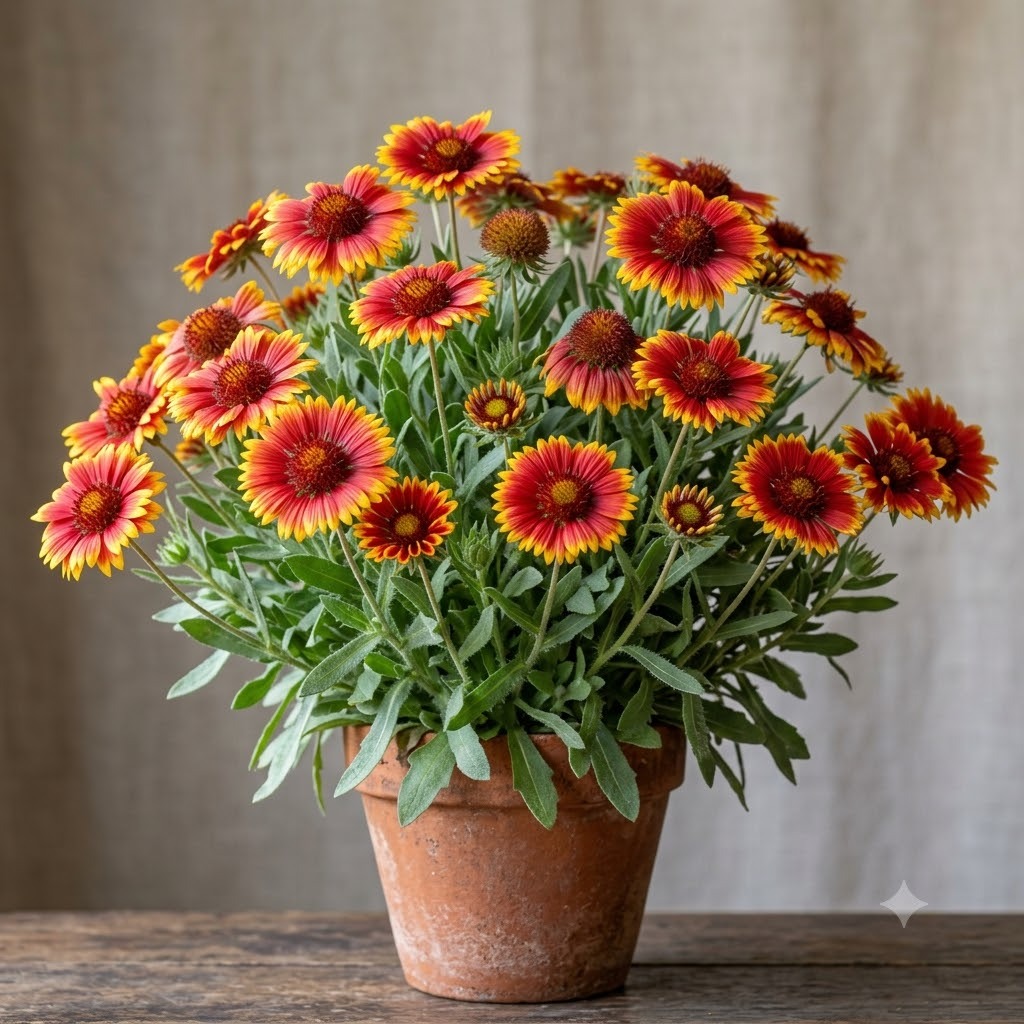
Gaillardia, universally known as blanket flower, is one of the sunniest, most cheerful plants in the summer border. It produces a non-stop parade of bold daisy-like flowers in blazing hot colors - fiery reds, oranges, golds, and yellows, often banded and bicolored like a woven blanket - from early summer right through to autumn frost. Blanket flower is tough as nails: it thrives in heat, drought, poor soil, and full sun, drawing in bees and butterflies while asking for very little. Its one honest limitation is that it is a short-lived perennial, often best treated as lasting a few years, but it flowers so generously (and self-seeds so readily) that it more than earns its place. Deadhead it and it will bloom for months; give it sharp drainage and it will sail through summer.
Origin & Natural Habitat
Gaillardia is native to North and South America, with the most familiar garden types descending from species of the central and western North American plains, prairies, and dry, sunny, sandy or gravelly ground. It is a plant of open, exposed, sun-baked places with lean soil and good drainage - conditions that would defeat many border perennials. This prairie heritage is the key to growing it: blanket flower wants full sun, sharp drainage, heat, and no coddling. It is naturally adapted to drought and poor fertility, which is exactly why it performs so well in tough, dry, low-maintenance plantings and struggles in rich, wet ground.
Appearance
Gaillardia forms a low, spreading mound of slightly hairy, greyish-green leaves, above which rise wiry stems bearing large, single or double daisy-like flowers, usually 30 to 60 cm tall. The blooms are its glory: broad ray petals, often three-lobed at the tips, in vivid combinations of red, orange, gold, and yellow, frequently ringed in concentric bands with a domed central disc. Many varieties are strikingly bicolored - a red center melting into a yellow edge, or the reverse - which is what gives them the "blanket" name. The flowers are held well above the foliage, are excellent for cutting, and are followed by round, fuzzy seed heads.
Why People Grow It - Qualities & Benefits
- Extremely long bloom season: flowers from early summer to frost, especially if deadheaded.
- Hot, cheerful colors: blazing reds, oranges, and golds unmatched for summer warmth.
- Very drought- and heat-tolerant: thrives where many perennials wilt.
- Loves poor soil: performs best in lean, sandy, gritty ground.
- Pollinator-friendly: bees and butterflies work the flowers, and seed heads feed birds.
- Great cut flower: long-lasting and vividly colored in the vase.
Care
Light & Position
Full sun is essential - at least 6 hours of direct sun a day, and the more the better. Blanket flower needs heat and light to flower well; in shade it grows leggy, flops, and blooms poorly. Give it your hottest, brightest, most open spot.
Soil
Sharp drainage is critical. Gaillardia thrives in light, well-drained, even poor and sandy soil, and it resents rich, heavy, or wet ground - waterlogging, especially in winter, is its main killer and shortens its already brief life. On heavy clay, improve drainage with grit or grow it in raised beds and containers. Do not enrich the soil heavily.
Watering
Water new plants until established, then water sparingly - only in prolonged drought. Established blanket flower is markedly drought-tolerant, and overwatering does far more harm than dryness. Keep it on the lean, dry side, particularly through winter.
Feeding
Do not overfeed. Gaillardia flowers best in poor soil; rich feeding produces soft, floppy foliage and fewer flowers, and can shorten the plant's life. Skip fertilizer or use only a very light spring feed at most.
Deadheading & Cutting Back
Deadheading is the single most important task - regularly removing spent flowers keeps blanket flower blooming continuously for months and prevents it exhausting itself on seed. Leaving some late seed heads feeds birds and allows a little self-sowing. Avoid cutting the whole plant hard back in late autumn; a light spring tidy is better, as intact top growth helps it overwinter.
Hardiness & Winter Care
Gaillardia is a hardy perennial in most temperate gardens but is genuinely short-lived, often declining after two or three years, and wet winter soil can finish it off sooner. The best winter care is sharp drainage and a dry, sunny position rather than any wrapping. Because it is short-lived, let it self-seed a little or save seed to keep a supply of fresh, vigorous plants coming.
Planting & Propagation
Plant gaillardia in spring, after the last frost, in a sunny, sharply drained spot, spacing plants for airflow. Propagation is easy and useful given its short lifespan: it grows readily from seed, often flowering in its first year, and self-sows in the garden. Named varieties are best increased by division in spring or by basal cuttings taken in spring, since seed-grown plants of hybrids may vary. Dividing established clumps every couple of years also helps keep them vigorous.
Common Problems & Pests
Blanket flower is largely trouble-free in the right, sunny, well-drained site.
- Root and crown rot: the main problem, caused by wet, heavy, poorly drained soil - the fix is sharp drainage and restrained watering.
- Short lifespan: expect to renew plants every few years from seed, division, or cuttings.
- Flopping / legginess: from too much shade or overly rich soil - grow it lean and sunny.
- Powdery mildew and aster yellows: can occur occasionally, especially in humid or crowded conditions - improve airflow and remove affected plants.
- Pests: relatively few, though aphids or leafhoppers may appear.
Toxicity & Safety
Gaillardia is generally considered low-toxicity to cats and dogs, and is not among the seriously dangerous garden plants. Some people can experience skin irritation or contact dermatitis from handling the foliage, so sensitive gardeners may prefer to wear gloves. A pet eating a large amount of the plant could get a mild digestive upset, but casual garden contact poses little hazard. If a pet shows persistent symptoms after eating it, contact a vet.
Pros & Cons
Pros
- Blazing hot colors over a very long season.
- Exceptionally drought- and heat-tolerant.
- Thrives in poor, dry, sandy soil.
- Great for pollinators and for cutting.
- Easy and quick to raise from seed.
Cons
- Short-lived perennial (renew every few years).
- Rots in wet, heavy, or poorly drained soil.
- Needs full sun and sharp drainage.
- Requires regular deadheading for best bloom.
- Foliage may irritate sensitive skin.
Best Suited For
- Hot, sunny borders and gravel gardens.
- Dry, sandy, or poor-soil sites and banks.
- Pollinator and wildlife gardens.
- Containers and raised beds (for drainage control).
- Cutting gardens and low-water plantings.
Not ideal for shady spots, rich or heavy wet soils, or gardeners wanting a long-lived, permanent perennial without renewal.
FAQ
Why is my blanket flower dying after only a year or two? Gaillardia is naturally a short-lived perennial, so some decline is normal - but wet, heavy soil shortens its life dramatically. Grow it in full sun with very sharp drainage, keep it on the dry side, and let it self-seed or take cuttings so you always have fresh plants.
How do I get blanket flower to keep blooming all summer? Deadhead it regularly. Removing spent flowers is the single biggest thing you can do - it keeps new blooms coming for months and stops the plant putting all its energy into seed.
Does gaillardia need rich soil and feeding? No - quite the opposite. It flowers best in lean, poor, well-drained soil. Rich feeding produces floppy foliage, fewer flowers, and a shorter life, so skip the fertilizer.
Is blanket flower good for pollinators? Yes - the open, daisy-like flowers are readily worked by bees and butterflies through its long season, and the seed heads that follow provide food for birds.
Can I grow gaillardia from seed? Easily - it germinates readily and often flowers in its first year, and it self-sows in the garden. Sowing seed is the simplest way to keep a supply of this short-lived plant going.