Gaura (Oenothera lindheimeri)
Gaura, often sold as "Whirling Butterflies," is a graceful, airy perennial that seems to float above the border on slender, wiry stems.
🗓️ Last reviewed: July 2026
Overview
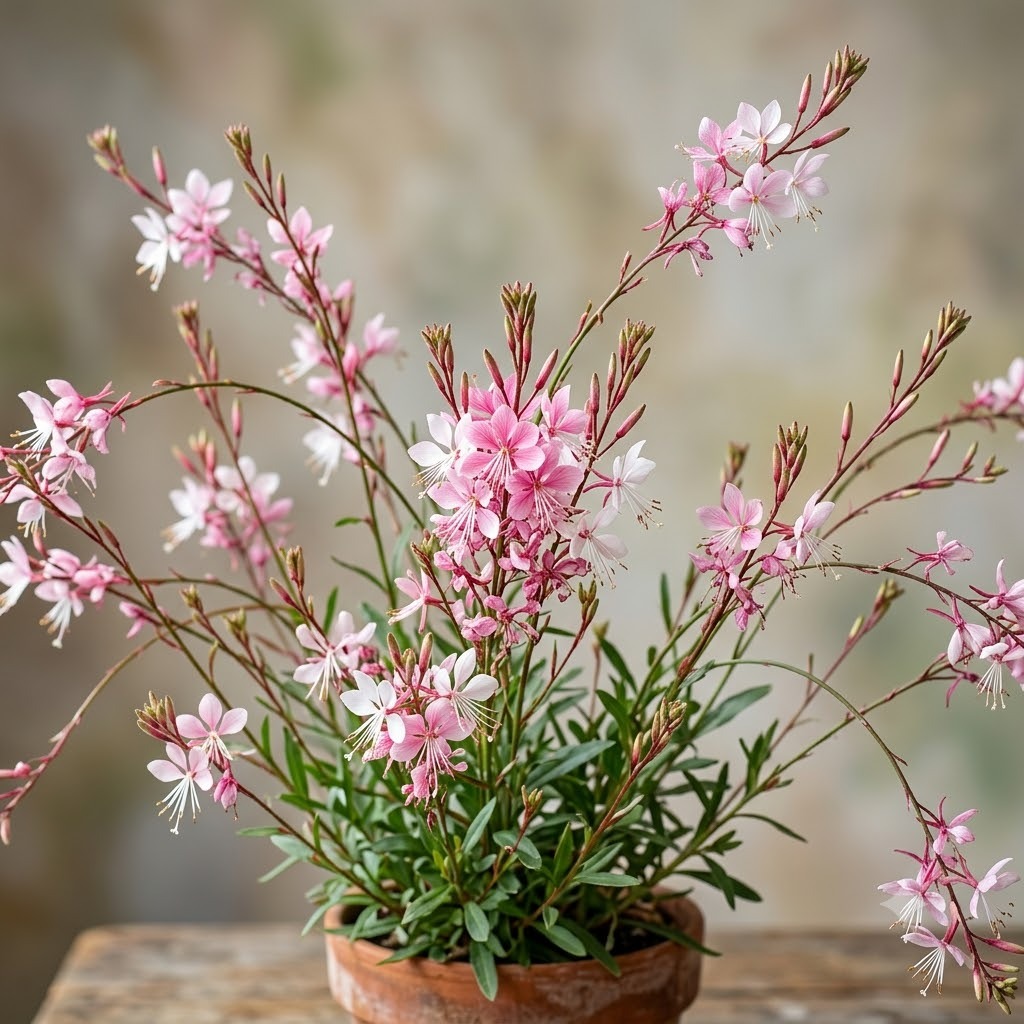
Gaura, often sold as "Whirling Butterflies," is a graceful, airy perennial that seems to float above the border on slender, wiry stems. From late spring right through to autumn it produces a continuous cloud of delicate pink and white flowers that flutter and dance in the slightest breeze, giving the plant its charming common name. Tough, drought- and heat-tolerant, and undemanding once established, Gaura brings movement, lightness, and a very long flowering season to sunny gardens. Botanically it is now classed as Oenothera lindheimeri, though it is still widely known and sold as Gaura.
Origin & Natural Habitat
Gaura is native to the southern United States and Mexico, especially Texas and Louisiana, where it grows wild in prairies, open grasslands, and dry, sunny, well-drained ground. This heritage shapes everything about its garden behaviour: it is adapted to heat, strong sun, poor lean soils, and periods of drought, and it deeply dislikes cold, wet, heavy soil. A plant of open sunny plains, it thrives on neglect far more than on pampering, and understanding its prairie origins is the key to keeping it happy and long-lived in the garden.
Appearance
Gaura forms a loose, open, fountain-like clump of slender stems clothed in narrow green leaves, often with reddish tints. From the stems rise long, wiry, branching flower spikes carrying many small four-petalled blooms that open a few at a time over a very long season. The flowers are white, pink, or a blend that often deepens or fades with age, and their poised shape on thin stalks gives the impression of a swarm of tiny butterflies hovering over the plant. Plants typically reach around 60-120 cm tall and wide, with compact modern varieties available for smaller spaces and containers.
Why People Grow It - Qualities & Benefits
- Very long bloom: flowers from late spring to autumn, one of the longest-flowering perennials.
- Movement and grace: the airy stems dance in the breeze like butterflies.
- Drought and heat tolerance: thrives in hot, dry, sunny conditions.
- Low maintenance: undemanding once established, ideal for relaxed planting.
- Airy structure: weaves lightly through other plants without smothering them.
- Pollinator value: the flowers attract bees and butterflies.
- Poor-soil tolerance: performs well in lean, well-drained ground where richer plants struggle.
Care
Light & Position
Gaura needs full sun - at least six hours of direct sunlight a day. It flowers best and grows sturdiest in an open, sunny position. In shade it becomes floppy, sparse, and short-lived. Give it room and light for the best display.
Soil
Well-drained soil is essential. Gaura tolerates poor, lean, sandy, or gravelly soils and actually prefers them to rich ground. Its one real enemy is heavy, cold, wet soil in winter, which rots the crown. Improve drainage on clay soils before planting, or grow it in raised beds and containers.
Watering
Water regularly during the first season to help it establish. Once settled in, Gaura is markedly drought-tolerant and needs little supplementary water except in prolonged dry spells. Avoid overwatering, which it dislikes far more than dryness.
Feeding
Gaura is a lean feeder that does not want rich conditions. Little or no feeding is needed; over-feeding produces soft, floppy growth and fewer flowers. A poor, well-drained site suits it best.
Pruning & Maintenance
Trim back or shear the plant lightly in the season to tidy it and encourage fresh flowering flushes. Cut it back in late winter or early spring to make way for new growth. The wiry stems can flop, especially in rich soil or shade; the taller types may benefit from light support or from being grown among other plants that hold them up.
Hardiness & Winter Care
Gaura is a short-lived perennial - it is naturally not a long-lived plant, and even in ideal conditions it often persists only a few years, sometimes fading faster in cold, wet climates. Winter wet is more likely to kill it than cold alone, so sharp drainage is the best winter protection. In colder areas it is sometimes grown as an annual or bedding plant. Avoid relying on specific hardiness zones; focus on giving it dry, well-drained conditions.
Planting & Propagation
Plant Gaura in spring into a sunny, well-drained spot, and avoid disturbing its deep taproot once established, as it resents being moved. It can be grown from seed sown in spring, though named varieties are usually propagated by softwood cuttings taken in early summer or by careful division, which the taproot makes tricky. Many gardeners simply buy young plants. In good conditions it may self-seed modestly, providing occasional replacement seedlings for this naturally short-lived plant.
Common Problems & Pests
- Winter wet and root rot: the main cause of death - cold, soggy soil rots the crown and taproot.
- Flopping and sprawl: in rich soil or shade the wiry stems become floppy - give sun, lean soil, or support.
- Short lifespan: it is naturally short-lived, so expect to replace plants every few years.
- Powdery mildew: can appear in humid, crowded, or dry-stressed conditions.
- Rust and leaf spot: occasional in damp settings - ensure airflow.
- Aphids: may cluster on soft growth - hose off or tolerate.
Gaura is largely pest-free; its troubles come mostly from too much water and rich soil rather than from pests.
Toxicity & Safety
Generally considered non-toxic. Gaura (Oenothera lindheimeri) is not listed among the plants commonly poisonous to cats, dogs, or people, and the evening-primrose family to which it belongs contains no notable toxins of concern for garden use. It is regarded as a safe, low-concern ornamental to grow around pets and children. As with any ornamental plant, it is not meant to be eaten, and chewing large amounts of foliage could cause mild digestive upset, so it is still sensible to discourage pets from grazing on it.
Pros & Cons
Pros
- Exceptionally long flowering season, late spring to autumn.
- Graceful, airy movement in the breeze.
- Excellent drought and heat tolerance.
- Low maintenance and happy in poor, lean soil.
- Non-toxic and attracts pollinators.
Cons
- Naturally short-lived - often needs replacing every few years.
- Needs full sun and sharp drainage; hates winter wet.
- Can flop and sprawl, especially in rich soil or shade.
- Dislikes being moved once established (deep taproot).
- Less reliable in cold, wet climates.
Best Suited For
- Sunny, well-drained borders and gravel gardens.
- Prairie-style, naturalistic, and drought-tolerant plantings.
- Adding airy movement and height among other perennials.
- Hot, dry, low-water gardens.
- Containers (compact varieties) in full sun.
Not ideal for shady gardens, heavy wet soils, or gardeners wanting a long-lived, permanent, low-flop plant.
FAQ
Why is my gaura flopping over? Gaura sprawls when it is grown in soil that is too rich, in too much shade, or with too much water - all of which produce soft, weak growth. Give it full sun, lean well-drained soil, and go easy on feeding and watering, or grow it among other plants that help hold its wiry stems upright.
How long does gaura live? It is naturally a short-lived perennial, often lasting only a few years even in good conditions, and fading faster in cold, wet climates. This is normal for the plant; many gardeners let it self-seed modestly or simply replace it periodically, and some grow it as an annual in colder areas.
Does gaura need much water? No - once established it is strongly drought-tolerant thanks to its prairie origins and deep taproot. Water it through its first season to settle in, then only in prolonged dry spells. Overwatering and winter wet are far more dangerous to it than dryness.
Is gaura safe for pets? Yes - it is generally considered non-toxic and is not on the common lists of plants poisonous to cats and dogs. As with any plant, it is still sensible to stop pets from eating large amounts of foliage to avoid mild stomach upset.
Why did my gaura die over winter? Usually winter wet rather than cold. Gaura hates sitting in cold, soggy soil, which rots its crown and taproot. Sharp drainage is the best winter protection - grow it in well-drained ground, a raised bed, or gritty soil, and avoid heavy, waterlogged sites.