Hardy Fuchsia (Fuchsia magellanica)
The Hardy Fuchsia is the tough, garden-worthy cousin of the tender fuchsias sold in summer hanging baskets.
🗓️ Last reviewed: July 2026
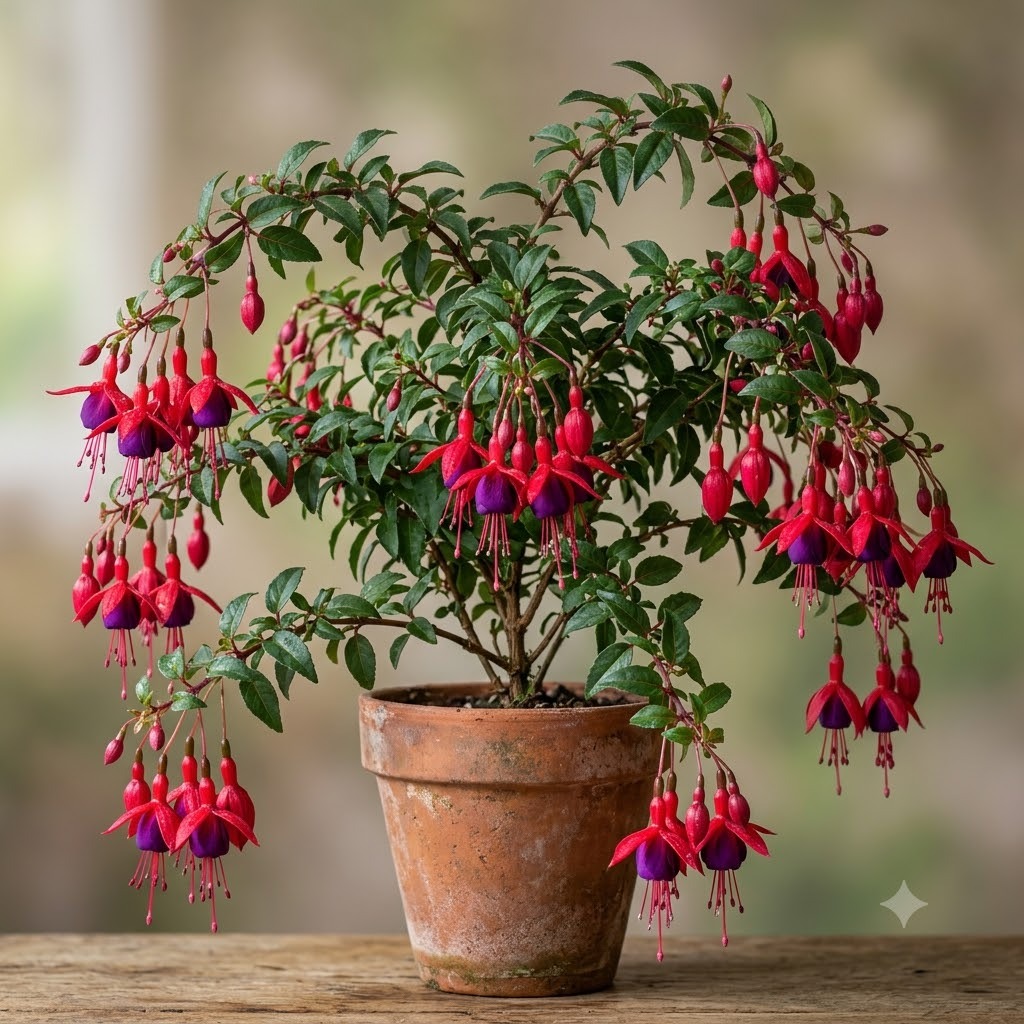
Overview
The Hardy Fuchsia is the tough, garden-worthy cousin of the tender fuchsias sold in summer hanging baskets. Where those trailing types die at the first frost, hardy fuchsias - the Fuchsia magellanica group and its relatives - form arching, shrubby plants that come back year after year, weathering cold winters with a little protection. All summer and well into autumn they drip with dozens of dainty, pendant "ballerina" flowers, usually in rich reds and purples, that dangle and dance in the breeze and draw in bees and hummingbird-like hawk-moths. Graceful, generous, and long-flowering, a hardy fuchsia is one of the best shrubs for bringing months of colour to a partly shaded border or an informal hedge.
Origin & Natural Habitat
Fuchsia magellanica is native to the cool, moist regions of southern South America - Chile and Argentina, including the far south around the Magellan region that gives it its name. There it grows as a shrub in damp woodland margins, along streams, and in cool, humid, sheltered places with mild but not scorching summers. This heritage explains its garden preferences perfectly: it thrives in moist, fertile soil, dappled or part shade, and cool conditions, and it dislikes both drought and baking heat. Its origin in a cool-temperate climate is exactly why it is one of the hardier fuchsias.
Appearance
The Hardy Fuchsia is a deciduous, arching shrub, typically reaching around 1 to 2 metres tall and wide, with slender, gracefully bending stems clothed in small, oval, often reddish-tinged green leaves. From early summer until the first frosts it produces a long succession of pendant flowers hanging like tiny lanterns or ballerinas: each has a tube and four swept-back sepals, usually deep red or crimson, surrounding a skirt of petals in purple, violet, or pink, with long stamens dangling below. Some named forms have white, pink, or two-tone flowers, and a few have variegated foliage. After flowering, small dark berries may form. The overall effect is airy, informal, and constantly in gentle motion.
Why People Grow It - Qualities & Benefits
- Very long flowering: blooms non-stop from early summer to the first frosts.
- Distinctive "ballerina" flowers: elegant pendant blooms in rich reds and purples.
- Comes back each year: hardy types survive winter and reshoot, unlike tender basket fuchsias.
- Thrives in part shade: one of the best flowering shrubs for cooler, dappled spots.
- Pollinator magnet: bees and moths love the nectar-rich flowers.
- Versatile: works as a shrub, an informal flowering hedge, or in large pots.
Care
Light & Position
Hardy fuchsias do best in part shade or dappled light, sheltered from the hottest midday sun and from cold, drying winds. They will grow in full sun in cooler climates if the soil stays reliably moist, but they resent hot, dry, scorching positions. A cool, moist, sheltered border is ideal.
Soil
Give them moist but well-drained, fertile soil, enriched with plenty of organic matter. They dislike both drought and permanent waterlogging. Mulching helps keep the roots cool and moist, which is exactly what these cool-climate shrubs want.
Watering
Keep the soil consistently moist, especially in dry spells and through the flowering season, as these are thirsty plants that flower less if allowed to dry out. Container-grown fuchsias need regular, generous watering as they dry out quickly, but avoid leaving them standing in water.
Feeding
Feed through the growing season with a balanced or high-potassium fertiliser to fuel the long succession of flowers. A spring mulch of compost feeds the soil and conserves moisture. Container plants especially benefit from regular liquid feeding.
Pruning
Prune hardy fuchsias in spring, not autumn. Leave the old top growth over winter as extra frost protection for the crown, then in spring, once new buds appear low down, cut the stems back hard to a framework or near ground level. This encourages vigorous fresh growth, which carries the flowers, and keeps the plant shapely.
Hardiness & Winter Care
This is the key difference between hardy and tender fuchsias. Hardy fuchsias survive cold winters, especially with a thick mulch of compost, bark, or leaf mould piled over the crown in autumn to insulate the roots. In severe winters the top growth may die back to the ground, but the plant reshoots from the base in spring. Tender basket and bedding fuchsias, by contrast, are killed by frost and must be brought indoors or discarded - so it is essential to choose genuinely hardy types for permanent garden planting.
Planting & Propagation
Plant in spring or early summer so the shrub establishes well before its first winter, setting it a little deeper than usual to protect the crown in cold gardens. Choose a moist, sheltered, part-shaded spot and mulch after planting. Hardy fuchsias are very easy to propagate from softwood cuttings in spring or summer, which root quickly and readily - one of the simplest of all shrubs to increase. Take a few cuttings each year as insurance against a hard winter.
Common Problems & Pests
- Winter loss: usually from an unprotected crown or planting a tender type by mistake - mulch well and choose hardy varieties.
- Fuchsia gall mite: a serious pest in some regions, distorting and thickening growth into galled clusters; badly affected plants may need removing, and Fuchsia magellanica types show some resistance.
- Rust: orange pustules on leaf undersides, worse in crowded, damp, still conditions - improve airflow.
- Aphids and whitefly: cluster on soft growth, especially under glass; usually minor outdoors.
- Vine weevil: grubs can attack roots of container plants.
Given the right cool, moist, sheltered spot, hardy fuchsias are robust and easy-going.
Toxicity & Safety
Hardy Fuchsia is non-toxic and one of the safer garden plants to grow around pets and children. The small dark berries that form after the flowers are edible, with a mild, slightly sharp or grape-like flavour, and are sometimes used in jams and preserves. The flowers are edible too and can be used as a decorative garnish. While the berries are harmless, they are not especially tasty raw and are grown for ornament rather than food. There are no significant toxicity concerns with this plant.
Pros & Cons
Pros
- Extremely long flowering, summer to first frost.
- Elegant, distinctive pendant "ballerina" flowers.
- Genuinely hardy - returns each year with protection.
- Excellent for part shade and cooler borders.
- Non-toxic with edible berries and flowers; loved by pollinators.
Cons
- Dislikes hot, dry, scorching positions.
- Needs consistently moist soil - not drought-tolerant.
- Crown needs winter mulch in cold gardens.
- Susceptible to fuchsia gall mite in some areas.
- Deciduous - dies back and looks bare in winter.
Best Suited For
- Cool, moist, part-shaded borders and woodland-edge gardens.
- Informal flowering hedges and screens.
- Mixed shrub and perennial borders needing long summer colour.
- Large containers in cooler climates with regular watering.
- Wildlife and pollinator gardens.
Not ideal for hot, dry, sun-baked gardens, drought-prone situations, or areas with severe fuchsia gall mite pressure.
FAQ
What is the difference between a hardy fuchsia and an ordinary fuchsia? Hardy fuchsias, such as the Fuchsia magellanica group, form permanent shrubs that survive winter and reshoot each year, especially with a mulch over the crown. The tender fuchsias sold as summer bedding and hanging baskets are killed by frost and must be brought indoors or discarded. Always choose a hardy type for permanent garden planting.
When should I prune a hardy fuchsia? In spring, not autumn. Leave the old growth on over winter as extra frost protection, then cut the stems back hard in spring once you see new buds appearing low on the plant. This fresh growth carries the flowers.
Are fuchsia berries safe to eat? Yes. Hardy fuchsia is non-toxic, and the small dark berries are edible with a mild, slightly sharp flavour, sometimes used in jams. The flowers are edible too. The berries are grown for ornament rather than flavour, but they are harmless to pets and children.
Why is my fuchsia not flowering well? Common causes are too much dry heat, insufficient water, a shortage of feed, or too much shade. Keep the soil consistently moist, feed with a high-potassium fertiliser through summer, and give it a cool, part-shaded but not deeply dark spot.
Will it survive a cold winter? A genuinely hardy fuchsia will, especially if you pile a thick mulch over the crown in autumn. The top growth may die back to the ground in a hard winter, but the plant reshoots strongly from the base in spring.