Hollyhock (Alcea rosea)
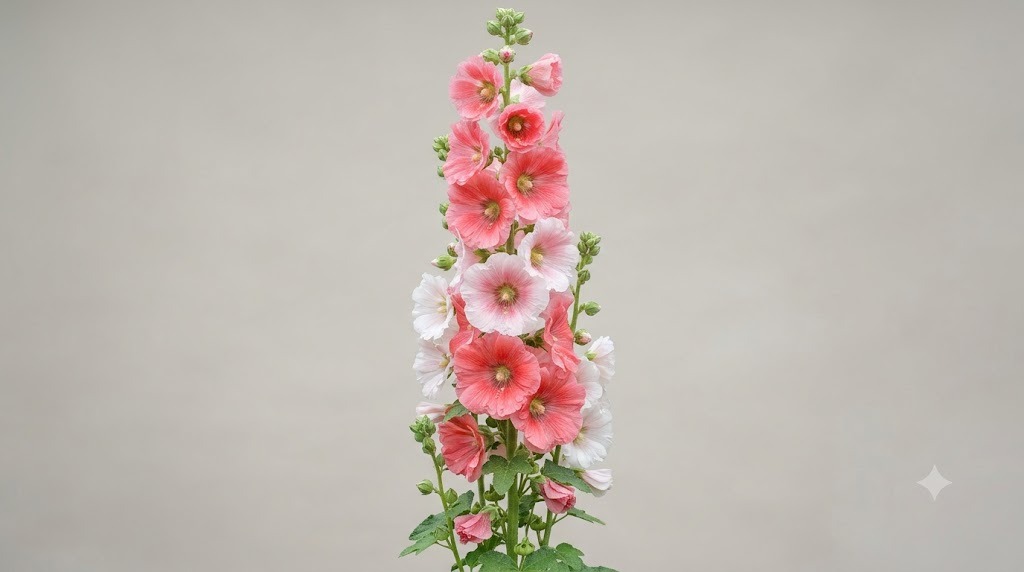
The Hollyhock is the grand old giant of the cottage garden - a towering, romantic plant whose tall flower spikes can soar to two or three meters, smothered from bottom to top in big, open, saucer-shaped blooms.
🗓️ Last reviewed: June 2026
Overview
The Hollyhock is the grand old giant of the cottage garden - a towering, romantic plant whose tall flower spikes can soar to two or three meters, smothered from bottom to top in big, open, saucer-shaped blooms. The flowers, in shades of pink, red, purple, white, yellow, and the famous near-black, have a papery, crinkled charm and a wonderfully old-fashioned character that evokes country cottages, garden walls, and times gone by. Hollyhocks are usually grown as short-lived perennials or biennials, but they self-seed so freely that they happily perpetuate themselves. For vertical drama against a wall or fence, a sunny backdrop for a border, and a flower that bees adore, the hollyhock is an irreplaceable classic.
Origin & Natural Habitat
The common hollyhock, Alcea rosea, is a member of the mallow family thought to have originated in Asia, likely China, and has been cultivated in gardens for many centuries, spreading throughout Europe and beyond. Its wild mallow relatives grow in open, sunny, often dry and disturbed ground, on roadsides, slopes, and waste places. This heritage explains its garden character: it loves full sun, tolerates poor and dry soil well, thrives in the warmth and shelter of a wall, and has the easy, self-seeding, somewhat wild nature of a tough, sun-loving mallow.
Appearance
Hollyhocks form a basal rosette of large, rounded, lobed, slightly rough leaves in their first year, then send up one or more towering, mostly unbranched flower spikes. These spikes, which can reach 1.8 to 3 m, are densely lined with large flowers, typically 8 to 12 cm across, that open in succession from the bottom of the spike upward over many weeks. Flowers may be single (open and saucer-like with a central boss of stamens) or double (full and ruffled like a powder puff), in a rich range of colors including the celebrated deep maroon "black" hollyhock. The overall effect is of a stately, old-fashioned column of bloom, perfect against a vertical backdrop.
Why People Grow It - Qualities & Benefits
- Dramatic height: towering spikes bring unmatched vertical impact to a border.
- Old-fashioned charm: the quintessential romantic cottage-garden flower.
- Long flowering season: blooms open in succession up the spike for many weeks.
- Beautiful colors: from soft pastels to bold reds and the famous near-black.
- Pollinator magnet: the open flowers are alive with bees.
- Self-seeding: perpetuates itself freely once established.
Care
Light & Position
Hollyhocks need full sun for strong, upright spikes and the best flowering - at least six hours of direct sun a day. They flower poorly and grow weaker and floppier in shade. They are classically grown against a sunny, sheltered wall or fence, which provides both the warmth they enjoy and support for their tall spikes against the wind. An open but sheltered sunny position is ideal.
Soil
They are adaptable and tolerate a wide range of soils, including poor and dry ground, but do best in moderately fertile, well-drained soil. Good drainage is helpful, though hollyhocks are notably tolerant of dry conditions once established. Very rich soil can encourage soft growth and worsen the rust disease they are prone to, so moderation is best. They tolerate alkaline soils well.
Watering
Hollyhocks are reasonably drought-tolerant once established thanks to a deep root, but they appreciate watering during dry spells, especially while growing strongly and flowering. Avoid overwatering and wetting the foliage, as damp leaves greatly encourage hollyhock rust, their main problem. Water at the base, in the morning, to keep the leaves as dry as possible.
Feeding
Hollyhocks are not heavy feeders and grow well in ordinary or even poor soil. A light spring feed or a mulch of compost is sufficient. Avoid heavy, high-nitrogen feeding, which produces soft, lush, leafy growth that is more susceptible to rust and more likely to flop. Lean and steady suits them better than rich and forced.
Pruning
Remove the old flower spike after blooming - cutting it back can sometimes encourage a smaller second flush and tidies the plant; alternatively, leave a spike to set seed for self-sowing. Promptly removing rust-affected lower leaves through the season helps slow the spread of the disease. After flowering and seeding, cut the old spikes down. Staking the tall spikes is often necessary, especially in exposed gardens, to stop them snapping or toppling.
Hardiness & Winter Care
Hollyhocks are hardy, with most reliable to around USDA zone 3, though they are typically short-lived, behaving as biennials or short-lived perennials. The basal rosette overwinters and the spike is produced the following year. Good drainage helps the rosette survive wet winters. Because individual plants are short-lived, their prolific self-seeding is what keeps them going in the garden year after year.
Planting & Propagation
Hollyhocks are most often grown from seed, sown in late spring or early summer to flower the following year (as biennials), or started earlier under cover to flower the first year. Plant them, or thin self-sown seedlings, against a sunny wall or at the back of a border, spacing them generously. They develop a deep taproot and resent transplanting once established, so it is best to sow or plant them where they are to grow. They self-seed prolifically, and these volunteer seedlings are the easiest way to keep a continuous display.
Common Problems & Pests
- Hollyhock rust: by far the most common and serious problem - orange-brown pustules on the undersides of leaves and yellow spots on top, spreading upward and disfiguring the foliage. Remove affected leaves promptly, water at the base, ensure airflow, clear debris in autumn, and choose more resistant strains.
- Slugs and snails: can damage young plants and fresh leaves.
- Capsid bugs and caterpillars: may chew holes in leaves and buds.
- Flopping and snapping: the tall spikes are vulnerable to wind without staking.
- Short lifespan: plants naturally decline after a year or two.
- Powdery mildew: occasionally, in dry, crowded conditions.
Managing rust by removing affected leaves and keeping foliage dry is the main ongoing task.
Toxicity & Safety
Generally considered non-toxic to cats, dogs, and humans, though it can cause skin irritation. Hollyhocks, like other mallows, are not listed among the dangerously poisonous garden plants and are widely grown in family and pet-friendly gardens. The main caution is physical: the leaves and stems have fine hairs that can cause mild skin irritation (contact dermatitis) in sensitive people, so wearing gloves when handling them is sensible. They are grown as ornamentals for their flowers and vertical display, not for eating.
Pros & Cons
Pros
- Spectacular height and vertical drama.
- Classic, romantic, old-fashioned cottage-garden charm.
- Long succession of flowers up the spike.
- Tolerant of poor, dry soil and alkaline ground.
- Excellent for bees; self-seeds to perpetuate itself.
Cons
- Very prone to hollyhock rust.
- Short-lived (biennial or short-lived perennial).
- Tall spikes usually need staking against wind.
- Can self-seed where unwanted.
- Foliage may irritate sensitive skin.
Best Suited For
- The back of borders and against sunny walls and fences.
- Cottage gardens and old-fashioned, romantic planting schemes.
- Adding bold vertical height and structure.
- Sunny, sheltered sites, including poor or dry soil.
- Pollinator and wildlife gardens.
Not ideal for shady gardens, very exposed windy sites without staking, or gardeners unwilling to manage rust or tolerate self-seeding.
FAQ
Why do my hollyhock leaves have orange-brown spots and pustules? That is hollyhock rust, the classic and most common hollyhock problem, caused by a fungus that produces orange-brown pustules under the leaves and yellow spots on top. It spreads upward and disfigures the foliage. Manage it by removing affected leaves promptly, watering at the base rather than the leaves, ensuring good airflow, clearing up debris in autumn, and choosing more resistant strains.
Do hollyhocks come back every year? Hollyhocks are hardy but typically short-lived, behaving as biennials or short-lived perennials - an individual plant often flowers for only a year or two. However, they self-seed prolifically, so new plants constantly come up to replace the old ones, and a stand of hollyhocks effectively perpetuates itself in the garden for many years.
Do hollyhocks need staking? Usually, yes, especially in exposed gardens. Their tall spikes, which can reach two to three meters, are vulnerable to being snapped or toppled by wind. Growing them against a wall or fence gives natural shelter and support, but freestanding plants generally benefit from staking to keep the spikes upright.
Are hollyhocks safe for pets? Yes, hollyhocks are generally considered non-toxic to cats and dogs and are widely grown in pet-friendly gardens. The main caution is for people: the hairy leaves and stems can cause mild skin irritation in sensitive individuals, so it is sensible to wear gloves when handling them.
How do I grow hollyhocks from seed? Hollyhocks grow easily from seed. Sow in late spring or early summer for flowers the following year, as they are usually biennial, or start them earlier under cover to flower in their first year. Sow or plant them where they are to grow, as their deep taproot resents transplanting, and they will then self-seed for future years.