Japanese Anemone (Anemone hupehensis / Anemone x hybrida)
The Japanese Anemone, often called the windflower, is one of the loveliest plants for late summer and autumn - a graceful, airy perennial that lifts the shade garden just as most other flowers are fading.
🗓️ Last reviewed: June 2026
Overview
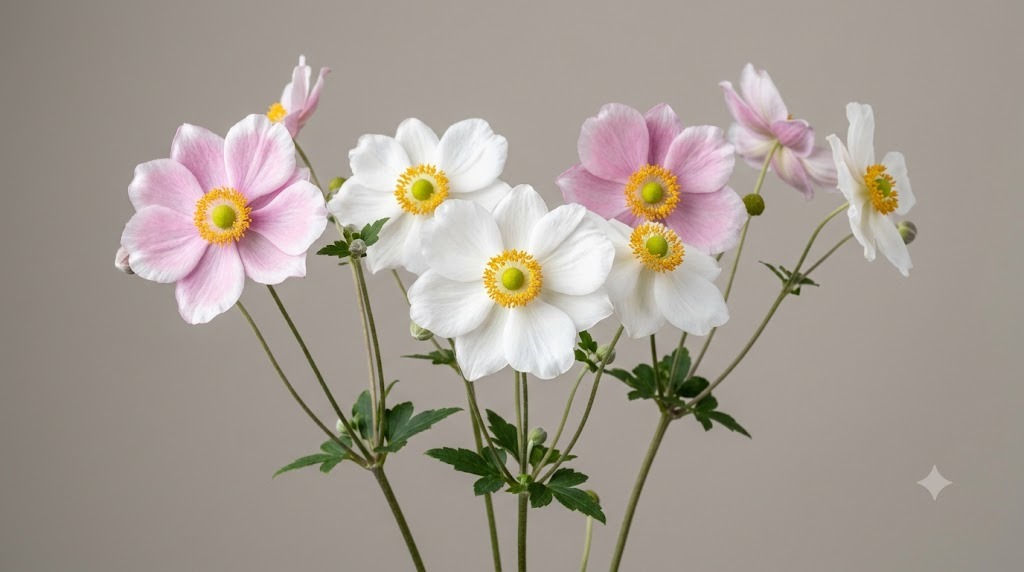
The Japanese Anemone, often called the windflower, is one of the loveliest plants for late summer and autumn - a graceful, airy perennial that lifts the shade garden just as most other flowers are fading. Its simple, cup-shaped blooms in soft pink or clean white are held high on tall, wiry stems that sway and dance in the slightest breeze, giving the plant its windflower name. Each flower is open and uncomplicated, with a ring of petals around a green button center surrounded by a boss of golden stamens, and they open in succession over many weeks. Reaching well above the foliage, the flowers seem to float in the air. For elegant, long-lasting color in part shade when the garden is winding down, the Japanese anemone is hard to beat.
Origin & Natural Habitat
The Japanese anemone is a member of the buttercup family. Despite the name, the plants grown in gardens trace back largely to Anemone hupehensis and its relatives from central and western China, with the long-cultivated garden forms (including Anemone x hybrida) having a long history in Japan, where they naturalized and were grown for centuries before reaching Western gardens in the 1800s. In the wild, their relatives grow at woodland edges, on shaded slopes, and in moist, humus-rich ground with dappled light. This heritage explains their garden character: they favor part shade rather than baking sun, enjoy cool, moist, fertile soil rich in organic matter, and spread quietly outward through the soft ground by underground runners, much as they would colonize a woodland clearing.
Appearance
Japanese anemones form a low, spreading clump of dark green, divided, slightly rough leaves, somewhat like a vine maple or large buttercup leaf, that makes a handsome mound through the growing season. From late summer into autumn, tall, branching, wiry flower stems rise well clear of the foliage, often to 1 to 1.5 m, each carrying several rounded buds that open into simple, shallow, cup-shaped or saucer-shaped flowers typically 5 to 8 cm across. Blooms come in shades of pink, from pale blush to deeper rose, and in pure white, single or semi-double, each with a green central knob ringed by bright yellow stamens. The overall effect is light and graceful - a haze of flowers nodding on slender stems above a neat clump of foliage, swaying with every breath of wind.
Why People Grow It - Qualities & Benefits
- Late-season color: flowers in late summer and autumn when little else blooms.
- Graceful, airy habit: simple blooms float high on wiry stems that sway in the breeze.
- Lights up part shade: one of the best perennials for brightening a shady spot.
- Long flowering season: opens in succession over many weeks.
- Easy and reliable: tough, hardy, and largely trouble-free once settled.
- Spreads to fill space: colonizes steadily to make a generous, naturalistic drift.
Care
Light & Position
Japanese anemones are at their best in part shade or dappled shade, which suits their woodland-edge origins. They will also grow in full sun in cooler climates provided the soil stays reliably moist, but in hot, dry sun they suffer and the leaves can scorch. A spot with morning sun and afternoon shade, or light shade beneath open trees, is ideal. They flower well even in fairly shaded positions, which is a large part of their value. Give them shelter from strong wind too, as the tall flower stems, while flexible, can be battered in very exposed sites.
Soil
They do best in moist, fertile, humus-rich soil that drains reasonably well - the cool, woodsy, organic ground of their natural habitat. Dig in plenty of compost or leaf mold before planting to hold moisture and feed the roots. They dislike two extremes: hot, dry, impoverished soil, where they struggle and scorch, and cold, waterlogged ground in winter, which can rot the crowns. A moisture-retentive but not boggy soil, enriched with organic matter, keeps them happy and free-flowering.
Watering
Japanese anemones like steady moisture, especially while establishing and during dry spells in summer and early autumn when they are building toward flowering. They are not drought plants, and dry soil leads to wilting, scorched leaf edges, and poor flowering. Water deeply during dry weather, and mulch with compost or leaf mold to keep the roots cool and moist. Once well established in suitable soil they cope better, but they always reward reliable moisture. Avoid leaving them to bake.
Feeding
They are not heavy feeders, but they appreciate fertile ground. An annual mulch of compost or well-rotted manure in spring feeds them gently, conserves moisture, and improves the soil - this is usually all they need. A balanced feed in spring can help on poor soils. Avoid heavy, high-nitrogen feeding, which encourages soft, leafy growth at the expense of flowers and can make the clump flop. Steady fertility from organic matter suits them better than forced feeding.
Pruning
Little pruning is needed. Deadheading spent flowers can tidy the plant and may prolong the display, though it is not essential. After flowering and once the foliage is hit by frost, cut the old stems and leaves down to the ground in late autumn or leave them to clear in early spring, which gives a little winter protection to the crown. Because the plants spread by underground runners, you may also need to dig out or chop back the spreading edges to keep the clump within bounds.
Hardiness & Winter Care
Japanese anemones are hardy, generally reliable in USDA zones 4 to 8. The plants die back to the ground in winter and return from the rootstock in spring. They can be slow to establish in their first year and may take a season or two to settle in and flower well, so patience pays off. Good drainage in winter matters, as crowns can rot in cold, sodden soil. A light mulch over the crown in autumn protects against hard freezes in colder zones. Once established, they are long-lived and dependable, returning bigger each year.
Planting & Propagation
Plant Japanese anemones in spring or early autumn, setting them in moist, enriched, part-shade ground with room to spread, as they will steadily colonize outward. They can be slow to establish, so do not be discouraged if the first year is quiet. The easiest way to propagate them is by division or by lifting rooted pieces of the spreading runners in spring or autumn and replanting them - these establish readily. They can also be grown from root cuttings taken in winter. Once they take hold, their natural spreading habit means you will rarely be short of new plants to move around or share.
Common Problems & Pests
- Spreading too far: their underground runners can colonize and creep into neighbors; give them room or dig back the edges to contain them.
- Slow to establish: plants often sulk for a season before settling in and flowering freely.
- Leaf scorch and wilting: in hot, dry sun or dry soil, the leaf edges brown and the plant flags.
- Powdery mildew: can appear on the foliage, especially in dry conditions or poor air flow.
- Slugs and snails: may nibble young spring growth.
- Crown rot: in cold, waterlogged winter soil the crowns can rot.
- Flopping stems: very rich feeding or deep shade can make the tall stems lean.
Their main quirk is the steady spread - welcome where you want a drift, a nuisance in a small, tightly planted bed.
Toxicity & Safety
Mildly toxic if eaten, and the sap can irritate skin - handle with reasonable care. Like other members of the buttercup family, Japanese anemones contain irritant compounds (protoanemonin) in their leaves, stems, and sap. Eating the plant can cause irritation of the mouth and digestive upset in people and pets, though it is not among the most dangerous garden plants and serious poisoning is uncommon. More commonly, the sap can cause mild skin irritation or contact dermatitis in sensitive people when handling, cutting, or dividing the plant, so wearing gloves is sensible. Keep curious pets and small children from chewing on it, and wash your hands after working with it. Grown as an ornamental for its flowers, it is not for eating.
Pros & Cons
Pros
- Beautiful, graceful late-summer and autumn flowers.
- One of the best perennials for color in part shade.
- Long flowering season on tall, airy, wind-swaying stems.
- Hardy, long-lived, and largely trouble-free once established.
- Spreads to fill space and is easy to propagate by division.
Cons
- Can spread aggressively by runners and colonize a bed.
- Often slow to establish and flower in the first year or two.
- Needs moist soil; scorches and wilts in hot, dry sun.
- Mildly toxic and the sap can irritate skin.
- Tall stems can lean or be battered in very exposed sites.
Best Suited For
- Part-shade and dappled-shade borders, and woodland-edge planting.
- Late-summer and autumn color when the garden is winding down.
- Naturalistic drifts where they have room to spread.
- Moist, fertile, humus-rich soils.
- Cottage gardens, cut-flower patches, and pollinator-friendly schemes.
Not ideal for small, tightly packed beds where their spread is unwelcome, hot dry sites with poor soil, or gardeners wanting instant results in the first season.
FAQ
Why won't my Japanese anemone flower in its first year? Japanese anemones are often slow to establish and commonly spend their first season, sometimes two, putting down roots and building foliage before they flower freely. This is normal - they sulk a little after planting. Give them moist, fertile, part-shade ground, keep them watered, be patient, and they will usually settle in and reward you with a generous, increasing display in following years.
Are Japanese anemones invasive? They are not classed as invasive in the way some weeds are, but they do spread steadily and vigorously by underground runners once established, and can colonize a bed or creep into neighboring plants. In a large or naturalistic border this is a virtue, giving you a lovely drift. In a small, tightly planted space, give them room and dig back the spreading edges each year, or grow them where their wandering is welcome.
Do Japanese anemones grow in shade? Yes - this is one of their best qualities. They are happiest in part shade or dappled shade and flower well even in fairly shaded positions, making them one of the most useful perennials for brightening a shady spot in late summer and autumn. They will take full sun in cool climates if the soil stays moist, but in hot, dry sun the leaves scorch and they struggle.
Are Japanese anemones poisonous to pets? They are mildly toxic. Like other plants in the buttercup family, they contain irritant compounds, and chewing the leaves or stems can cause mouth irritation and digestive upset in cats and dogs. The sap can also irritate skin. They are not among the deadliest garden plants, but it is best to keep pets from nibbling them and to wear gloves when cutting or dividing the plant, washing your hands afterward.
How do I propagate Japanese anemones? The easiest way is by division. In spring or autumn, lift the clump or simply dig up rooted pieces of the spreading underground runners and replant them in moist, enriched soil - they establish readily. You can also take root cuttings in winter. Because the plants spread naturally, you will usually have plenty of rooted offsets to lift and move around the garden or share with others.