Joe-Pye Weed (Eutrochium purpureum)
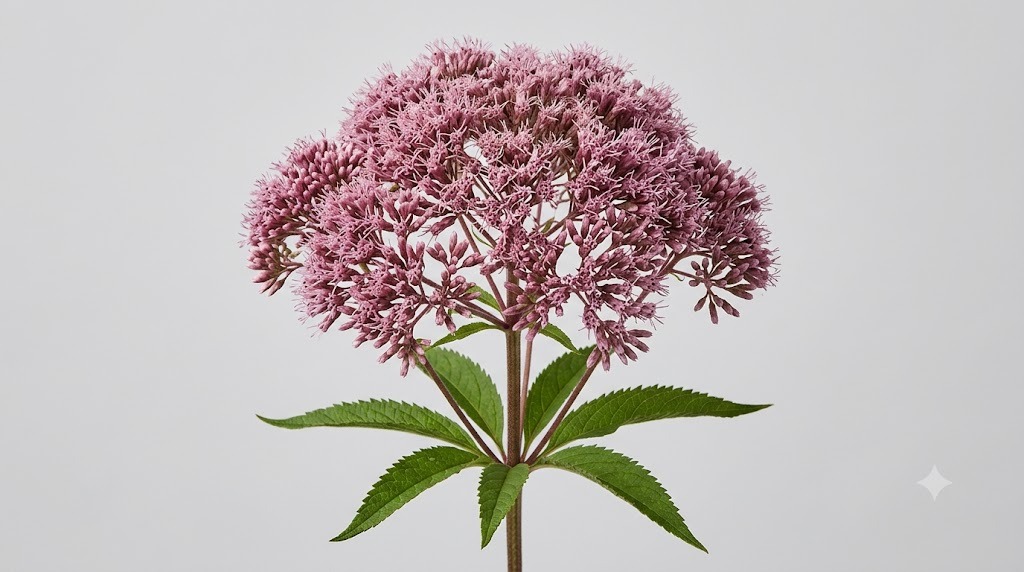
Joe-Pye weed is a stately native North American perennial built for the back of the border - a tall, upright plant that climbs to 1.5 to 2 meters and is crowned in late summer by big, domed clusters of soft mauve-pink flowers.
🗓️ Last reviewed: June 2026
Overview
Joe-Pye weed is a stately native North American perennial built for the back of the border - a tall, upright plant that climbs to 1.5 to 2 meters and is crowned in late summer by big, domed clusters of soft mauve-pink flowers. Those flat-topped flower heads are a famous magnet for butterflies, bees, and other pollinators, which work them in their dozens through August and September when many other flowers are fading. The plant has an easy, prairie-and-meadow character, loves full sun to part shade and moist-to-wet soil, and shrugs off the kind of damp ground that defeats many border perennials. For honest, long-lasting late-season height, a haze of dusky pink, and a buzzing crowd of wildlife, Joe-Pye weed is hard to beat.
Origin & Natural Habitat
Joe-Pye weed, Eutrochium purpureum, is a member of the daisy family (Asteraceae) native to eastern and central North America, where it grows wild in moist meadows, damp woodland edges, thickets, stream banks, and low-lying ground. It was long classified in the genus Eupatorium, and many gardeners and older books still know it under that name. Its natural home in rich, reliably moist soil explains its garden needs perfectly: it wants sun or light shade, plenty of moisture, and room to reach its full height. This wetland-edge heritage is exactly why it shines in rain gardens, beside ponds, and in any spot that stays damp.
Appearance
Joe-Pye weed forms a strong, upright clump of tall, sturdy stems, often flushed purple or speckled, clothed in whorls of large, coarsely toothed, lance-shaped leaves arranged in tiers up the stem. In late summer each stem is topped by a large, rounded to domed cluster of many small, fluffy flowers in shades of dusky mauve-pink to soft rose-purple, the whole head often 20 to 30 cm across. The effect is of a soft, hazy dome of pink floating well above the rest of the border, alive with butterflies. After flowering the heads fade to fluffy, buff-colored seed clusters that hold their shape and give good structure well into autumn and winter.
Why People Grow It - Qualities & Benefits
- Late-season height: towering pink domes for the back of the border just when the garden needs lift.
- Pollinator magnet: one of the very best plants for butterflies and bees in late summer.
- Loves damp ground: thrives in moist-to-wet soil that defeats many perennials.
- Native and tough: an easygoing North American native with real resilience.
- Long season of interest: flowers fade to handsome seed heads that stand into winter.
- Architectural presence: bold, upright structure and tiered foliage.
Care
Light & Position
Joe-Pye weed grows best in full sun to part shade. In full sun, with enough moisture, it is at its strongest, most upright, and most floriferous. It also tolerates light or partial shade well, which can actually help in hot, dry climates by reducing moisture stress, though plants in deeper shade tend to grow taller, leaner, and floppier and may need support. Give it an open spot at the back of a border, beside water, or in a damp meadow planting where its height has room to read.
Soil
This is a plant that genuinely likes it moist. It does best in fertile, humus-rich soil that stays reliably damp, and it is happy in heavy, moisture-retentive ground that many border plants dislike. It tolerates wet soil and even seasonal flooding far better than most perennials, which is what makes it such a natural choice for rain gardens and pond margins. It is less happy in thin, dry, sandy soil; if your ground is on the dry side, improve it with plenty of organic matter and be prepared to water.
Watering
Consistent moisture is the single most important thing. Joe-Pye weed wants its roots to stay damp, especially in its first year and during hot, dry spells, when dry soil causes the leaves to scorch at the edges, wilt, and the flowering to suffer. In a naturally moist or boggy spot it largely looks after itself. In an ordinary border, water generously and regularly in dry weather, and a good mulch helps lock moisture in. It is one of the few tall perennials you can happily plant where the ground stays wet.
Feeding
Joe-Pye weed is not a hungry plant and grows well in ordinary fertile soil without much feeding. A spring mulch of compost or well-rotted manure is usually all it needs - this feeds gently and, just as usefully, helps hold moisture in the soil. Avoid heavy, high-nitrogen feeding, which encourages soft, overly tall, floppy growth that is more likely to need staking. Rich, moisture-retentive soil and a yearly mulch keep it growing strongly.
Pruning
Maintenance is minimal. The faded flower heads can be left in place, as they turn into attractive buff seed clusters that give structure and feed birds through autumn and winter. Cut the old stems down to the ground in late winter or early spring before new growth begins. Some gardeners cut the whole clump back by about a third to a half in early summer (the "Chelsea chop") to produce a shorter, sturdier, more self-supporting plant - useful if your conditions make it grow very tall and floppy.
Hardiness & Winter Care
Joe-Pye weed is fully hardy, reliable across roughly USDA zones 4 to 9, and needs no winter protection. It dies back to the ground in autumn and the root crown overwinters happily, even in cold and wet conditions, to resprout strongly the following spring. Leaving the dead stems and seed heads standing over winter adds structure, shelters insects, and feeds birds; simply cut everything down before the new shoots appear. It is a genuinely low-maintenance, dependable perennial in cold-winter climates.
Planting & Propagation
Joe-Pye weed is easiest to establish from a young plant or a division, planted in spring or autumn into moist, fertile soil with room to reach its full height - space the larger forms generously, around 60 to 90 cm apart. The simplest way to make more plants is by division: in spring, as growth begins, lift an established clump and split the crown into sections, each with roots and shoots, then replant straight away and water in well. Division every few years also keeps vigorous clumps healthy. It can be grown from seed too, sown in autumn or spring, though named cultivars are best propagated by division to come true.
Common Problems & Pests
- Drought stress and leaf scorch: by far the most common issue - in dry soil the leaf edges brown and the plant wilts and flowers poorly. Keep it moist and mulched.
- Flopping: tall plants in shade or rich soil can grow leggy and lean; the Chelsea chop or light support fixes this.
- Powdery mildew: can appear on the foliage, especially on dry, stressed plants late in the season.
- Self-seeding: it can seed around in agreeable conditions; deadhead if you do not want volunteers.
- Size: the full species is genuinely large and can overwhelm a small bed - choose a compact cultivar instead.
- Slugs: may nibble the fresh spring shoots, though established plants shrug this off.
Overall it is a notably trouble-free, robust plant whose main need is simply enough water.
Toxicity & Safety
Generally considered non-toxic and pet-safe - not listed among the plants poisonous to cats, dogs, or humans. Joe-Pye weed is widely grown in family and wildlife gardens without concern and does not appear on the common lists of dangerously toxic ornamental plants. As with any plant, it is grown for its flowers, structure, and pollinator value rather than for eating, and it is sensible to discourage pets and children from chewing on ornamental plants in general. There are no significant contact or handling hazards, making it a safe, easygoing choice for gardens where pets and children play.
Pros & Cons
Pros
- Spectacular late-summer height and dusky-pink color.
- One of the best plants for butterflies and bees.
- Thrives in damp and wet soil where many plants fail.
- Hardy, native, and genuinely low-maintenance.
- Handsome seed heads give autumn and winter structure.
Cons
- The full species is very tall and needs space.
- Demands consistent moisture and dislikes dry soil.
- Can flop in shade or overly rich ground.
- May self-seed in favorable conditions.
- Slow to emerge in spring and a late starter.
Best Suited For
- The back of borders and large, naturalistic plantings.
- Rain gardens, pond edges, and reliably moist or boggy ground.
- Wildlife and pollinator gardens, especially for late-summer butterflies.
- Prairie-style, meadow, and native-plant schemes.
- Gardeners wanting bold, dependable, low-care late-season height.
Not ideal for small beds, hot dry gardens that cannot be kept watered, or anyone wanting a compact, tidy plant - though compact cultivars like Little Joe solve the size problem.
FAQ
Why are the leaf edges on my Joe-Pye weed turning brown and crispy? That is almost always drought stress. Joe-Pye weed is a moisture-loving plant from damp meadows and stream banks, and when the soil dries out the leaf margins scorch and brown, the plant wilts, and flowering suffers. The fix is consistent moisture: water generously and regularly in dry spells, mulch well to hold moisture in the soil, and, if you can, grow it somewhere that stays naturally damp.
How big does Joe-Pye weed get, and is there a smaller version? The full species is genuinely tall, typically reaching 1.5 to 2 meters or more in good, moist soil, which is wonderful at the back of a large border but too much for a small bed. If you want the same flowers and pollinator value on a more manageable plant, look for compact cultivars - "Little Joe" is the best known, staying considerably shorter while keeping the domed pink heads and butterfly appeal.
Is Joe-Pye weed safe for pets and children? Yes. Joe-Pye weed is generally considered non-toxic and is not listed among the plants poisonous to cats, dogs, or people, so it is a safe choice for family and pet-friendly gardens. As with any ornamental plant it is grown to look at rather than to eat, and it is sensible to discourage pets and children from chewing on garden plants in general, but there are no particular hazards with this one.
Can I grow Joe-Pye weed in a dry garden? It is not the natural choice for dry conditions - this is a plant that wants moist-to-wet soil, and in dry ground it scorches, wilts, and disappoints. You can grow it in an ordinary border if you improve the soil with plenty of organic matter, mulch well, and commit to watering it in dry spells, and a little afternoon shade helps reduce moisture stress. But if your soil is genuinely dry and you cannot water, a more drought-tolerant perennial will be happier.