Kniphofia (Red Hot Poker / Torch Lily)
Kniphofia, known as Red Hot Poker or Torch Lily, is one of the most dramatic flowers you can grow in a sunny garden.
🗓️ Last reviewed: July 2026
Overview
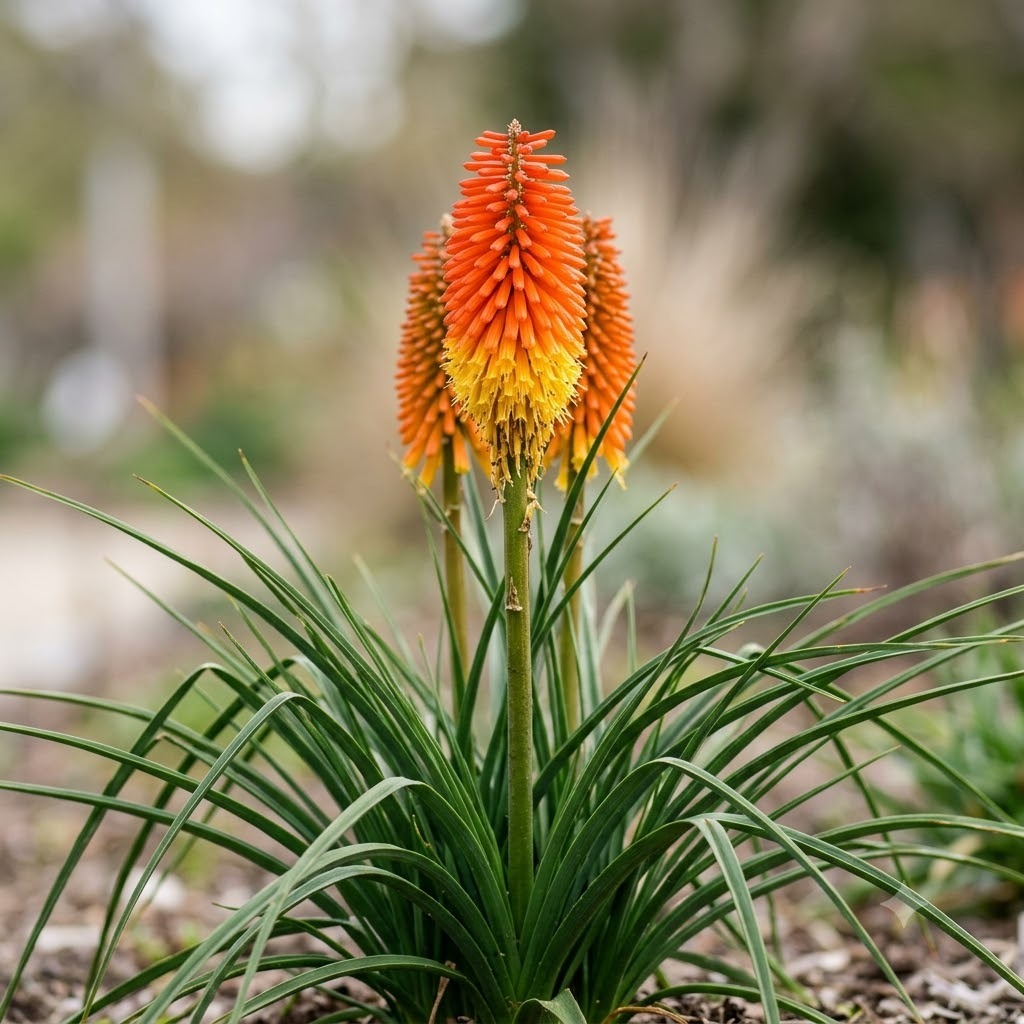
Kniphofia, known as Red Hot Poker or Torch Lily, is one of the most dramatic flowers you can grow in a sunny garden. From a fountain of strappy, grass-like leaves it fires up tall stems topped with dense, torch-shaped flower heads - fiery spikes of orange, red, and yellow that look like lit pokers. The classic two-tone effect, with hot red-orange buds at the top opening to yellow below, is unmistakable and lights up a border in summer. A tough South African native, Kniphofia loves full sun and sharp drainage and shrugs off heat and drought once established. Its one real dislike is a cold, wet crown in winter - keep it well-drained and it is a bold, low-effort performer that hummingbirds, bees, and butterflies adore.
Origin & Natural Habitat
Kniphofia is native to southern and eastern Africa, chiefly South Africa, where it grows in grasslands, mountain slopes, and damp meadows. This gives it an interesting split personality: many species enjoy moisture during the growing season yet demand excellent drainage, especially in winter, because their native summer-rainfall climate means the crowns are never left sitting cold and wet. In cultivation this translates to a plant that wants full sun, tolerates summer drought well, and is happiest where winters are not both cold and soggy. Its African grassland origin explains its love of sun, its heat tolerance, and its dislike of a waterlogged winter crown.
Appearance
Kniphofia forms a bold clump of long, narrow, arching leaves - grass- or reed-like, sometimes slightly keeled - in green or blue-green. From this rises a stout, leafless flower stem, usually 60 cm to 1.2 m tall depending on variety, topped by a dense cylindrical or torch-shaped spike of tubular flowers. The flowers open from the top down or bottom up depending on type, and the classic look is bicolored: hot coral-red or orange at the top fading to yellow. Modern varieties also come in pure yellow, cream, coral, and green-tinged forms, and range from compact types under 60 cm to giants well over a metre. The vertical torches make superb architectural accents among softer, mounded plants, and they draw nectar-feeding birds and insects.
Why People Grow It - Qualities & Benefits
- Dramatic architectural flowers: bold, fiery torch-shaped spikes unlike anything else in the border.
- Long, striking display: flowers in summer, with some varieties repeat- or long-blooming.
- Wildlife magnet: tubular flowers are rich in nectar and adored by bees, butterflies, and hummingbirds (where present).
- Heat- and drought-tolerant: thrives in hot, dry, sunny spots once established.
- Evergreen structure (in mild areas): the strappy foliage gives year-round presence in warmer gardens.
- Deer-resistant: generally left alone by browsing animals.
Care
Light & Position
Full sun is essential - at least 6 hours a day - for strong stems and the best flowering. In too much shade, Kniphofia grows floppy and flowers poorly. Give it an open, warm, sunny position.
Soil
Sharp drainage is the single most important thing. Kniphofia wants fertile but free-draining soil and hates heavy, wet ground, especially in winter. On clay, improve drainage with grit and compost, or plant on a slope or raised bed so water never pools around the crown.
Watering
Water regularly through the first growing season to establish, and during summer growth in dry spells. Once established, Kniphofia is drought-tolerant. The critical rule is to keep the crown dry over winter - wet, cold crowns rot.
Feeding
Moderate. A spring mulch of compost and a light feed as growth begins supports good flowering, but avoid overfeeding, which encourages soft, floppy leaves at the expense of blooms.
Deadheading & Grooming
Remove spent flower stems at the base to keep the plant tidy and encourage more blooms in repeat-flowering types. Tidy away dead outer leaves in spring. Avoid cutting all the foliage back hard in autumn in cold areas - the leaves help protect the crown.
Hardiness & Winter Care
Hardiness varies by species and variety, and the deciduous types are generally tougher than the evergreen ones. The biggest winter risk is not cold alone but cold combined with wet, which rots the crown. In colder or wetter gardens, ensure sharp drainage and protect the crown: tie the foliage up over the centre of the plant to shed water, and add a dry mulch. In borderline climates, choose hardier deciduous varieties.
Planting & Propagation
Plant potted Kniphofia in spring, giving each clump room to develop, with the crown at soil level and never buried in a hollow where water collects. Choose a warm, well-drained, sunny spot. Propagate established plants by division in spring (not autumn, so the divisions establish before winter) - lift the clump and separate the crowns, each with roots and shoots. Species can also be grown from seed, though seedlings take a couple of years to flower and named varieties will not come true from seed.
Common Problems & Pests
- Crown rot from winter wet: the number-one killer - cold, waterlogged soil rots the crown. Sharp drainage and a dry crown are the fix.
- Poor flowering / floppy leaves: caused by too much shade, overfeeding, or overcrowded clumps that need dividing.
- Snails and slugs: may shelter in the dense foliage and nibble young growth.
- Thrips or occasional aphids: minor and rarely serious.
Overall, Kniphofia is tough and largely pest-free where drainage is good.
Toxicity & Safety
Kniphofia is generally considered non-toxic or of very low toxicity to humans and pets, and it is not listed among the common seriously poisonous garden plants. It poses no known significant hazard to cats or dogs. As with any plant, chewing the fibrous leaves could cause mild stomach upset simply from the plant material. The nectar-rich flowers are a benefit to wildlife, not a hazard. If a pet ever ingests a large amount and shows symptoms, consult a vet.
Pros & Cons
Pros
- Bold, fiery, architectural torch flowers unlike anything else.
- Heat- and drought-tolerant once established.
- Excellent nectar plant for bees, butterflies, and hummingbirds.
- Deer-resistant; evergreen structure in mild climates.
- Low-maintenance in a sunny, well-drained spot.
Cons
- Needs full sun and very sharp drainage.
- Prone to crown rot in cold, wet winter soil.
- Evergreen types are less hardy than deciduous ones.
- Can flop or flower poorly in shade or over-rich soil.
- Clumps need occasional dividing to stay vigorous.
Best Suited For
- Hot, sunny borders needing bold vertical accents.
- Gravel gardens, dry gardens, and well-drained slopes.
- Exotic, prairie, and wildlife-friendly planting schemes.
- Coastal and Mediterranean-style gardens.
- Pollinator and hummingbird gardens.
Not ideal for shady gardens, heavy wet clay, or cold gardens with soggy winters unless drainage and crown protection are provided.
FAQ
Why did my Red Hot Poker die over winter? Almost always crown rot from cold, wet soil rather than cold alone. Kniphofia needs sharp drainage; keep the crown dry in winter, plant on well-drained ground or a raised bed, and tie the leaves up over the centre to shed water in wet climates.
Why won't my Kniphofia flower? The usual causes are too much shade, overfeeding (which favours leaves over flowers), or an old, overcrowded clump. Give it full sun, go easy on feed, and divide congested clumps in spring.
Should I cut the leaves back in autumn? In cold or wet gardens, no - leave the foliage on and tie it up over the crown to protect it through winter. Tidy away dead leaves in spring instead.
Is Kniphofia good for wildlife? Very. The tubular, nectar-rich flowers are excellent for bees, butterflies, and hummingbirds where they occur, and the plant is generally left alone by deer.
How do I get more plants? Divide established clumps in spring, giving each division roots and shoots. Species can also be raised from seed, though named varieties will not come true and take a couple of years to flower.