Liatris (Blazing Star / Gayfeather)
Liatris, known as Blazing Star or Gayfeather, is one of the most striking flowers you can add to a sunny border.
🗓️ Last reviewed: July 2026
Overview
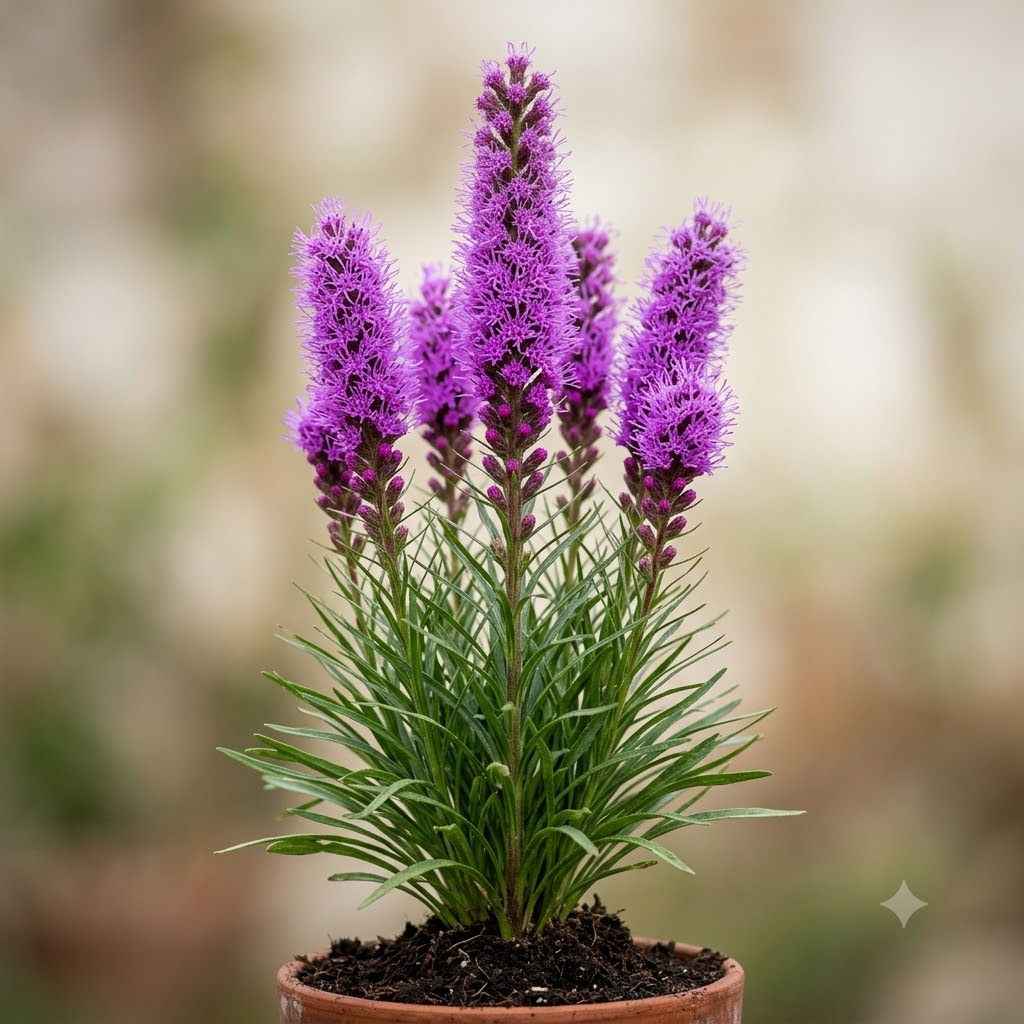
Liatris, known as Blazing Star or Gayfeather, is one of the most striking flowers you can add to a sunny border. It sends up tall, slender spikes packed with fuzzy, thistle-like flowers in vivid purple (occasionally white), and it does something almost no other spike flower does - it opens from the top down. That means the tips of the spike bloom first while the base is still in bud, which gives an unusually long, tidy show. A tough North American prairie native, Liatris is drought-tolerant, deer-resistant, and one of the best pollinator magnets in the garden. Plant a group of corms in spring, give them full sun and good drainage, and they largely take care of themselves.
Origin & Natural Habitat
Liatris is native to central and eastern North America, where it grows wild in prairies, open meadows, and dry, sunny grasslands. It is a true prairie plant, evolved to handle full sun, lean soil, seasonal drought, and cold winters. This heritage explains its needs and its toughness: it thrives in poor-to-average, freely draining soil, resents constant moisture, and does not need pampering or rich feeding. The most commonly grown garden species is Liatris spicata, sometimes called dense blazing star, along with Liatris ligulistylis, famous for attracting monarch butterflies. Understanding that it comes from open, sun-baked grassland tells you almost everything about how to grow it well.
Appearance
Liatris grows from a rounded corm into a clump of grassy, narrow green leaves at the base. From this rises one or more stiff, upright flower spikes, typically 60 to 120 cm tall depending on species and conditions. Each spike is densely lined with small, fluffy flower heads that look soft and feathery - hence the name Gayfeather. The classic color is a rich rosy-purple, though white forms exist. The distinctive feature is the top-down blooming: the top of the spike opens first, and the flowers progress downward over several weeks. The narrow, vertical form makes Liatris a valuable "spike" plant for contrast among rounded and mounded perennials, and the flowers are excellent for cutting and drying.
Why People Grow It - Qualities & Benefits
- Bold vertical form: tall purple spikes add height and structure to borders.
- Long bloom: the top-down flowering habit stretches the display over several weeks in mid to late summer.
- Pollinator powerhouse: butterflies (including monarchs), bees, and other pollinators flock to it - one of the best nectar plants you can grow.
- Tough and low-maintenance: drought-tolerant once established, deer- and rabbit-resistant, and happy in poor soil.
- Native plant value: supports local wildlife and fits naturalistic, prairie, and meadow plantings.
- Cut and dried flowers: long-lasting in the vase and easy to dry.
Care
Light & Position
Full sun is essential - at least 6 hours of direct sun a day. Liatris grown in shade becomes floppy, weak, and flowers poorly. Give it the brightest, most open spot you have.
Soil
Average to poor, well-drained soil is ideal. Liatris dislikes heavy, wet, or rich soil - too much fertility or moisture makes stems flop and can rot the corms. If your soil is heavy clay, improve drainage with grit and compost, or grow Liatris in a raised bed.
Watering
Water new plantings to help them establish. Once settled, Liatris is genuinely drought-tolerant and needs little supplemental water except in prolonged dry spells. The most common way to kill it is overwatering, especially in winter, when soggy soil rots the corms.
Feeding
Little to no feeding is needed. Liatris is a lean-soil prairie plant, and rich feeding produces weak, floppy growth. A light spring mulch of compost is plenty.
Staking & Deadheading
Tall spikes in exposed sites or richer soil may need light staking. Deadhead spent spikes to tidy the plant, or leave some standing - the seed heads feed birds and add winter structure. Cut back the foliage in late autumn or early spring.
Hardiness & Winter Care
Liatris is a hardy perennial across most temperate gardens and dies back to the ground in winter, resprouting from the corm in spring. Its main winter risk is not cold but wet - ensure sharp drainage so the dormant corms do not sit in waterlogged soil.
Planting & Propagation
Plant corms in spring, about 8 to 10 cm deep, with the pointed or flatter side up (the growing point at the top), spacing them roughly 15 to 30 cm apart in groups for the best display. You can also plant potted Liatris in spring or autumn. Propagate by dividing established clumps in spring or autumn - lift and separate the corms every few years to keep clumps vigorous. Liatris also grows readily from seed, though seed-grown plants take a couple of years to reach flowering size and may need a period of cold to germinate well.
Common Problems & Pests
- Rot from wet soil: by far the most common problem - corms rot in heavy, poorly drained, or waterlogged ground, especially over winter. Drainage is the fix.
- Floppy stems: caused by too much shade, over-rich soil, or overfeeding. Give full sun and lean soil.
- Powdery mildew and leaf spot: occasional fungal issues in humid or crowded conditions - improve airflow.
- Slugs and snails: may nibble young spring growth.
- Voles/rodents: can occasionally eat corms in some gardens.
Liatris is otherwise notably pest-free and is reliably ignored by deer and rabbits.
Toxicity & Safety
Liatris is generally regarded as non-toxic and is not listed as a poisonous plant to cats, dogs, or humans. It poses no known significant hazard to pets or children. As with any plant, discourage pets from chewing large amounts of foliage, which can cause mild stomach upset simply from the fibrous material. If you are ever unsure about a specific pet, consult a vet.
Pros & Cons
Pros
- Bold, unusual vertical purple spikes.
- Long-lasting, top-down blooms in mid to late summer.
- Outstanding pollinator and butterfly plant.
- Drought-tolerant, low-maintenance, deer- and rabbit-resistant.
- Native prairie plant; great cut and dried flower.
Cons
- Needs full sun and sharp drainage.
- Rots in heavy, wet soil, especially in winter.
- Can flop in shade or over-rich soil.
- Individual clumps are relatively short-lived and benefit from dividing.
Best Suited For
- Sunny borders and mixed perennial beds needing vertical accents.
- Prairie, meadow, and naturalistic plantings.
- Pollinator and butterfly gardens.
- Cutting gardens and dried-flower growers.
- Dry, sunny, low-water gardens.
Not ideal for shady gardens, heavy wet clay soils, or anyone wanting a lush plant in rich, moist ground.
FAQ
Why does my Liatris flower from the top down? That is completely normal and one of its charms. Unlike most spike flowers, Liatris opens its top flowers first and works downward, which gives a long, tidy display over several weeks.
Why did my Liatris corms rot or fail to come up? Almost always because the soil is too heavy or wet, particularly over winter. Liatris is a prairie plant that needs sharp drainage - improve the soil with grit, or grow it in a raised bed.
Is Liatris good for pollinators? Exceptionally. It is one of the best nectar plants for butterflies - including monarchs - as well as bees. A group in full sun will be alive with visitors.
Do I need to stake it? Usually not in full sun and lean soil, where stems stay stiff and upright. Staking helps only in exposed windy sites or if the soil is too rich, which encourages floppy growth.
How do I keep my clumps going long-term? Divide the corms every few years in spring or autumn. This keeps the clumps vigorous and gives you more plants for free.