Lobelia (Lobelia erinus)
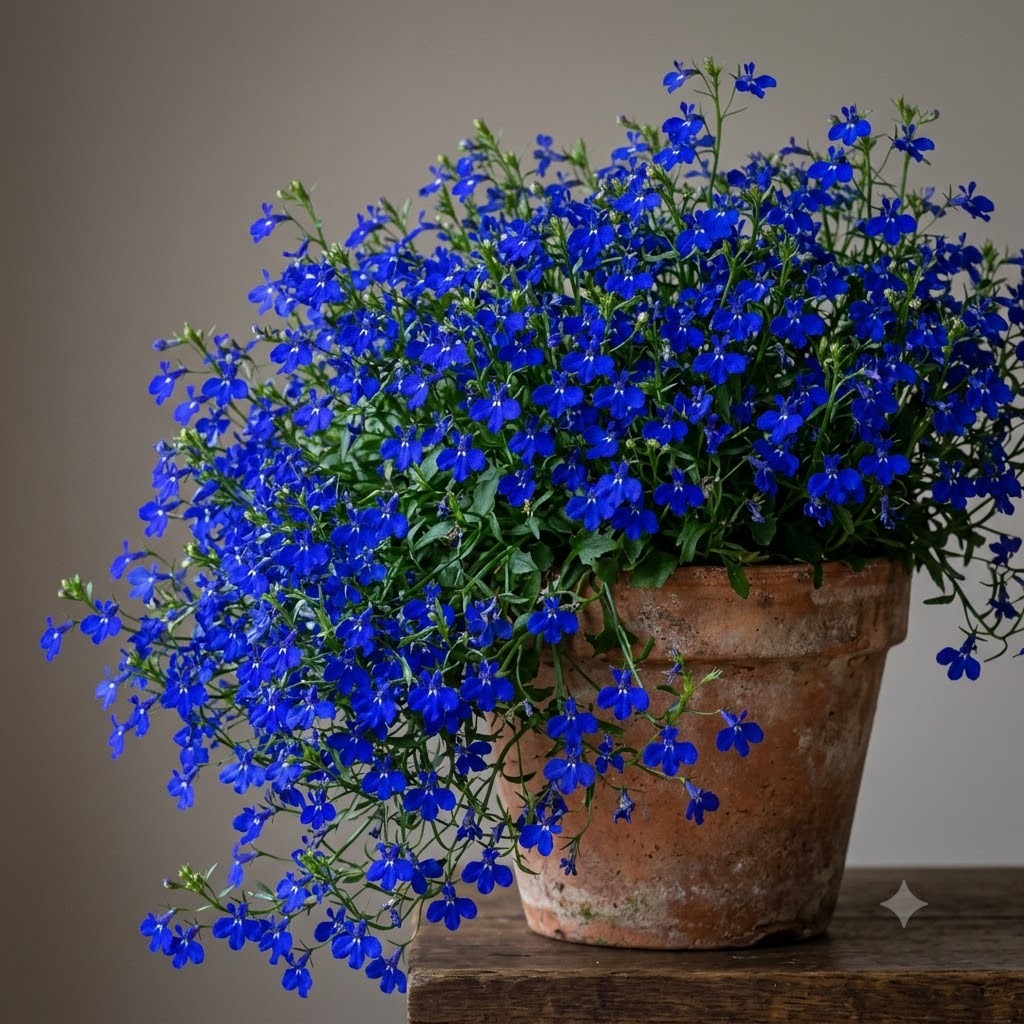
The trailing and bushy Lobelia is one of the great classics of summer containers and hanging baskets, prized for its intense, jewel-like blue flowers - a true blue that few other plants can match - along with shades of violet, mauve, and white.
🗓️ Last reviewed: July 2026
Overview
The trailing and bushy Lobelia is one of the great classics of summer containers and hanging baskets, prized for its intense, jewel-like blue flowers - a true blue that few other plants can match - along with shades of violet, mauve, and white. Smothered in masses of tiny blooms, it cascades over the edges of baskets and pots or forms neat mounds for edging. Lobelia is a cool-season plant that performs best in mild weather and can struggle in intense summer heat. Easy to combine with other summer bedding, it brings a cool, saturated color that lifts any planting. Note that the bright red perennial "cardinal flower" is a different lobelia entirely.
Origin & Natural Habitat
Garden lobelia (Lobelia erinus) originates from southern Africa, where it grows in moist, open ground, damp grassland, and rocky places with reliable moisture. This background explains two of its needs: it likes steady moisture and dislikes drying out, and it favors mild, cool growing conditions over extreme heat. It was introduced to European gardens and became a staple of Victorian bedding and container displays. The genus Lobelia is large and varied, including the very different tall red perennial cardinal flower (Lobelia cardinalis), a moisture-loving border plant - but the familiar blue trailing and edging lobelia of baskets is the tender annual Lobelia erinus.
Appearance
Trailing lobelia is a small, fine-textured plant with slender stems and tiny leaves, covered in a profusion of small, delicate flowers. Each bloom has a distinctive fan of lower petals, often with a white or yellow eye. The signature color is a deep, vivid blue, but violet, sky-blue, lilac, rose, and white forms are widely grown. Bushy or compact types form neat mounds around 10 to 15 cm tall for edging, while trailing types cascade 20 to 30 cm or more over the sides of baskets and pots. In full flush the whole plant can be almost hidden beneath its flowers.
Why People Grow It - Qualities & Benefits
- True blue color: delivers an intense, saturated blue rare among garden flowers.
- Masses of bloom: smothered in tiny flowers over a long summer season.
- Perfect for baskets and pots: trailing types cascade beautifully over container edges.
- Great mixer: combines superbly with other summer bedding and container plants.
- Neat edging: compact types make tidy mounds for border and bed edges.
- Cool, fresh effect: the blue tones cool and brighten hot-colored plantings.
Care
Light & Position
Lobelia grows in full sun to part shade. In hot climates a little afternoon shade helps it cope and keep flowering, as strong heat causes it to fade. In cooler climates full sun gives the best display.
Soil
It prefers moist, fertile, well-drained soil rich in organic matter. In containers, use a good-quality potting mix that holds moisture yet drains freely. It dislikes dry, impoverished soil.
Watering
Consistent moisture is the key to keeping lobelia happy - it dislikes drying out. Water regularly, especially in baskets and pots, which dry quickly in summer. Do not let it wilt from drought, but avoid waterlogging.
Feeding
Lobelia in containers benefits from regular feeding through the growing season with a balanced liquid fertilizer to sustain its heavy, continuous flowering. In beds, moderate feeding in fertile soil is enough.
Maintenance
If plants become straggly or pause in midsummer, especially in heat, trim them back lightly to encourage fresh, bushier growth and a new flush of flowers. Keep containers watered and fed, and remove any tired, browned growth. Many modern trailing types flower reliably without deadheading.
Hardiness & Winter Care
Trailing and edging lobelia (Lobelia erinus) is a frost-tender annual, killed by frost and grown fresh each year. It is a cool-season plant that flowers best in mild weather and can decline in prolonged summer heat. It is not overwintered; new plants are raised each spring. (The unrelated cardinal flower, Lobelia cardinalis, is a hardy perennial by contrast.)
Planting & Propagation
Garden lobelia is grown from seed, which is very fine and sown on the surface of moist compost, usually started early indoors because it is slow to reach flowering size. Many gardeners buy young plants or plug plants for convenience, as the tiny seed can be fiddly. Plant out after the last frost, once the weather has warmed, spacing plants around 10 to 15 cm apart or planting more densely in baskets for a full, cascading effect. Keep newly planted lobelia well watered as it establishes.
Common Problems & Pests
- Heat and drought stress: the most common issue - plants fade, brown, and stop flowering in hot, dry conditions; keep moist and trim back for a fresh flush.
- Drying out: baskets and pots dry quickly and lobelia suffers fast if it wilts; consistent watering is essential.
- Slugs and snails: can damage young plants.
- Root rot: in cold, waterlogged, poorly drained conditions.
- Aphids: may occasionally cluster on soft growth.
Given steady moisture and mild conditions, lobelia is largely trouble-free.
Toxicity & Safety
Best treated as potentially harmful if eaten. Plants in the genus Lobelia contain alkaloids, and lobelia is generally regarded as toxic if ingested by pets or people, potentially causing effects such as drooling, vomiting, or other symptoms. It is not an edible plant. Keep pets and children from eating it, site it out of reach where necessary, and contact a vet or medical professional if a significant amount is swallowed. For everyday handling and gardening it presents no problem.
Pros & Cons
Pros
- Rare, intense true-blue flowers.
- Masses of bloom over a long season.
- Superb in hanging baskets and containers.
- Mixes beautifully with other summer bedding.
- Neat compact types for edging.
Cons
- Frost-tender annual - lasts one season.
- Struggles and fades in hot summers.
- Needs consistent moisture; hates drying out.
- Fine seed is slow and fiddly to raise.
- Toxic if eaten - not pet- or child-safe to ingest.
Best Suited For
- Hanging baskets and container edges (trailing types).
- Mixed summer bedding and combination pots.
- Border and bed edging (compact types).
- Cool-climate and cool-season summer displays.
- Blue and cool-toned color schemes.
Not ideal for hot, dry gardens, low-water plantings, or gardeners wanting a permanent perennial from this annual type.
FAQ
Why does my lobelia stop flowering and go brown in summer? Trailing lobelia is a cool-season plant that dislikes heat and drought. In hot spells it often fades and browns. Keep it well watered, give it some afternoon shade in hot climates, and trim it back to encourage a fresh flush when conditions cool.
Is lobelia the same as the red cardinal flower? No. The blue trailing and edging lobelia is the tender annual Lobelia erinus. The tall red cardinal flower is Lobelia cardinalis, a hardy moisture-loving perennial - a different plant in the same genus.
Why is my lobelia wilting in a hanging basket? Baskets dry out very quickly, and lobelia hates drying out. It needs consistent moisture and regular feeding. Water it reliably, especially in warm weather, and it should recover if it has not been left dry for too long.
Is lobelia safe for pets? No - lobelia contains alkaloids and is generally considered toxic if eaten, so keep pets and children from consuming it. It is not an edible plant. Seek veterinary or medical advice if a significant amount is swallowed.
Does lobelia come back every year? The blue trailing and edging lobelia (Lobelia erinus) is a frost-tender annual grown fresh each year and does not overwinter in cold climates. The unrelated cardinal flower perennial, however, does return each year.