Magnolia (Magnolia)
The Magnolia is one of the great flowering plants of the garden - an ancient group of trees and shrubs grown for their large, showy, often fragrant blooms.
🗓️ Last reviewed: July 2026
Overview
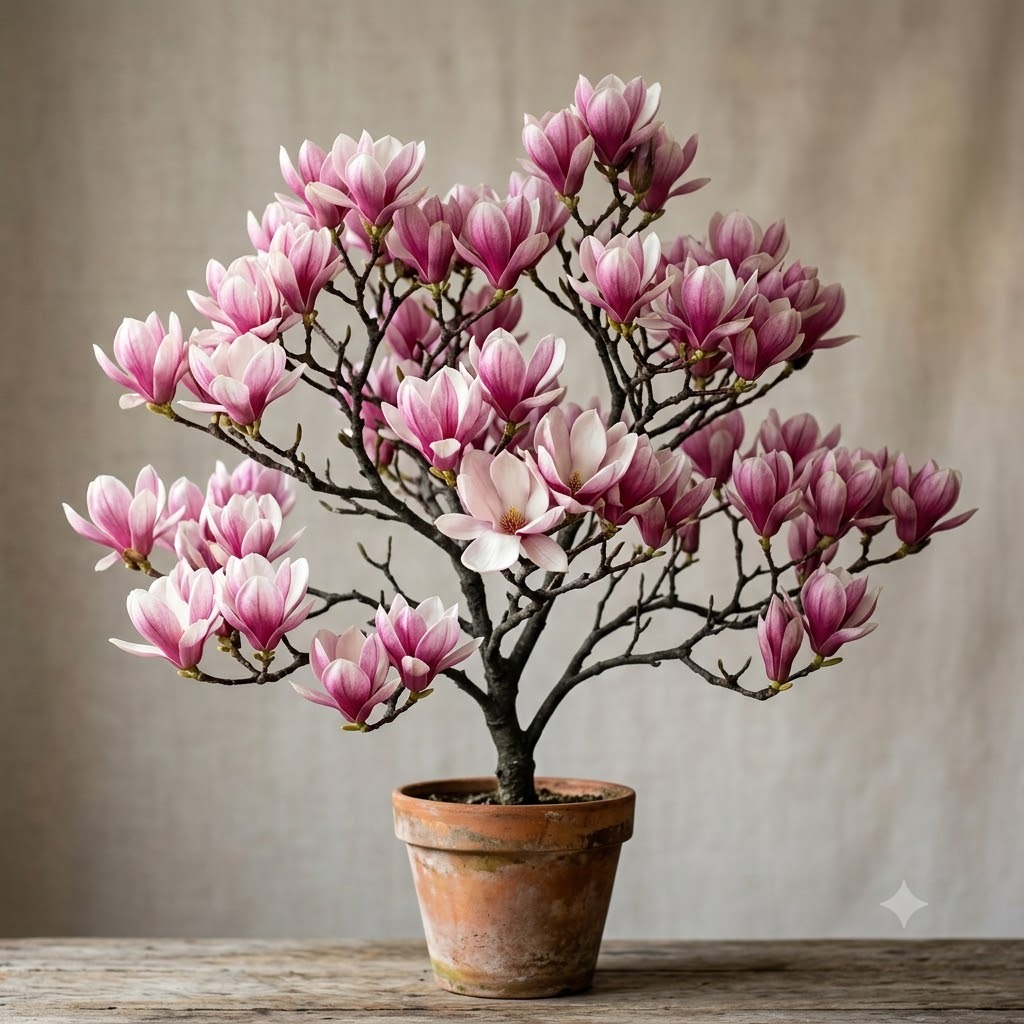
The Magnolia is one of the great flowering plants of the garden - an ancient group of trees and shrubs grown for their large, showy, often fragrant blooms. Depending on the type, a magnolia can be a small spring-flowering shrub smothered in star-shaped flowers, a graceful tree hung with goblet-shaped blooms on bare branches, or a stately evergreen with huge, glossy leaves and dinner-plate flowers in summer. Few plants create such a spectacle. A magnolia is a long-term, patient investment - slow to establish, but a magnificent centerpiece for decades once it settles in.
Origin & Natural Habitat
Magnolias are an ancient lineage of plants, thought to have appeared before bees evolved - which is why their tough flowers are pollinated largely by beetles. They grow wild in two main regions: East and Southeast Asia (the source of most deciduous garden magnolias, such as the star and saucer types) and the Americas, from the eastern United States down into Central and South America (home of the evergreen southern magnolia, Magnolia grandiflora). In the wild they grow in woodlands and forest edges in fertile, moist but well-drained soil, which explains their garden preferences: rich ground, steady moisture, and shelter.
Appearance
Magnolias fall into two broad camps. Deciduous magnolias flower in early spring, often on bare branches before the leaves appear, in shades of white, pink, purple, and yellow. The star magnolia (M. stellata) is a compact shrub with many-petaled starry white or pink flowers; the saucer magnolia (M. x soulangeana) is a small tree with large goblet-shaped pink-and-white blooms. Evergreen magnolias, mainly the southern magnolia, are large trees with big, leathery, glossy dark-green leaves (often rusty-brown and felted beneath) and huge, richly fragrant creamy-white flowers in summer. Sizes range from a 2-3 m star magnolia shrub to a southern magnolia that can eventually reach well over 15 m.
Why People Grow It - Qualities & Benefits
- Spectacular flowers: among the largest and most dramatic blooms of any hardy plant.
- Early color: deciduous types are one of the first big flowering events of spring.
- Fragrance: many magnolias, especially the evergreen types, are beautifully scented.
- Architectural presence: a magnolia makes a stunning specimen and focal point.
- Range of sizes: from small courtyard shrubs to grand trees and wall-trained forms.
- Long-lived: a well-sited magnolia is a plant for generations.
Care
Light & Position
Most magnolias prefer full sun to light dappled shade. Full sun gives the best flowering, but a little afternoon shade can help in hot climates. Crucially, deciduous early-flowering types benefit from a sheltered position - their early blooms are easily browned and spoiled by late frosts and cold winds, so avoid frost pockets and east-facing spots where morning sun thaws frosted buds too fast.
Soil
Magnolias want rich, fertile, moist but well-drained soil. Most prefer neutral to slightly acidic ground and dislike very alkaline (chalky) or shallow soils, where they can struggle and yellow. Improve the site generously with compost or leaf mould before planting.
Watering
Keep young magnolias well watered, especially through their first few years and in dry spells - they resent drought while establishing. Their roots are relatively shallow and fleshy, so steady moisture matters. Mature plants are more self-reliant but still appreciate water in prolonged dry weather.
Feeding
Magnolias are not heavy feeders. A spring mulch of compost or leaf mould feeds the soil, conserves moisture, and protects the shallow roots. A light feed in spring can help young plants, but avoid overfeeding.
Pruning
Magnolias need little or no pruning and generally look best left to their natural shape. If you must prune, do it lightly, only to remove dead, damaged, or awkward branches. Deciduous types are best pruned in mid to late summer to reduce the risk of bleeding sap; evergreen types can be tidied after flowering. Magnolias do not respond well to hard pruning, so shape gently.
Hardiness & Winter Care
Hardiness varies by type: many deciduous magnolias are quite cold-hardy, while some evergreen and early-flowering types are more tender. The main winter and spring concern is frost damage to flower buds and open blooms. A sheltered site and avoiding frost pockets are the best protection; young plants can be protected from hard frosts in their first winters.
Planting & Propagation
Plant magnolias in autumn or spring, taking care not to damage the shallow, fleshy roots and setting them at the same depth they grew in the pot. Choose the final position carefully - magnolias dislike being moved once established. They are propagated by softwood or semi-ripe cuttings (which can be slow and tricky), by grafting (common commercially), by layering low branches, and sometimes from seed, though seed-grown plants are slow and may take many years to flower.
Common Problems & Pests
- Frost-damaged flowers: the most common disappointment - late frost turns open blooms brown and mushy. Shelter and siting are the fix.
- Chlorosis (yellowing leaves): often caused by soil that is too alkaline or by poor drainage.
- Scale insects: small sap-sucking bumps on stems and leaves, sometimes with sticky honeydew and sooty mould.
- Coral spot and dieback: fungal problems on stressed or damaged wood.
- Slow establishment: magnolias can sulk for a year or two after planting before settling - patience is needed.
Magnolias are generally healthy plants once established in the right soil.
Toxicity & Safety
Generally considered non-toxic to cats, dogs, and humans. Magnolias are not listed among the plants known to poison pets, and no significant toxicity is associated with the garden species. As with any plant, nibbling large amounts of leaves or bark could cause mild stomach upset in a curious pet, but magnolia is not regarded as a poisonous plant. There are no thorns or other physical hazards.
Pros & Cons
Pros
- Spectacular, often fragrant flowers.
- Early spring color (deciduous types).
- Handsome architectural specimen.
- Long-lived and low-maintenance once established.
- Non-toxic.
Cons
- Early blooms are vulnerable to frost.
- Slow to establish and slow to flower from young.
- Dislike alkaline soil and being moved.
- Larger types need plenty of space.
- Little tolerance for hard pruning.
Best Suited For
- Specimen and focal-point planting in a lawn or open bed.
- Sheltered gardens where spring frost is not severe.
- Neutral to acidic, fertile soils.
- Courtyards and small gardens (compact star magnolias).
- Wall-training in cooler climates (some evergreen types).
Not ideal for exposed frost-pocket gardens, very chalky shallow soils, or gardeners wanting instant results.
FAQ
Why did my magnolia flowers turn brown? Almost always late frost. Deciduous magnolias flower very early, and a cold snap browns the open blooms overnight. Plant in a sheltered spot away from frost pockets and east-facing walls, and choose a slightly later-flowering variety in cold gardens.
How long until a magnolia flowers? It depends on the type and how it was propagated. Grafted and cutting-grown plants may flower within a few years, while seed-grown magnolias can take many years. Be patient in the early years - magnolias often establish slowly before they bloom well.
Do magnolias need acid soil? They prefer neutral to slightly acidic, fertile, moist but well-drained soil and dislike very alkaline (chalky) ground, where they may yellow and struggle. Improving the soil with compost and leaf mould helps.
Are magnolias safe for pets? Magnolias are generally considered non-toxic to cats and dogs and are not on the common poisonous-plant lists. As always, discourage pets from eating large amounts of any garden plant.
Do I need to prune my magnolia? Usually not. Magnolias look best in their natural shape and dislike hard pruning. Remove only dead or damaged branches, pruning deciduous types in summer to avoid bleeding sap.