Mock Orange (Philadelphus coronarius)
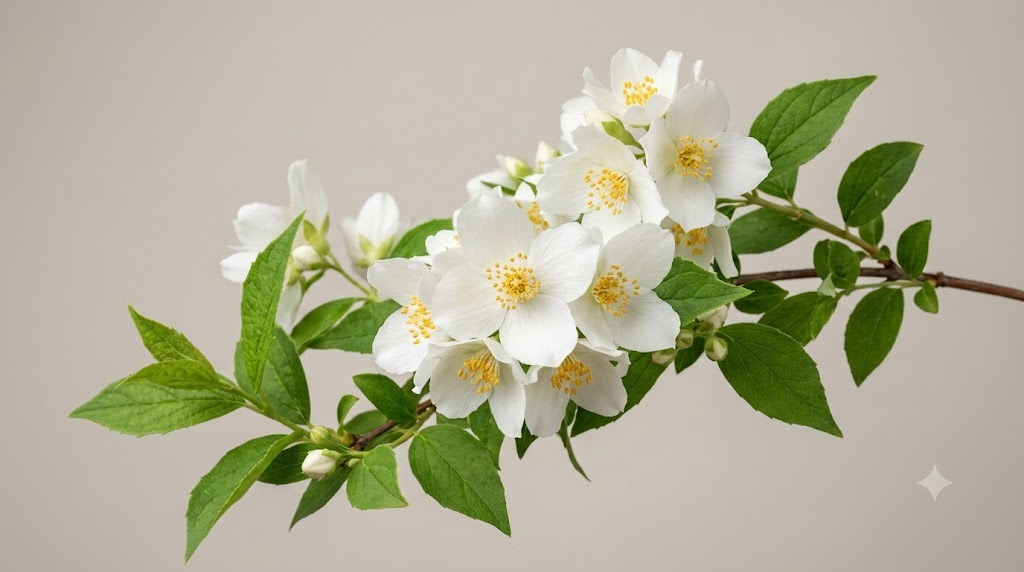
The Mock Orange is one of the great old-fashioned flowering shrubs - a tough, easygoing deciduous bush that erupts in late spring or early summer into clouds of pure-white, cup-shaped flowers with golden centers.
🗓️ Last reviewed: June 2026
Overview
The Mock Orange is one of the great old-fashioned flowering shrubs - a tough, easygoing deciduous bush that erupts in late spring or early summer into clouds of pure-white, cup-shaped flowers with golden centers. Its real claim to fame is the scent: a rich, sweet, intensely orange-blossom fragrance that carries right across the garden on a warm evening and gives the plant its common name, since the flowers smell uncannily like those of a true orange. For a few weeks the whole shrub disappears under a froth of bloom. The rest of the year it is a quiet, dependable green backbone. Undemanding, hardy, and long-lived, mock orange is a classic for the back of a border, an informal hedge, or a spot near a path or doorway where its perfume can be enjoyed.
Origin & Natural Habitat
The common mock orange, Philadelphus coronarius, is a member of the hydrangea family and is native to southern Europe and into Asia Minor, where it grows on rocky slopes, woodland edges, and scrubby hillsides. It has been cultivated in gardens for centuries and is the parent of many of the popular garden hybrids grown today. Its origins on open, well-drained, often stony ground explain its garden character: it is genuinely tough, copes with poor soil and dry spells once established, enjoys sun, and asks for very little. This is a shrub built by nature to look after itself.
Appearance
Mock orange forms a rounded, upright, multi-stemmed deciduous shrub, typically 2 to 3 m tall and almost as wide, with arching branches that bow under the weight of bloom. The mid-green oval leaves are pleasant but unremarkable - the plant is grown entirely for its flowers. These appear in early summer in great profusion: four-petalled, cup-shaped, usually pure white with a boss of yellow stamens, around 2.5 to 4 cm across, borne in clusters along the stems. Some forms are single, some semi-double or double, and a few have a faint purple flush at the center. The overall effect in full bloom is of a shrub smothered in white, and the fragrance is just as much a part of its appearance as the flowers themselves.
Why People Grow It - Qualities & Benefits
- Incredible fragrance: a rich, sweet orange-blossom scent that perfumes the whole garden.
- Clouds of white flowers: smothered in pure-white bloom in early summer.
- Tough and easy: undemanding, hardy, and forgiving of poor conditions.
- Long-lived and reliable: a dependable shrub that performs for decades.
- Pollinator-friendly: bees love the open, nectar-rich flowers.
- Classic and versatile: ideal for borders, informal hedges, and cottage gardens.
Care
Light & Position
Mock orange flowers best in full sun, which gives the heaviest bloom and the strongest scent. It will also grow happily in partial shade and still flower reasonably well, making it a useful shrub for a range of spots, but the more sun it gets, the more generously it blooms. In deep shade it grows leafy and flowers sparsely. A spot in sun or light shade where you pass by often is ideal, so the fragrance can be enjoyed.
Soil
This is an adaptable, unfussy shrub that tolerates a wide range of soils, including poor, chalky, and dry ground. It does best in moderately fertile, well-drained soil but is genuinely tough and will cope with less. Its native life on stony slopes means it dislikes waterlogged ground above all - good drainage matters more than richness. It handles alkaline and chalky soils well, which makes it valuable where many shrubs struggle.
Watering
Once established, mock orange is notably drought-tolerant and rarely needs watering in normal conditions. Water young plants regularly through their first year or two while they root in, and give established shrubs a deep soak during prolonged dry spells, especially around flowering time. Beyond that, it largely looks after itself. As with most shrubs, the aim is to establish a deep, self-sufficient root system rather than to water frequently.
Feeding
Mock orange is not a hungry plant and grows well in ordinary soil with little or no feeding. A mulch of compost or well-rotted manure in spring is plenty to keep it healthy and flowering. Avoid heavy, high-nitrogen feeding, which encourages soft leafy growth at the expense of flowers. Lean and steady suits it well - over-rich conditions are far more of a problem than poor ones.
Pruning
This is the one piece of timing that matters. Mock orange flowers on wood produced the previous year - so-called old wood - which means pruning at the wrong time removes next year's flowers. Always prune immediately after flowering, in mid-summer, once the blooms fade. Cut back the stems that have just flowered, and remove a few of the oldest stems right down to the base each year to keep the shrub young, open, and vigorous. This after-flowering prune gives the plant the rest of the season to grow the new wood that will carry next year's bloom.
Hardiness & Winter Care
Mock orange is fully hardy, reliable to around USDA zone 4 and comfortable through zone 8, and needs no winter protection in most temperate climates. The bare deciduous framework shrugs off cold and frost without trouble. It is a robust, low-maintenance shrub that simply drops its leaves in autumn, rests over winter, and leafs out again in spring. Good drainage is the only real concern, as the one thing it dislikes is sitting in cold, wet soil.
Planting & Propagation
Mock orange is most easily propagated from cuttings. Take softwood cuttings in early summer or hardwood cuttings in autumn and winter, both of which root readily, making it simple to raise new plants from a favorite shrub. Plant out in autumn or spring in a sunny or lightly shaded spot with reasonable drainage, giving it room to reach its full rounded size. Established shrubs can also be propagated by removing rooted suckers or by layering low branches. From cuttings to a flowering shrub takes a few years, but the plant then performs reliably for decades.
Common Problems & Pests
- Few serious problems: mock orange is a notably trouble-free, robust shrub.
- Aphids: can cluster on soft new growth in spring but rarely cause lasting harm.
- Poor flowering from wrong pruning: by far the most common complaint - cutting at the wrong time removes the flowering wood.
- Powdery mildew: may appear on leaves in dry summers or crowded conditions.
- Leaf spot: occasional fungal spotting in damp seasons, usually cosmetic.
- Sparse bloom in shade: too little sun reduces both flowering and fragrance.
The single biggest cause of disappointment is mistimed pruning, not pests or disease.
Toxicity & Safety
Mock orange is generally regarded as non-toxic and pet-safe - it is not listed among the plants poisonous to cats, dogs, or humans. It is widely grown in family and pet-friendly gardens without concern, and the flowers are valued by bees and other pollinators. As with any plant, it is grown as an ornamental and is not intended for eating, and it is always sensible to discourage pets and small children from chewing on garden plants in general. But mock orange itself carries no notable toxicity and is considered one of the safer choices for a household with animals or children.
Pros & Cons
Pros
- Outstanding, far-carrying orange-blossom fragrance.
- Smothered in clouds of pure-white flowers in early summer.
- Extremely tough, hardy, and low-maintenance.
- Long-lived and reliable, performing for decades.
- Tolerates poor, dry, and chalky soils; pet-safe and bee-friendly.
Cons
- Flowers for only a few weeks; plain green the rest of the year.
- Must be pruned right after flowering or you lose next year's bloom.
- Can grow large and needs room or regular pruning.
- Flowers and scent are reduced in shade.
- Foliage is unremarkable out of bloom.
Best Suited For
- The back of borders and mixed shrub plantings.
- Informal flowering hedges and screens.
- Near paths, seating, and doorways to enjoy the scent.
- Cottage gardens and traditional, fragrant planting schemes.
- Tough sites with poor, dry, or chalky soil; sunny or lightly shaded.
Not ideal for very small gardens with no room, deep shade, permanently wet ground, or gardeners wanting year-round flower interest from a single shrub.
FAQ
Why didn't my mock orange flower this year? The most common reason is pruning at the wrong time. Mock orange flowers on old wood - growth made the previous year - so if you cut it back in late winter or spring, you remove the very stems that were about to bloom. Always prune immediately after flowering in mid-summer. The other common cause is too much shade, since the shrub flowers far more generously in full sun.
When and how should I prune mock orange? Prune straight after it finishes flowering, in mid-summer. Cut back the stems that have just bloomed, and take out a few of the oldest, woodiest stems right down to the base to keep the shrub open and vigorous. This timing lets the plant grow fresh new wood through the rest of the season, which is exactly what will carry next year's flowers.
Why is it called mock orange if it isn't an orange? The name comes from the scent. Its pure-white flowers give off a rich, sweet fragrance that smells remarkably like the blossom of a true orange tree, even though the plant is not related to citrus at all. It is a deciduous shrub in the hydrangea family - the "mock" simply means it imitates the orange-blossom perfume.
Is mock orange safe for pets and children? Yes, mock orange is generally considered non-toxic and is not listed among the plants poisonous to cats, dogs, or people. It is widely grown in pet-friendly and family gardens. As a general rule it is still wise to discourage pets and children from chewing on any garden plant, but mock orange itself is regarded as one of the safer ornamental shrubs.
How big does mock orange get, and how do I propagate it? Common mock orange typically reaches around 2 to 3 m tall and nearly as wide, forming a rounded shrub, so give it room. It is easy to propagate from cuttings - softwood cuttings in early summer or hardwood cuttings in autumn and winter both root readily - and you can also use rooted suckers or layer low branches to raise new plants.