Bee Balm (Monarda)
Bee balm, also known as bergamot or monarda, is one of the best pollinator perennials you can plant.
🗓️ Last reviewed: July 2026
Overview
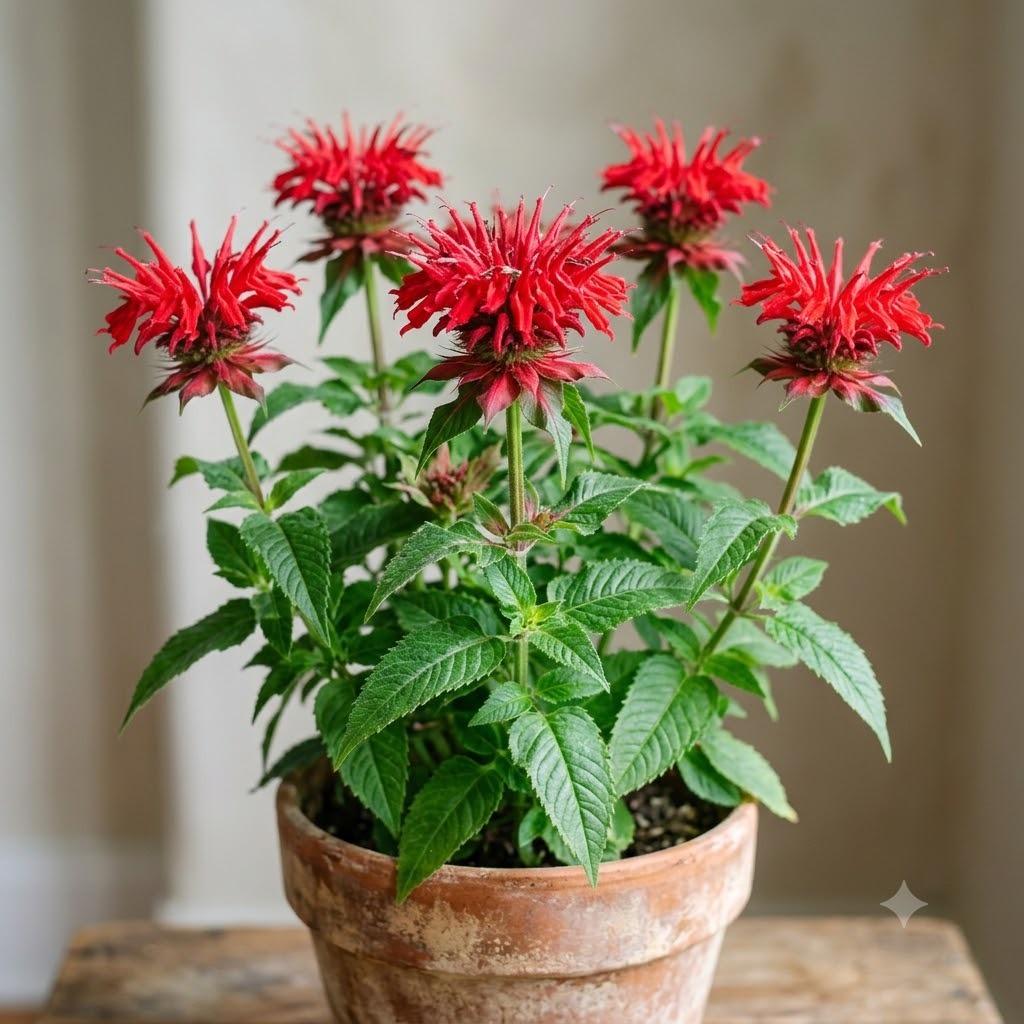
Bee balm, also known as bergamot or monarda, is one of the best pollinator perennials you can plant. Through mid to late summer it produces shaggy, whorled crowns of tubular flowers in vivid reds, purples, pinks, and whites, held above aromatic, mint-scented foliage that hums with bees, butterflies, and hummingbirds. It is a striking, upright, cottage-garden and prairie plant with a long native pedigree in North America. Bee balm has one well-known weakness - it is prone to powdery mildew - but this is entirely manageable by choosing mildew-resistant varieties and giving the plant sun and good airflow. Get those two things right and monarda is a generous, wildlife-packed highlight of the summer border.
Origin & Natural Habitat
Monarda is native to North America, where different species grow wild in moist meadows, prairies, woodland edges, and along streams and damp ground. Scarlet bee balm (Monarda didyma) favors moist, rich soils in part shade to sun, while wild bergamot (Monarda fistulosa) tolerates drier ground. As a mint-family plant it shares that family's aromatic foliage and, in some species, a tendency to spread by creeping roots. Its meadow-and-streamside origins explain its needs: monarda likes sun, generally does not want to dry out completely, and appreciates the air circulation of an open planting - crowded, stagnant conditions are what invite mildew.
Appearance
Bee balm is an upright, clump-forming perennial, typically 60 to 120 cm tall depending on species and variety. The square stems (a mint-family signature) carry pairs of aromatic, slightly toothed leaves that release a spicy, oregano-like scent when brushed. In summer, each stem is topped by a distinctive shaggy, tousled crown of narrow, tubular flowers arranged in a whorl - almost like a ragged pompom or firework. Colors range from the vivid scarlet of Monarda didyma through crimson, magenta, purple, lilac, pink, and white. Bees and hummingbirds probe the tubular flowers for nectar, and the seed heads that follow have their own winter interest.
Why People Grow It - Qualities & Benefits
- Superb pollinator plant: bees, butterflies, and hummingbirds flock to the tubular flowers - the name says it all.
- Bold, unusual flowers: the shaggy, firework-like blooms are unlike anything else in the border.
- Aromatic foliage: the leaves smell spicy and minty and are used in herbal teas (Oswego tea).
- Long summer display: flowers through mid and late summer, filling a useful gap.
- Native and naturalistic: an excellent choice for wildlife, prairie, and cottage-style gardens.
- Good cut flower: the blooms and scented foliage work well in arrangements.
Care
Light & Position
Bee balm does best in full sun to light, partial shade. Full sun gives the strongest flowering and, crucially, the best air circulation and quick-drying foliage that helps fend off mildew. In hot, dry climates a little afternoon shade helps prevent stress, but deep shade brings weak growth and worse mildew.
Soil
Monarda prefers moist but reasonably well-drained, fertile soil rich in organic matter. It does not like to bake bone-dry, and drought stress makes mildew far worse. Improve the soil with compost, and mulch to retain moisture - but avoid stagnant, waterlogged ground.
Watering
Water regularly to keep the soil consistently moist, especially in dry spells and hot weather. Consistent moisture is one of the best defenses against powdery mildew, since drought-stressed plants are the most vulnerable. Water at the base rather than over the leaves.
Feeding
A spring mulch of compost usually supplies enough. A light feed as growth begins supports strong flowering, but avoid heavy nitrogen, which produces soft, lush growth that is more mildew-prone.
Airflow & Mildew Prevention
This is the key to good bee balm. Choose mildew-resistant varieties, give plants full sun, space them well for good air circulation, and keep them adequately watered. Thin out crowded stems in spring to open the clump up. These cultural steps prevent most mildew before it starts.
Deadheading & Cutting Back
Deadhead faded flower crowns to prolong bloom and tidy the plant. In autumn or late winter, cut the old stems down; leaving some seed heads adds winter structure and feeds birds. Divide clumps every 2 to 3 years to keep them healthy and contained.
Hardiness & Winter Care
Bee balm is a hardy herbaceous perennial in most temperate gardens, dying back to the ground in winter and returning in spring. It needs no special winter protection. The dead stems can be left over winter for wildlife and cut back before new growth emerges.
Managing Spread
Like many mint relatives, bee balm spreads by shallow creeping roots and can form widening colonies. This is easy to manage by lifting and dividing the clump every couple of years and pulling up unwanted spread.
Planting & Propagation
Plant bee balm in spring or autumn in a sunny, moist, fertile spot with room for air to move around it. Propagation is very easy: division in spring or autumn is the simplest and best method - lift the clump and split off rooted pieces from the vigorous outer edge, discarding the tired center. It can also be grown from seed (species come truer than named hybrids) and from basal or stem cuttings taken in spring or early summer.
Common Problems & Pests
- Powdery mildew: by far the most common issue - a white, dusty coating on the leaves, worst in humidity, poor airflow, or drought stress. Prevent it with resistant varieties, full sun, spacing, and steady moisture rather than curing it after the fact.
- Rust: occasional orange pustules on leaves in damp seasons.
- Drought stress: leaf scorch and worsened mildew when the plant dries out.
- Spreading: its creeping roots can outgrow their space - divide to manage.
- Pests: generally few, as the aromatic foliage deters many; stalk borers or spider mites appear occasionally.
Toxicity & Safety
Bee balm is generally regarded as non-toxic and low-risk to cats, dogs, and people - the leaves are, in fact, used to make herbal tea and as an edible garnish. As with any strongly aromatic herb, eating large amounts could cause mild stomach upset in a pet, and it is not something to encourage grazing on, but casual contact and normal garden exposure pose little hazard.
Pros & Cons
Pros
- Outstanding for bees, butterflies, and hummingbirds.
- Bold, distinctive, shaggy flowers.
- Aromatic, edible, tea-worthy foliage.
- Long mid-to-late summer bloom.
- Easy to divide and native to North America.
Cons
- Prone to powdery mildew (choose resistant types).
- Spreads by creeping roots.
- Dislikes drying out completely.
- Needs good airflow and sun to look its best.
- Can look tatty if stressed or crowded.
Best Suited For
- Pollinator, wildlife, and hummingbird gardens.
- Cottage-garden and prairie-style borders.
- Moist, sunny beds and streamside plantings.
- Herb gardens (aromatic, tea-worthy foliage).
- Cutting gardens.
Not ideal for dry, drought-prone spots, deep shade, crowded stagnant borders, or gardeners unwilling to manage a little spread.
FAQ
Why does my bee balm get white powdery leaves? That is powdery mildew, monarda's classic weakness, worst in humidity, crowding, and drought stress. The fix is prevention: plant mildew-resistant varieties, give full sun and good spacing for airflow, and keep the plant well watered so it never dries out.
Is bee balm invasive? It spreads by shallow creeping roots like its mint relatives and can widen into a colony, but it is far less aggressive than true mint and easy to control by dividing the clump every couple of years and pulling up unwanted growth.
Does bee balm attract hummingbirds? Yes - the tubular flowers, especially the red forms, are a magnet for hummingbirds, as well as bees and butterflies. It is one of the best all-round pollinator perennials.
Can I use bee balm leaves for tea? Yes - monarda has long been used to make a fragrant herbal tea (sometimes called Oswego tea), and the aromatic leaves and flowers are edible as a garnish.
Does bee balm need full sun? It flowers best in full sun, which also gives the airflow and quick-drying foliage that help prevent mildew. It tolerates light partial shade, but deep shade means weaker growth and more disease.