Muscari (Grape Hyacinth)
Muscari, commonly known as the Grape Hyacinth, is one of the easiest and most cheerful of all spring bulbs.
🗓️ Last reviewed: July 2026
Overview
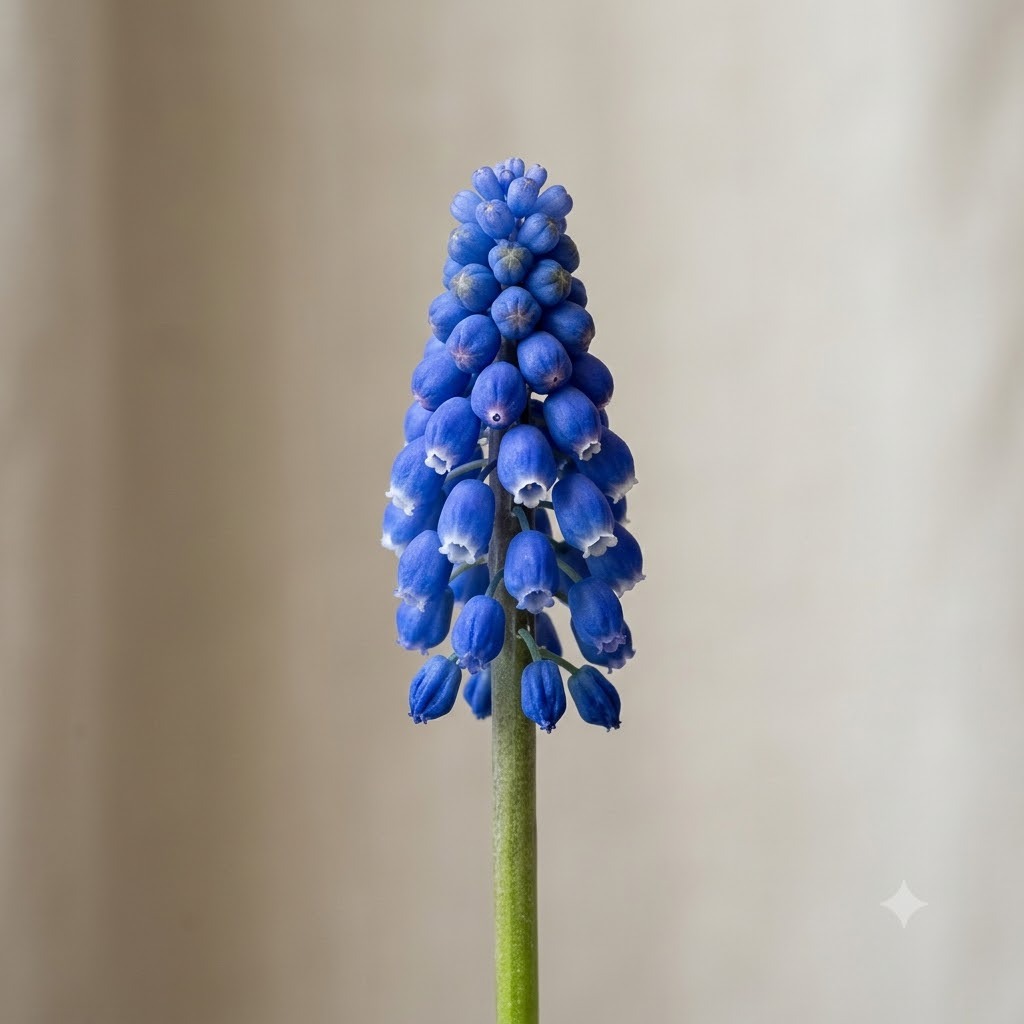
Muscari, commonly known as the Grape Hyacinth, is one of the easiest and most cheerful of all spring bulbs. Each little plant sends up a dense, cone-shaped spike of tiny, rounded, urn-shaped flowers - most famously in a rich cobalt blue - that look just like a miniature bunch of grapes turned upside down. They are small, but planted in generous drifts they create rivers of intense blue that flow through beds, borders, and lawns in mid-spring. Grape hyacinths are tough, hardy, undemanding, and quick to naturalize, spreading happily year after year. Plant them in autumn, forget about them, and enjoy a reliable, low-maintenance carpet of colour every spring.
Origin & Natural Habitat
Muscari species are native to the Mediterranean region, southwest Asia, and southeastern Europe, where they grow wild in meadows, on grassy hillsides, in open woodland, and on rocky slopes. These are places with cool, moist winters and springs followed by warmer, drier summers - the classic rhythm of a spring-flowering bulb that grows and blooms in the cool season and then rests underground through summer. This heritage explains why they are so easy in temperate gardens: they are hardy, tolerant of a range of soils as long as drainage is reasonable, and adapted to naturalize and multiply in grass and open ground.
Appearance
Grape hyacinths grow from small bulbs, producing narrow, strap-like, often grassy leaves in autumn or early spring. In mid-spring, short, sturdy stems rise to carry the flower spike: a tightly packed cone of many small, rounded, urn-shaped florets, each with a tiny constricted mouth, giving the whole spike the look of a bunch of grapes. The classic colour is a deep, luminous cobalt to violet-blue, but there are also pale blue, white, pink, yellow, and two-tone forms. Most muscari are compact, reaching just 10-20 cm tall, which makes them perfect for the front of borders, edging, rockeries, pots, and naturalizing in short grass. The effect en masse is a dense, jewel-like sheet of colour.
Why People Grow It - Qualities & Benefits
- Intense spring colour: rivers of cobalt blue that few other bulbs can match.
- Extremely easy: hardy, undemanding, and reliable year after year.
- Naturalizes freely: spreads and multiplies to form ever-larger drifts.
- Compact and versatile: perfect for edging, rockeries, pots, and under other bulbs.
- Early nectar source: valuable to early bees and other pollinators in spring.
- Great for lawns and drifts: naturalizes beautifully in short grass.
Care
Light & Position
Grape hyacinths do best in full sun to light, partial shade. They flower most freely in a bright, open spot, but they tolerate the dappled shade beneath deciduous trees and shrubs, which are still leafless when muscari bloom in spring.
Soil
They are not fussy and grow in most ordinary garden soils, provided drainage is reasonable. Like most bulbs, they dislike heavy, permanently wet ground, where the bulbs can rot. A moderately fertile, free-draining soil is ideal.
Watering
In most temperate gardens, natural rainfall is enough - muscari receive moisture through the cool, damp autumn, winter, and spring when they are in growth. Water only during unusually dry spells in the growing season. Once the foliage dies back after flowering, they need no watering through their summer rest.
Feeding
Muscari rarely need feeding in decent soil. If you wish, a light feed of a balanced or bulb fertilizer after flowering helps the bulbs build up for next year, and a spring mulch keeps the soil healthy.
Grooming
Very little is needed. You can snip off the spent flower spikes after blooming if you prefer a tidy look or want to limit self-seeding, but always let the leaves die back naturally, as the fading foliage feeds the bulb for next year's display. Note that some muscari send up their leaves in autumn, which is normal.
Hardiness & Winter Care
Muscari are hardy, fully perennial spring bulbs that need cold winter conditions and require no special winter protection in temperate gardens - they are left in the ground permanently. They come back reliably each year and multiply over time, needing lifting only if a clump becomes overcrowded and you want to divide and spread it.
Planting & Propagation
Plant the small bulbs in autumn, a few centimetres deep and pointed end up, in well-drained soil - and plant them generously in groups or drifts for the best effect, as a few dotted bulbs make little impact. They look wonderful massed at the front of borders, in rockeries, in pots, and naturalized in short grass. Muscari propagate very easily: they multiply by producing offset bulbs around the parent, which can be lifted and divided when dormant in summer and replanted to spread them further. Many also self-seed freely, gradually colonizing an area - welcome if you want a naturalized carpet, though it can spread more than desired in some gardens.
Common Problems & Pests
- Excess spreading: muscari can self-seed and multiply enthusiastically, becoming more widespread than intended - deadhead before seed sets if you want to control this.
- Floppy or untidy foliage: the leaves, especially of autumn-emerging types, can look messy through winter - simply tolerate it, as the foliage feeds the bulb.
- Bulb rot: in heavy, waterlogged soil the bulbs can rot - ensure reasonable drainage.
- Few pests: grape hyacinths are largely trouble-free, though slugs may nibble young growth and rodents occasionally take bulbs.
- Poor flowering: usually from overcrowding or too much shade - lift and divide congested clumps and give them more light.
Toxicity & Safety
Muscari are generally regarded as low in toxicity and are not among the seriously poisonous garden bulbs. Like many bulbs, however, they are not meant to be eaten, and ingesting the bulbs or plant can cause mild stomach upset in pets or people. It is sensible to keep pets from digging up and chewing the bulbs. Handling the plant poses no particular hazard.
Pros & Cons
Pros
- Intense, luminous spring colour, especially cobalt blue.
- Extremely easy, hardy, and reliable.
- Naturalizes and multiplies freely.
- Compact and versatile - beds, rockeries, pots, and lawns.
- Valuable early nectar for pollinators.
Cons
- Can self-seed and spread more than wanted.
- Foliage (especially autumn-emerging types) can look untidy over winter.
- Small - needs planting in generous drifts for impact.
- Short flowering season, as with most spring bulbs.
Best Suited For
- The front of borders, edging, and rockeries.
- Naturalizing in short grass and under deciduous trees and shrubs.
- Containers and mixed spring bulb displays.
- Low-maintenance gardens wanting reliable spring colour.
Not ideal for heavy, permanently waterlogged soils, or very tidy gardeners who dislike self-seeding and winter foliage.
FAQ
When should I plant grape hyacinths? Plant the bulbs in autumn, a few centimetres deep and pointed end up, in well-drained soil. Plant them in generous groups or drifts, as scattered single bulbs make little impact.
Do grape hyacinths spread? Yes - and that is part of their charm. They multiply by offset bulbs and often self-seed, gradually forming larger drifts. If you want to limit spreading, remove the spent flower spikes before they set seed.
Why is my muscari foliage untidy in winter? Some muscari send up their leaves in autumn, so the grassy foliage can look messy through winter. This is normal - leave it in place, as it feeds the bulb for next year's flowers.
Are grape hyacinths safe around pets? They are considered low in toxicity, but like all bulbs they are not meant to be eaten and can cause mild stomach upset. It is best to stop pets digging up and chewing the bulbs.
Do I need to lift muscari for winter? No. They are hardy spring bulbs left permanently in the ground. Lift and divide them only if a clump becomes overcrowded and you want to spread them to new areas.