Flowering Tobacco (Nicotiana)
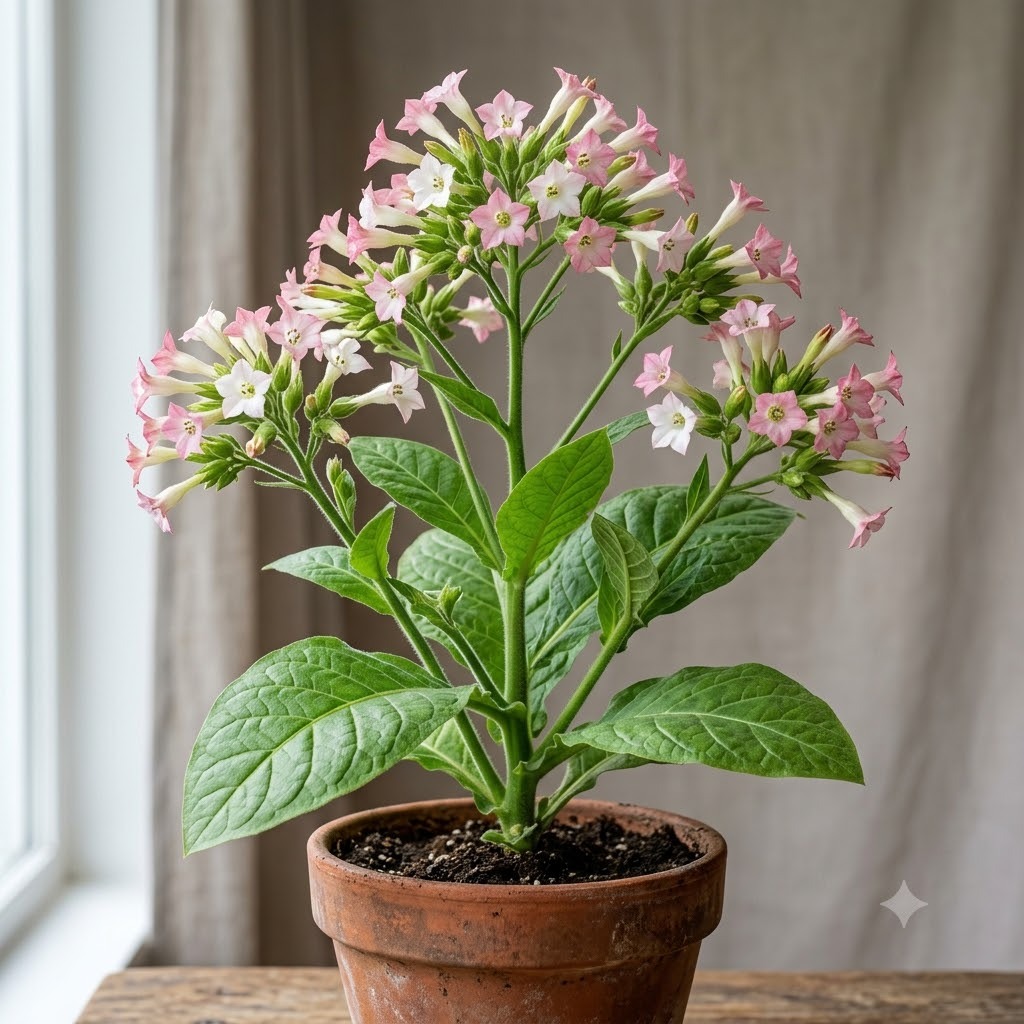
Flowering Tobacco is the cottage-garden charmer grown for its clusters of slender, tubular, star-shaped flowers and, in many species, a sweet evening perfume that drifts across the garden at dusk.
🗓️ Last reviewed: July 2026
Overview
Flowering Tobacco is the cottage-garden charmer grown for its clusters of slender, tubular, star-shaped flowers and, in many species, a sweet evening perfume that drifts across the garden at dusk. An easygoing tender annual, it comes in colors from white and lime-green to pink, red, and deep maroon, and ranges from knee-high bedding types to statuesque plants over 1.5 m tall. It is a relative of the crop tobacco, but it is grown purely for beauty and scent. Sow it, give it sun or light shade, and it flowers generously from summer into autumn, making it a favourite for informal borders, containers, and moonlit "evening" gardens.
Origin & Natural Habitat
Nicotiana belongs to the nightshade family (Solanaceae) and is native mostly to the Americas - especially South America, with some species from North America and a few from Australia and the South Pacific. In the wild it grows in warm, open, disturbed ground, along roadsides and clearings, where it behaves as a fast-growing annual or short-lived perennial. This heritage explains its garden behaviour: it loves warmth, thrives in a single long growing season, and often self-seeds happily. Many species evolved pale, night-opening, heavily scented flowers to attract moths, which is why the classic flowering tobaccos are at their most fragrant in the evening.
Appearance
Flowering Tobacco forms an upright plant with large, slightly sticky, soft green leaves at the base and branching stems carrying loose clusters of flowers. Each bloom is a long tube that flares into a five-pointed star. Colors include pure white, cream, lime-green, soft pink, rose, crimson, and near-black maroon. Popular garden types include the compact bedding hybrids (around 25-45 cm, good for containers and edging, though often less scented), the tall old-fashioned Nicotiana alata and the woodland tobacco Nicotiana sylvestris (a dramatic 1.5 m plant topped with drooping white trumpets), and the small-flowered, sea-green Nicotiana langsdorffii. The whole plant has a slightly resinous, sticky feel typical of the tobacco family.
Why People Grow It - Qualities & Benefits
- Evening fragrance: many species, especially the white and pale ones, release a rich sweet scent at dusk.
- Long flowering season: blooms from early summer until the first frosts.
- Cottage-garden charm: airy, informal flower clusters suit relaxed planting.
- Colour range: from crisp white and unusual lime-green to deep maroon.
- Pollinator value: night-scented types draw moths; open flowers attract bees and hummingbirds (where present).
- Easy from seed: cheap and generous, and many types self-seed for next year.
- Structure: tall species like N. sylvestris add height and drama to a border.
Care
Light & Position
Flowering Tobacco grows well in full sun or light, dappled shade. In hot climates a little afternoon shade keeps the plants fresher and the scent stronger; in cooler regions give it as much sun as possible. Choose a sheltered spot so the tall types are not battered by wind.
Soil
It likes moist but well-drained, fertile soil enriched with compost. It is not fussy about type as long as the ground does not dry out completely or stay waterlogged.
Watering
Keep the soil evenly moist, especially in warm, dry weather and for plants in containers, which dry out fast. Regular watering keeps the plants flowering well and prevents wilting. Avoid letting them bake bone-dry, but do not leave them sitting in soggy soil.
Feeding
For plants in the ground, compost-enriched soil is often enough. Container plants benefit from a general liquid feed every couple of weeks through the growing season to keep the flowers coming.
Deadheading & Maintenance
Deadhead faded flowers to encourage more blooms and a tidier plant, though many gardeners leave some seed heads late in the season so the plants can self-sow. Tall species may need light staking in exposed spots. Handle with awareness that the foliage is sticky and mildly irritating to some skins.
Hardiness & Winter Care
In most gardens Flowering Tobacco is grown as a tender annual - it is killed by frost. Sow fresh each spring, or let it self-seed. In frost-free regions some species can persist as short-lived perennials. Do not rely on specific hardiness zones, as behaviour depends heavily on local frost.
Planting & Propagation
Flowering Tobacco is almost always grown from seed. The seed is very fine, so sow it on the surface of moist compost and press gently without covering, as it needs light to germinate. Start indoors in warmth in early spring, then harden off and plant out after the last frost, or sow directly once the soil has warmed. Space plants according to their eventual size. Established plantings often self-seed, producing free seedlings the following year that can be thinned or transplanted.
Common Problems & Pests
- Aphids: cluster on soft new growth and buds - hose off, squash, or let predators help.
- Slugs and snails: enjoy young seedlings - protect early transplants.
- Whitefly and flea beetles: can appear, as they favour the nightshade family.
- Tobacco/tomato viruses: as a Solanaceae plant it can host viruses; remove badly affected plants and avoid handling after touching tobacco products.
- Downy or powdery mildew: possible in humid, crowded conditions - space plants for airflow.
- Wind damage: tall species can flop or snap in exposed sites - stake if needed.
Most plantings grow trouble-free with reasonable spacing and moist soil.
Toxicity & Safety
Toxic if eaten. Nicotiana is a relative of tobacco and, like others in the nightshade family, contains nicotine and related alkaloids in its leaves and stems. All parts are considered poisonous to people, cats, dogs, and livestock if ingested, and eating the foliage can cause serious harm. It should be kept away from children and pets who might chew it, and it is not edible in any form. The sticky foliage can also irritate sensitive skin, so wear gloves if you are prone to reactions. Grow it for its flowers and scent only, never for consumption.
Pros & Cons
Pros
- Sweet evening fragrance in many types.
- Long flowering from summer to frost.
- Beautiful colour range, including unusual lime-green and maroon.
- Easy and cheap from seed; often self-seeds.
- Attracts moths, bees, and other pollinators.
Cons
- Toxic if eaten - a concern with pets and small children.
- Tender - killed by frost, so grown as an annual in most gardens.
- Sticky foliage that can irritate skin.
- Tall types may need staking.
- Compact bedding hybrids are often much less scented.
Best Suited For
- Cottage gardens and informal, relaxed borders.
- "Evening" or "moonlight" gardens near patios and seating, for the dusk scent.
- Containers and pots (compact types).
- Cutting gardens and pollinator plantings.
- Adding height to borders (tall species like N. sylvestris).
Not ideal for households wanting only pet- and child-safe plants within reach, or gardeners who want a frost-hardy permanent planting.
FAQ
Is flowering tobacco the same as smoking tobacco? They are close relatives in the same genus, but garden Nicotiana is grown purely for its flowers and scent, not for smoking. It still contains nicotine and is toxic if eaten, so it should never be consumed.
Why isn't my nicotiana fragrant? Not all types are scented. The strongest evening perfume comes from the taller, paler species and old-fashioned varieties. Many compact bedding hybrids were bred for colour and neat size and have little or no fragrance - choose a scented variety if perfume is the goal.
When is it most fragrant? The classic night-scented flowering tobaccos release their perfume in the evening and after dark, when their moth pollinators are active. Plant them near a patio or path to enjoy the scent at dusk.
Will it come back next year? It is a tender annual killed by frost, so it usually does not survive winter in cold climates. However, it often self-seeds, so new seedlings may appear the following spring where it grew.
Is flowering tobacco safe around pets? No - it is toxic if eaten by cats, dogs, and livestock, as it contains nicotine like its tobacco relatives. Site it out of reach or skip it if you have pets that chew plants.