Passionflower (Passiflora)
The Passionflower is one of the most extraordinary and exotic-looking climbers you can grow in a garden.
🗓️ Last reviewed: July 2026
Overview
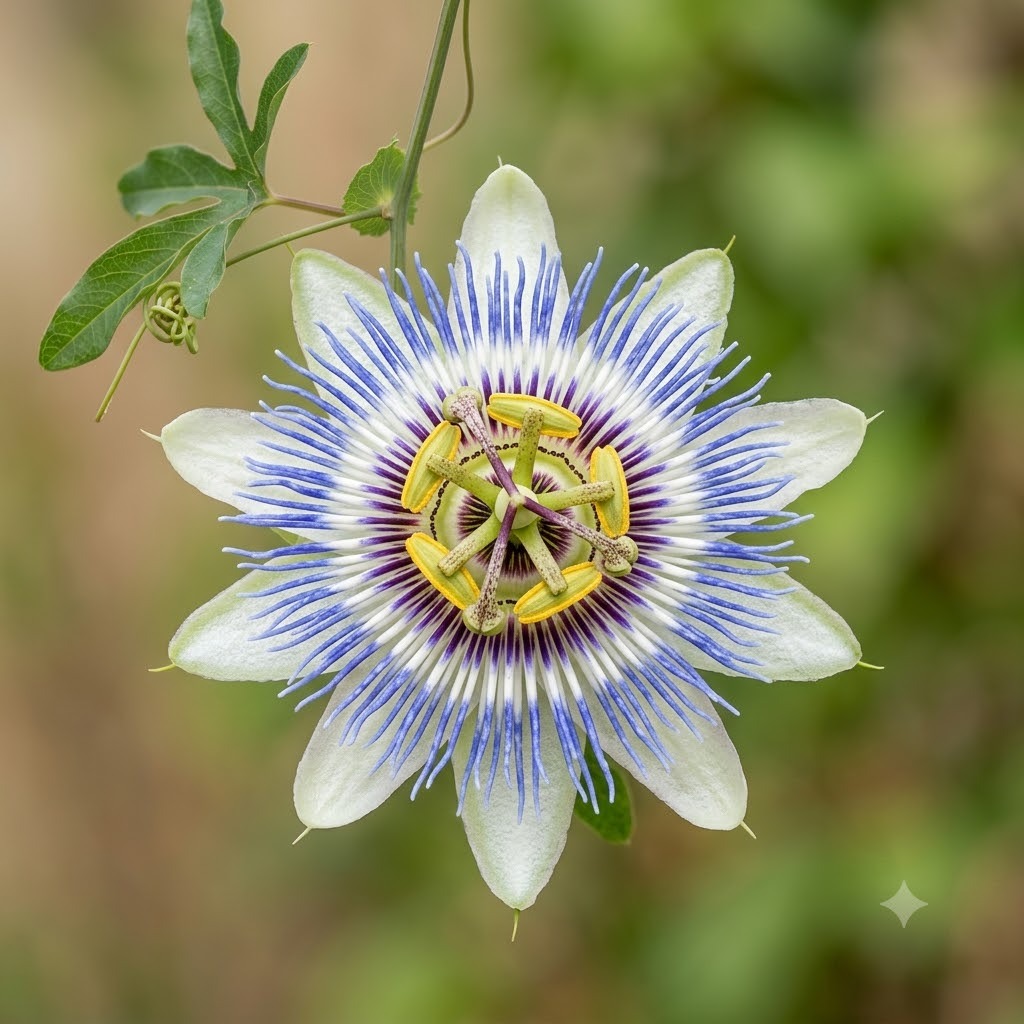
The Passionflower is one of the most extraordinary and exotic-looking climbers you can grow in a garden. Its flowers are almost architectural - a wheel of petals topped by a fringed crown of coloured filaments, with a prominent central structure of stamens and styles - looking more like a piece of jewellery than a bloom. Vigorous, fast, and self-clinging by tendrils, a passionflower will race up a wall, fence, or trellis and cover it in intricate blooms through summer and autumn. Some kinds go on to produce edible passionfruit. The most widely grown hardy species, the blue passionflower, is surprisingly tough and can survive cold winters in a sheltered spot, making this tropical-looking plant achievable well beyond the tropics.
Origin & Natural Habitat
Most passionflowers come from the warm regions of the Americas, from the southern United States through Central and South America, where they scramble through forest edges, clearings, and scrub as vigorous tendril climbers reaching up toward the light. A few species come from Asia and Australia. The genus is large and varied, ranging from tender tropical vines to a handful of hardier species. The best-known garden plant, the blue passionflower (Passiflora caerulea), is native to South America but is notably more cold-tolerant than its relatives, which is why it thrives in temperate gardens where other species would not survive.
Appearance
Passionflowers are climbing, tendril-gripping vines, often vigorous, reaching several metres in a season. The leaves are usually lobed, in some species distinctly hand-shaped, and a fresh mid-green. The flowers are the spectacle: a flat wheel of petals and sepals, topped by a striking ring of thread-like filaments called the corona, often banded in blue, purple, or white, with a raised central column of stamens and stigmas. Blooms of the blue passionflower are typically white with a blue and purple corona. Flowering runs through summer into autumn. Some species follow the flowers with egg-shaped fruits - passionfruit - which ripen from green to orange, yellow, or purple depending on the type.
Why People Grow It - Qualities & Benefits
- Exotic, intricate flowers: unlike anything else in a temperate garden, endlessly fascinating up close.
- Fast, generous cover: a vigorous climber that quickly clothes walls, fences, and trellis.
- Long season: flowers through summer and into autumn.
- Edible fruit (some types): certain species produce true passionfruit.
- Pollinator draw: the open flowers attract bees and other insects.
- Tropical look, temperate toughness: the hardy blue passionflower brings an exotic feel to cool gardens.
Care
Light & Position
Passionflowers want a warm, sheltered spot in full sun for the best flowering, ideally against a south- or west-facing wall or fence that soaks up warmth. They will tolerate a little light shade but flower far more freely in sun. Shelter from cold, drying winds helps, especially in colder gardens where warmth encourages both flowers and fruit to ripen.
Soil
They grow in most reasonable, well-drained garden soils. What they dislike is heavy, waterlogged ground in winter. Improve the planting site with compost, and in containers use a free-draining, good-quality compost. Overly rich soil can produce lush leaves at the expense of flowers.
Watering
Water regularly while establishing and during dry spells, keeping the soil moist but never sodden. Container plants dry out fast and need consistent watering through the growing season. Established plants in the ground are fairly resilient once their roots are down.
Feeding
Feed in spring and through summer with a balanced or potassium-rich fertiliser to encourage flowering rather than excessive foliage. Avoid overfeeding with high nitrogen, which pushes leafy growth at the cost of blooms. Container plants need regular feeding.
Pruning
Passionflowers are vigorous and benefit from pruning to keep them in bounds. In cold gardens, cut back frost-damaged growth in spring once the risk of hard frost has passed and you can see which stems have survived. Otherwise thin and shorten stems in spring to control size and encourage fresh flowering growth. They tolerate hard pruning well and regrow strongly.
Hardiness & Winter Care
Hardiness varies enormously by species. The blue passionflower is the hardiest commonly grown type and, in a sheltered spot with a good winter mulch over the roots, can survive cold winters and reshoot from the base even if top growth is killed. Many other passionflowers are tender and need a frost-free greenhouse or conservatory, or must be grown in pots brought under cover for winter. Always match the species to your climate.
Planting & Propagation
Plant in late spring or early summer once the soil is warm and frosts have passed, against a wall or trellis with support in place for the tendrils to grip. Propagate from semi-ripe cuttings in summer, which root readily with warmth, or from seed, though seed-raised plants can be variable and slower to flower. Vigorous stems can also be layered. In cold areas, take cuttings as insurance in case a hard winter kills the parent plant.
Common Problems & Pests
- All leaves, no flowers: usually too much shade, too much nitrogen feed, or a very young plant - move to sun and switch to a high-potassium feed.
- Winter dieback: top growth killed by frost; hardy types often reshoot from the base in spring if mulched.
- Fruit not ripening: a short or cool season can leave fruit unripe; more sun and warmth help.
- Cucumber mosaic virus: can distort and mottle foliage; remove badly affected plants.
- Aphids, whitefly, and red spider mite: especially under glass or in hot dry conditions.
Given warmth, sun, and a sheltered spot, it is a robust and rewarding climber.
Toxicity & Safety
The ripe fruit of edible passionflower species is safe and delicious. However, caution is needed: unripe fruit and the leaves and stems of many passionflowers contain compounds that can cause stomach upset if eaten in quantity, so only eat the fully ripe fruit of a species known to be edible. Ornamental species are grown for their flowers, not their fruit, and their fruit should not be assumed edible. Keep pets and children from grazing on the foliage and unripe fruit. When in doubt about a species, treat the fruit as inedible and enjoy the plant for its flowers alone.
Pros & Cons
Pros
- Spectacular, intricate, exotic flowers.
- Fast, vigorous cover for walls and fences.
- Long flowering season into autumn.
- Some types give edible passionfruit.
- The hardy blue passionflower suits cool gardens.
Cons
- Many species are tender and need winter protection.
- Vigorous - can outgrow its space and need regular pruning.
- Unripe fruit and foliage can cause stomach upset.
- Flowers poorly in shade or if overfed with nitrogen.
- Fruit may not ripen in short, cool seasons.
Best Suited For
- Warm, sheltered, sunny walls and fences.
- Trellises, arches, and pergolas needing fast exotic cover.
- Adventurous gardeners wanting a tropical look in a temperate garden.
- Large containers for tender species that can be moved under cover.
- Gardens where the intricate flowers can be admired close up.
Not ideal for cold exposed gardens (except the hardiest types), small spaces where vigour is a problem, or gardeners wanting a fuss-free, slow-growing plant.
FAQ
Is the passionflower hardy? It depends entirely on the species. The blue passionflower is the hardiest common type and can survive cold winters in a sheltered spot with a mulch over its roots, often reshooting from the base if the top is frosted. Many other passionflowers are tender and need protection over winter.
Can I eat passionflower fruit? Only the fully ripe fruit of species known to be edible. Unripe fruit and the leaves and stems of many passionflowers can cause stomach upset. Ornamental species are grown for their flowers, and their fruit should not be assumed safe to eat.
Why does my passionflower have lots of leaves but no flowers? The usual causes are too much shade, too much nitrogen fertiliser, or a young plant still establishing. Move it into full sun, switch to a high-potassium feed, and give it time to settle in.
How do I stop it taking over? Prune in spring to control size and shape, cutting back hard if needed - passionflowers tolerate hard pruning and regrow strongly. Choose a spot where its vigour is welcome, and thin the growth each year.
Does it need a support? Yes. Passionflowers climb by curling tendrils, so they need wires, a trellis, or netting to grip. Provide support at planting and guide the young stems onto it.