Penstemon (Beardtongue)
Penstemon, commonly called beardtongue, is a graceful, long-flowering perennial that carries elegant spires of tubular, foxglove-like flowers through summer and often well into autumn.
🗓️ Last reviewed: July 2026
Overview
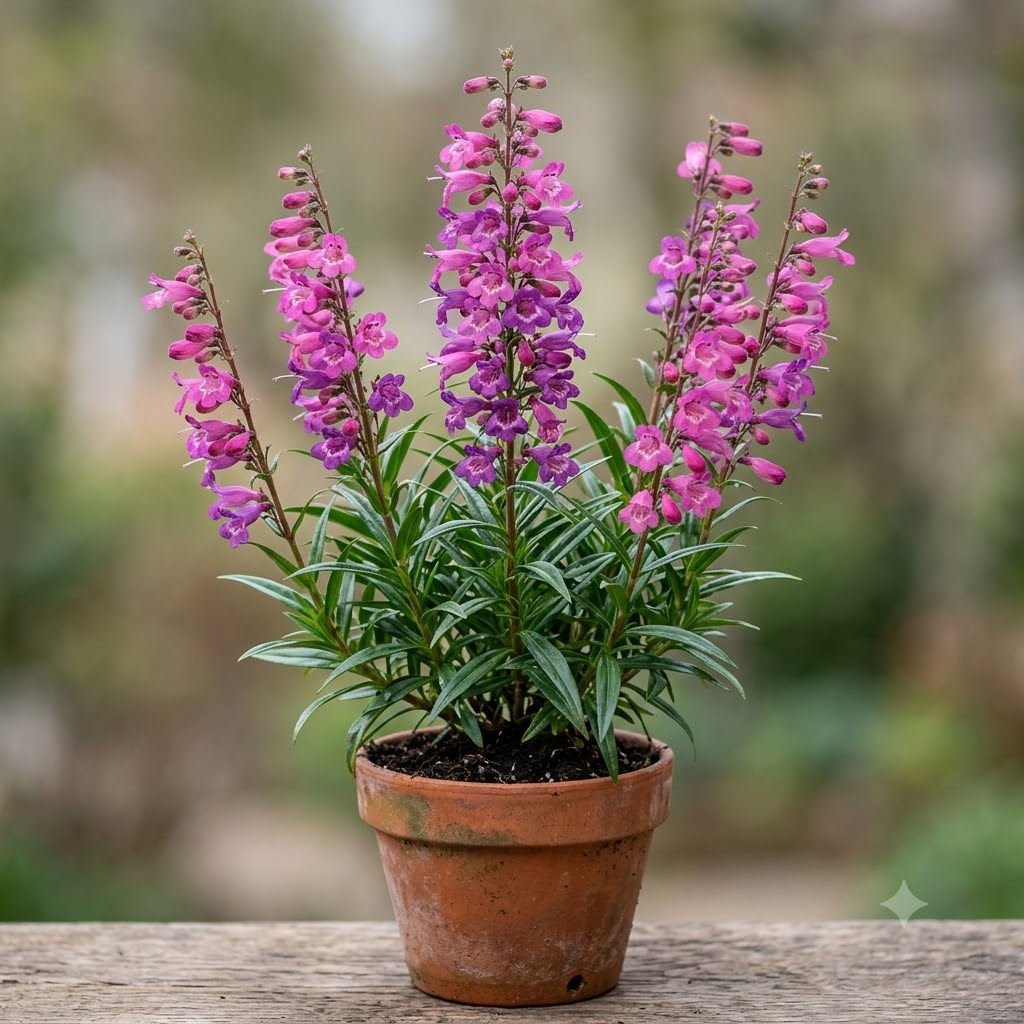
Penstemon, commonly called beardtongue, is a graceful, long-flowering perennial that carries elegant spires of tubular, foxglove-like flowers through summer and often well into autumn. The blooms come in a beautiful range of pinks, reds, purples, whites, and violet-blues, held on upright stems above neat, often semi-evergreen foliage. Penstemons are magnets for bees and, in some regions, hummingbirds, drawn to their nectar-rich tubes. They have a reputation for being slightly tender or short-lived, but the real key to keeping them happy is simple: give them full sun and sharp drainage, because their true enemy is not cold but wet, heavy soil sitting around their crowns over winter. Get the drainage right and penstemon rewards you with one of the longest bloom seasons in the border.
Origin & Natural Habitat
Penstemon is a large genus native almost entirely to North America, with the greatest diversity in the dry, sunny, well-drained landscapes of the western United States and Mexico - grasslands, rocky slopes, open woodland, and mountain scree. Many species are adapted to lean, gritty, fast-draining soils and bright sun. The popular large-flowered garden hybrids grown in borders are more lush and slightly less hardy than their wild ancestors, but they inherit the family's core preferences: sun, good drainage, and a dislike of sitting in cold, wet ground. Understanding this dry-slope origin is the single most useful thing for growing them well.
Appearance
Penstemons form clumps of upright stems, typically 45 to 90 cm tall depending on type, clothed in narrow, often glossy, lance-shaped leaves that are frequently semi-evergreen, holding through mild winters. From early or mid summer onward, the stems carry loose spikes of tubular, two-lipped flowers that dangle and face outward, rather like slim foxgloves. The common name "beardtongue" comes from a tuft of small hairs on one of the flower's stamens. Colors span soft and hot pinks, scarlet and ruby reds, purples, violets, whites, and cool blues, and many varieties have contrasting pale throats. The overall effect is airy, upright, and long-lasting.
Why People Grow It - Qualities & Benefits
- Exceptionally long bloom: among the longest-flowering perennials, often from early summer into autumn.
- Elegant, tubular flowers: slim, foxglove-like spires in a superb color range.
- Great for pollinators: bees work the flowers constantly, and hummingbirds visit in regions where they occur.
- Semi-evergreen structure: many keep their foliage through mild winters.
- Drought-tolerant once established: well-suited to sunny, low-water gardens.
- Excellent border filler: upright and airy, blending well with roses, grasses, and other perennials.
Care
Light & Position
Full sun is best - at least 6 hours of direct sun a day - giving the strongest flowering and the fast-draining, quick-drying conditions penstemons prefer. They tolerate very light shade but flower less and grow softer. Choose an open, warm, sunny spot, ideally with some shelter from cold winds.
Soil
Sharp drainage is the number one requirement. Penstemons want light, well-drained, even gritty soil and will rot in heavy, wet clay - especially over winter. On heavy ground, improve drainage generously with grit and organic matter, or grow them in raised beds or containers. They are not fussy about fertility and do fine in average soil.
Watering
Water new plants until established. Once settled, penstemons are quite drought-tolerant and need watering only in prolonged dry spells. The greater danger is overwatering and soggy soil; err on the dry side, particularly in winter.
Feeding
Penstemons are not heavy feeders. A spring mulch of compost and, if wanted, a light general feed as growth begins is plenty. Avoid overfeeding, which encourages soft, floppy growth at the expense of flowers and hardiness.
Deadheading & Cutting Back
Deadhead spent flower spikes regularly to keep the display going - this is a big part of their marathon bloom season. Do not cut plants hard back in autumn; the old growth helps protect the crown through winter. Instead, tidy and cut back in mid to late spring once the danger of hard frost has passed and new growth appears at the base.
Hardiness & Winter Care
Hardiness varies by type - the large-flowered hybrids tend to be more tender and shorter-lived than tougher species and small-leaved forms. In colder or wetter areas, the winning combination is a sunny, sharply drained spot, leaving the top growth on over winter for protection, and applying a dry mulch around the crown. Wet winter soil kills far more penstemons than cold alone. It is wise to take a few cuttings each year as insurance.
Planting & Propagation
Plant penstemon in late spring or early summer, once the soil has warmed, in a sunny, sharply drained position - this gives it a full season to establish before winter. Propagation is easy and worthwhile, since plants can be short-lived: softwood or semi-ripe cuttings taken in summer root readily and are the best way to keep favorite varieties going. Penstemons can also be grown from seed (species come truer than hybrids) and larger clumps can sometimes be divided in spring, though cuttings are usually more reliable.
Common Problems & Pests
Penstemons are relatively trouble-free when given the right site.
- Winter rot / crown rot: the biggest killer, caused by cold, wet, poorly drained soil - the cure is sharp drainage and a sunny spot.
- Short lifespan: many hybrids fade after a few years - keep them going by taking cuttings.
- Powdery mildew: can appear in crowded, humid, or dry-stressed conditions - improve airflow.
- Slugs and snails: may nibble soft new spring growth on emerging plants.
- Floppiness: usually from overfeeding, too much shade, or overly rich soil.
Toxicity & Safety
Penstemon is generally considered non-toxic and low-risk to cats, dogs, and people, and is not listed among common problem garden plants for pets. As with any ornamental, it is not intended for eating, and a pet consuming a large quantity could get a mild stomach upset, but normal garden contact poses little hazard.
Pros & Cons
Pros
- One of the longest bloom seasons of any perennial.
- Elegant tubular flowers in a wide color range.
- Excellent for bees and hummingbirds.
- Drought-tolerant and often semi-evergreen.
- Easy to propagate from cuttings.
Cons
- Needs sharp drainage; hates wet winter soil.
- Many hybrids are short-lived or slightly tender.
- Can rot in heavy clay.
- Should not be cut back hard in autumn.
- Benefits from regular deadheading.
Best Suited For
- Sunny, well-drained borders and gravel gardens.
- Pollinator and hummingbird gardens.
- Raised beds and containers (great for controlling drainage).
- Cottage-garden and prairie-style plantings.
- Low-water, sunny plots.
Not ideal for heavy wet clay, deep shade, or damp low-lying ground where winter wet collects.
FAQ
Why did my penstemon die over winter? The usual culprit is not cold but wet - penstemons rot in cold, soggy, poorly drained soil around the crown. Plant them in full sun with sharp drainage, leave the old top growth on over winter for protection, and take a few cuttings each year as insurance.
How do I keep penstemons flowering for so long? Deadhead regularly. Snipping off the spent flower spikes keeps new ones coming and is the secret to their marathon summer-into-autumn display.
When should I cut penstemons back? Not in autumn - leave the old growth to protect the crown through winter. Cut back and tidy in mid to late spring, once the frosts have passed and new shoots appear at the base.
Are penstemons good for pollinators? Very - bees constantly work the tubular flowers, and in regions where they occur, hummingbirds are drawn to them too, especially the red and pink forms.
Do penstemons come back every year? They are perennials and many are reliably so, but the large-flowered hybrids can be short-lived or slightly tender. Give them sun and sharp drainage and take summer cuttings so you always have replacements.